Science & Tech · Science & Environment · 9 hrs ago
Atacama lithium extraction raises environmental and social concerns
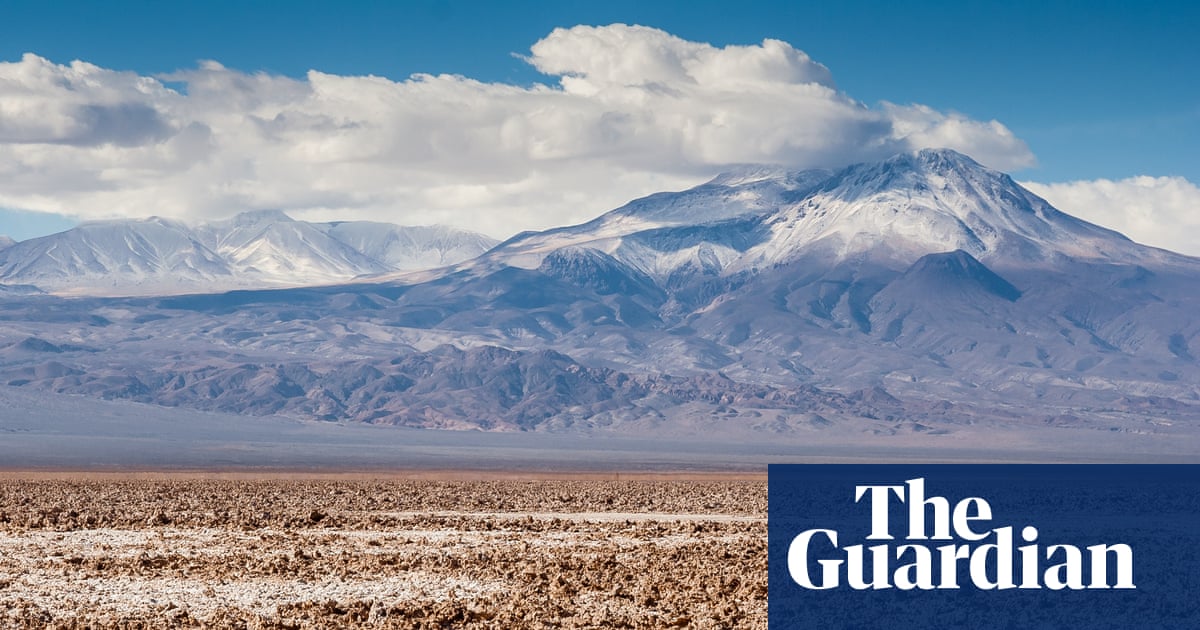
The Salar de Atacama is a vast salt flat in northern Chile, high in the Andes.
Its underground brine holds nearly one-quarter of the world’s lithium reserves.
Lithium is used in rechargeable batteries for transport and energy, which can help reduce carbon emissions.
The salt flat, flamingos and nearby Indigenous communities may face environmental and social costs as lithium is extracted.
The lithium-rich brine forms as water carries lithium down from surrounding mountains and evaporates in the dry basin.
The article describes the conflict between using lithium to address climate change and the effects of mining it.
It does not say what specific decisions or actions will follow.

The Salar de Atacama in northern Chile contains nearly one-quarter of the world’s lithium reserves, suspended in brine.
Lithium is used in rechargeable batteries that can help cut emissions from transportation and energy.
Extracting the lithium carries social and environmental costs for the salt flat, wildlife and neighbouring Indigenous communities.
The salt flat is the largest of several dozen in northern Chile and the third largest in the world.
Water flowing into the basin evaporates, concentrating lithium in the remaining brine.
- Who
- Lithium mining companies seek lithium from the salt flat. Neighbouring Indigenous communities are among those affected.
- What
- Lithium extraction raises environmental and social concerns.
- When
- Not stated
- Where
- Salar de Atacama in northern Chile.
- Why
- Lithium is used in rechargeable batteries that can help reduce carbon emissions, but extracting it carries social and environmental costs.
This story does not have two clearly opposing sides.
This story does not have a timeline yet.
- Location
- Salar de Atacama, northern Chile
- Elevation
- 7,500ft above sea level
- Size
- Third largest salt flat in the world
- Lithium reserves
- Nearly one-quarter of the world’s reserves
- Brine depth
- 4 to 200 feet below the surface
Sources
Related news
Researchers map hair-like sensory cells across squid bodies
Bellbird and Seriema Among the Loudest Birds Measured
Survey finds only 83 mature cheetahs across a vast area of South Africa

British Columbia rogue wave was nearly three times taller than nearby waves

Detached sea cucumber tissue remained active for more than three years
New book examines the survival skills of 75 fierce forms of nature
Air pollution reaches ‘very poor’ levels in towns near Manaus
Young Puerto Rican parrot rescued from invasive boa
Warm, mostly sunny weather forecast across the Netherlands this week
Researchers confirm a new giant waterlily species in Colombia
Amazonas fires rise 271% in the first 10 days of October