Science & Tech · Science & Environment · 10 hrs ago
Detached sea cucumber tissue remained active for more than three years
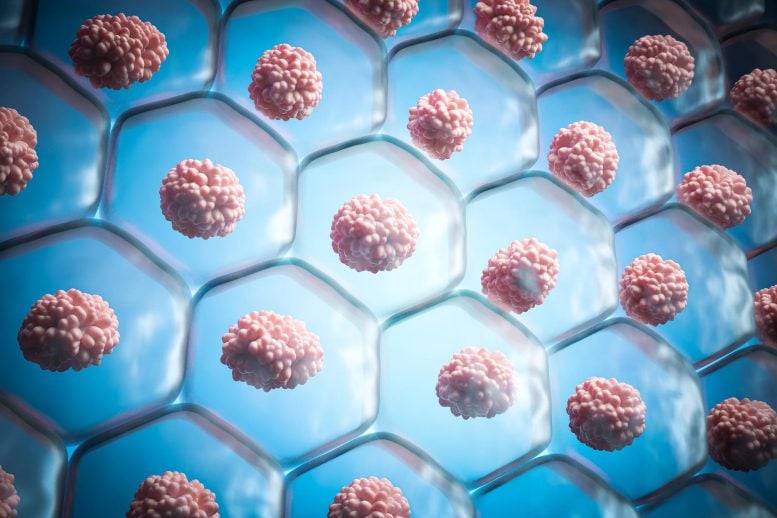
Researchers at Memorial University of Newfoundland studied tissue removed from three cold-water sea cucumbers in flowing seawater.
The detached pieces, taken from the animals’ feet, bodies and tentacles, retained their structure and could move on their own.
The team observed immune activity and tissue repair, and the fragments remained active more than three years later, when the experiments ended.
The fragments had no mouths, but appeared to absorb amino acids from seawater, which cells use to build proteins.
Sea cucumbers are echinoderms, a group known for tissue regeneration, but researchers had generally expected detached tissue to die.
The finding shows that this tissue can survive and grow in microbe-rich seawater, rather than only in carefully controlled, germ-free conditions.
Researchers have not grown a complete sea cucumber from a fragment, and how long the tissue can remain viable is still unknown.
The team says the finding could help scientists investigate tissue repair and antimicrobial healing.

Detached sea cucumber tissue remained active for more than three years in flowing natural seawater.
Researchers removed tissue from the feet, main bodies and tentacles of three sea cucumbers and observed healing, movement and tissue reorganization.
The fragments appeared to absorb amino acids from seawater, which may have provided nourishment.
The study could help researchers investigate tissue regrowth and antimicrobial healing.
- Who
- Researchers at Memorial University of Newfoundland studied the tissue, working with collaborators including Rachel Sipler.
- What
- Detached sea cucumber tissue healed, reorganized and remained active for more than three years.
- When
- The experiments lasted more than three years; the study was published on October 11, 2026.
- Where
- The tissue was kept in flowing natural seawater. The animals were the cold-water species Psolus fabricii.
- Why
- Researchers studied how detached tissue survives and regrows, including in seawater containing microbes.
This story does not have two clearly opposing sides.
Natural seawater is just about the most microbially diverse, least clean approach we could take experimentally.
Yet, that rich environment full of bacteria and all this organic matter was actually feeding them and allowing this tissue to heal and grow.
We haven’t grown a new, complete sea cucumber yet, but we are seeing pretty stunning growth and diversification of cells literally years after this tissue was removed.
A fragment from a tube foot appeared to be growing in seawater.
The tissue remained active when researchers ended the experiments to prepare the findings for publication.
SciTechDaily published its report on the study.
- Species
- Psolus fabricii
- Animals studied
- Three sea cucumbers
- Tissue sources
- Feet, main bodies and tentacles
- Duration
- More than three years
- Study journal
- Science Advances
Sources
Related news

Thunderstorms forecast in nine Saudi regions, with rain possible in Riyadh and Eastern Province

Turkish students win record 78 medals at international science olympiads

Bohai Bay plant cuts desalination energy use by more than half

Used cooking oil may damage modern diesel engines
Hurricane Simon and other weather systems bring heavy rain to Mexico
Heavy rain expected in parts of Turkey as 13 provinces get yellow alerts

Three-volume series on weather support for China’s low-altitude economy published

Heavy rain and flash-flood risk forecast across parts of Saudi Arabia
Hunan launches AI platform for hybrid rice breeding
China’s first five national parks score highly on ecological benefits

El Niño sets Pacific temperature record as event intensifies