Science & Tech · Science & Environment · 3 hrs ago
Researchers map hair-like sensory cells across squid bodies
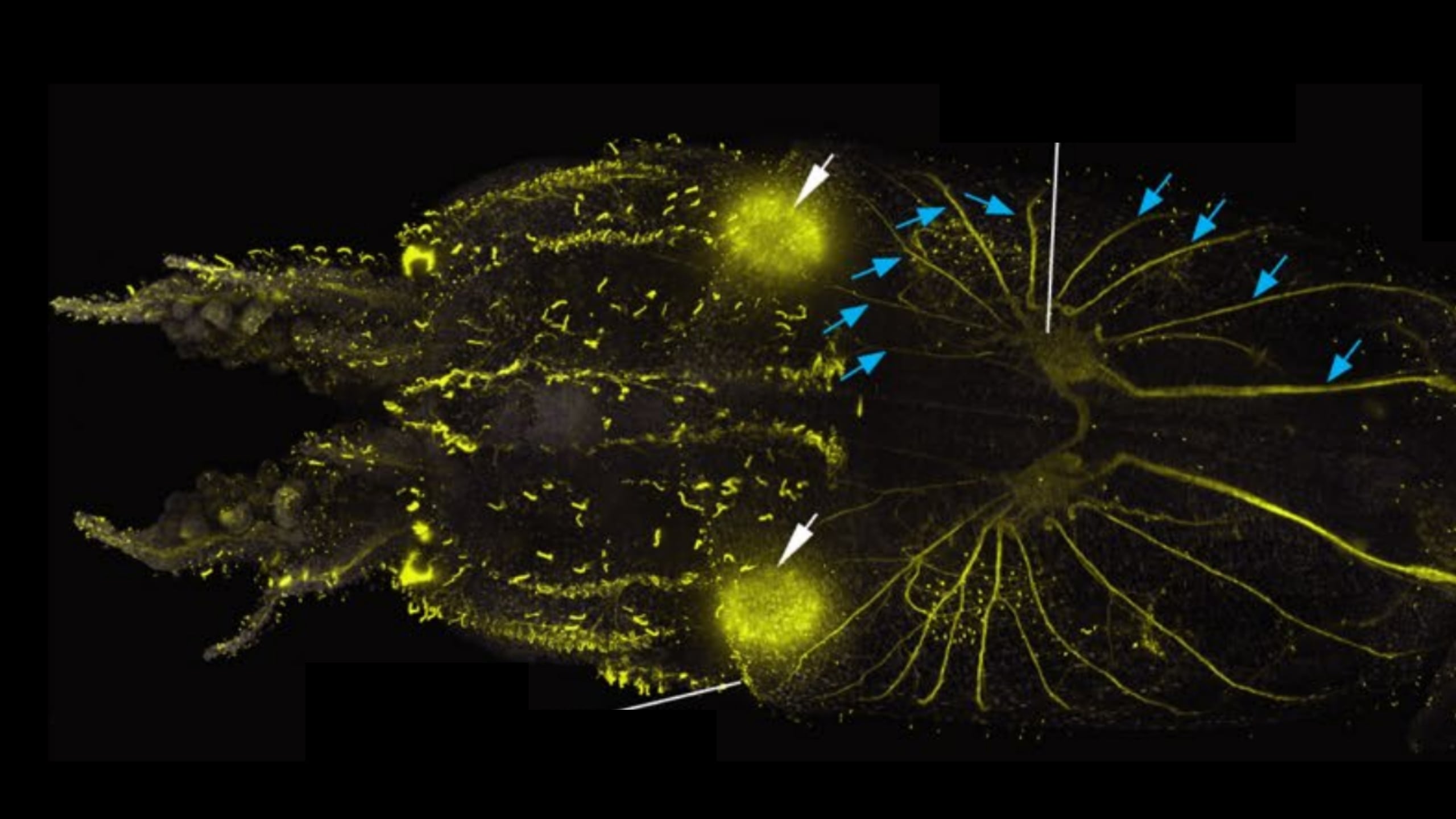
Researchers at Case Western Reserve University found sensory cells with hair-like bundles across squid bodies, not only on their heads and arms.
The team used light-sheet microscopy to make detailed images and map the network.
Squid use these cells to detect movement in the surrounding water, which can carry information about nearby prey and currents.
Humans have similar hair cells inside the cochlea, a part of the inner ear that helps turn sound vibrations into signals for the brain.
In both squid and humans, hair bundles vary in length; in human ears, bundle length is linked to the sound pitches cells detect.
The discovery may help researchers study how these delicate structures are built and maintained, and why damage to them can cause hearing loss.
The findings offer a new way to investigate hearing, but the research does not establish exactly how squid tune their cells to different water movements.

Researchers found hundreds of previously unknown hair cells across the squid’s body, extending the sensory network beyond its head and arms.
The team produced the first complete map of squid lateral lines, arrays of sensory cells called hair cells.
The cells detect water movement, and their hair bundles vary in length.
Researchers say the findings may help explain how human hearing works and how hearing loss occurs.
- Who
- Brian McDermott and colleagues at Case Western Reserve University.
- What
- They mapped hair cells across the squid’s body, finding hundreds more than previously known.
- When
- The study was published in 2026.
- Where
- The research focused on the longfin inshore squid; part of the work took place at the Marine Biological Laboratory in Woods Hole, Massachusetts.
- Why
- The researchers hope the squid’s sensory cells may provide insights into how human hearing works and how hearing loss occurs.
This story does not have two clearly opposing sides.
Often, when a child is born deaf or a hearing person loses their hearing, it is the hair bundle that has been damaged
Squid are cephalopods with a diverse population of hair cells on the surface of their bodies, which may yield insights not only into how these fascinating animals detect water movement to survive, but also into how hearing and deafness occur in humans
This story does not have a timeline yet.
- Research team
- Brian McDermott and colleagues at Case Western Reserve University
- Study journal
- Current Biology
- Sensory cells
- Hundreds more than previously known
- Mapping method
- Light sheet microscopy
- Research location
- Marine Biological Laboratory, Woods Hole, Massachusetts
Sources
Related news
Bellbird and Seriema Among the Loudest Birds Measured

Survey finds only 83 mature cheetahs across a vast area of South Africa

British Columbia rogue wave was nearly three times taller than nearby waves

Detached sea cucumber tissue remained active for more than three years

New book examines the survival skills of 75 fierce forms of nature

Researchers confirm a new giant waterlily species in Colombia

Air pollution reaches ‘very poor’ levels in towns near Manaus

Showers and morning fog forecast in parts of Türkiye
Young Puerto Rican parrot rescued from invasive boa

Warm, mostly sunny weather forecast across the Netherlands this week

Amazonas fires rise 271% in the first 10 days of October