Science & Tech · Science & Environment · 14 hrs ago
Global timekeepers plan to end leap seconds from 2027
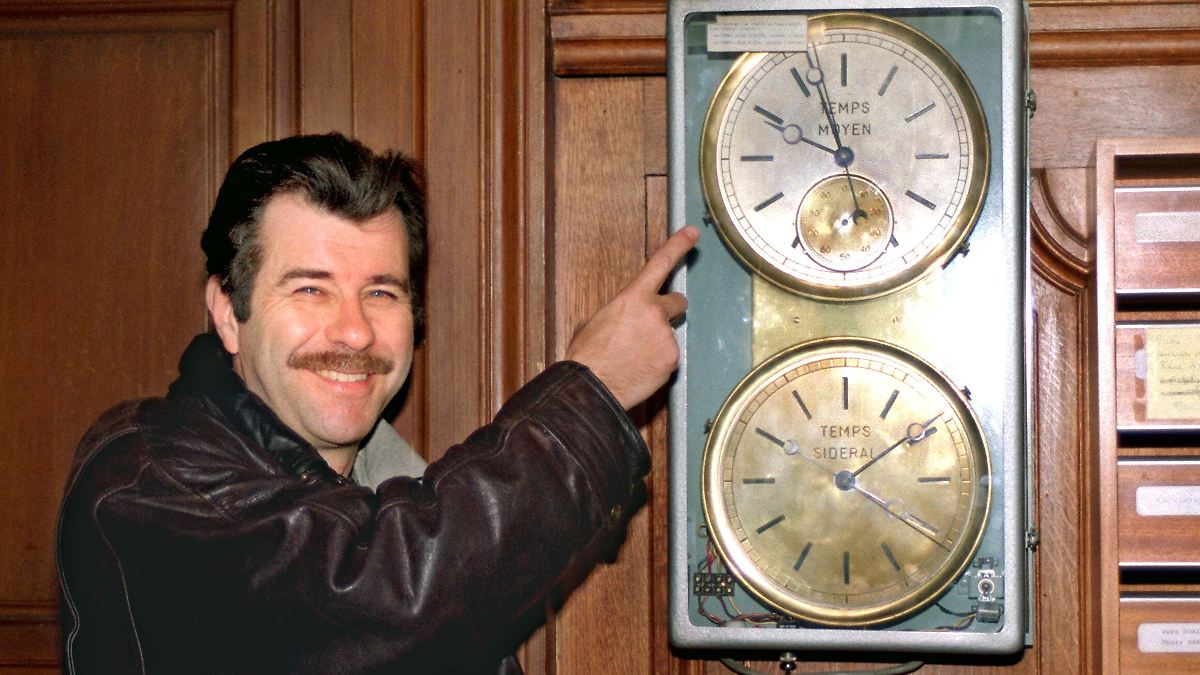
Timekeepers use atomic clocks to set Coordinated Universal Time, or UTC, while astronomical time is based on Earth’s rotation.
Because Earth’s rotation varies slightly, the two time scales can drift apart.
Since 1972, 27 leap seconds have been added to keep the difference within 0.9 seconds.
These adjustments are usually unnoticed by people but can disrupt computer systems and critical services.
Earth’s rotation has sped up slightly in recent years, raising the possibility that timekeepers may need to subtract a second for the first time.
The General Conference on Weights and Measures proposes ending leap seconds and allowing UTC to drift by up to an hour from astronomical time.
It is due to confirm the change on October 15, with the proposed new rule taking effect on May 20, 2027; the growing gap would matter mainly to people working with astronomical time.

The General Conference on Weights and Measures plans to end leap seconds from 20 May 2027.
The change would allow Coordinated Universal Time to differ from astronomical time by up to 3,600 seconds.
Leap seconds have been used since 1972 to keep atomic-clock time aligned with time measured by Earth’s rotation.
The conference says a possible first-ever negative leap second could require costly technical preparations and pose risks to computer systems and critical infrastructure.
A final confirmation was due on 15 October in Versailles.
- Who
- The General Conference on Weights and Measures is proposing the change.
- What
- It plans to stop using leap seconds and allow UTC to differ from astronomical time by up to one hour.
- When
- The proposed change would take effect on 20 May 2027. Final confirmation was due on 15 October 2026.
- Where
- Versailles, France, where the final confirmation was due to take place.
- Why
- To avoid risks and technical costs linked to possible leap-second adjustments, including a negative leap second.
This story does not have two clearly opposing sides.
critical infrastructure such as energy supply, telecommunications or transport also need a constant time without adjustments
The leap-second procedure was introduced.
The most recent leap second was inserted.
Final confirmation of the proposal was due in Versailles.
The proposed end of leap seconds would take effect.
- Leap-second procedure began
- 1972
- Leap seconds inserted
- 27
- Most recent leap second
- End of 2016
- Proposed end date
- 20 May 2027
- Maximum proposed UTC–UT1 difference
- 3,600 seconds
Sources
Related news

Researchers map hair-like sensory cells across squid bodies

Bellbird and Seriema Among the Loudest Birds Measured

Survey finds only 83 mature cheetahs across a vast area of South Africa
British Columbia rogue wave was nearly three times taller than nearby waves

Detached sea cucumber tissue remained active for more than three years

New book examines the survival skills of 75 fierce forms of nature

Researchers confirm a new giant waterlily species in Colombia

Air pollution reaches ‘very poor’ levels in towns near Manaus

Showers and morning fog forecast in parts of Türkiye

Young Puerto Rican parrot rescued from invasive boa

Warm, mostly sunny weather forecast across the Netherlands this week