

Business · Markets · 9 hrs ago
Berkeley shares rise 70% as investors bet election may revive stalled uranium mine
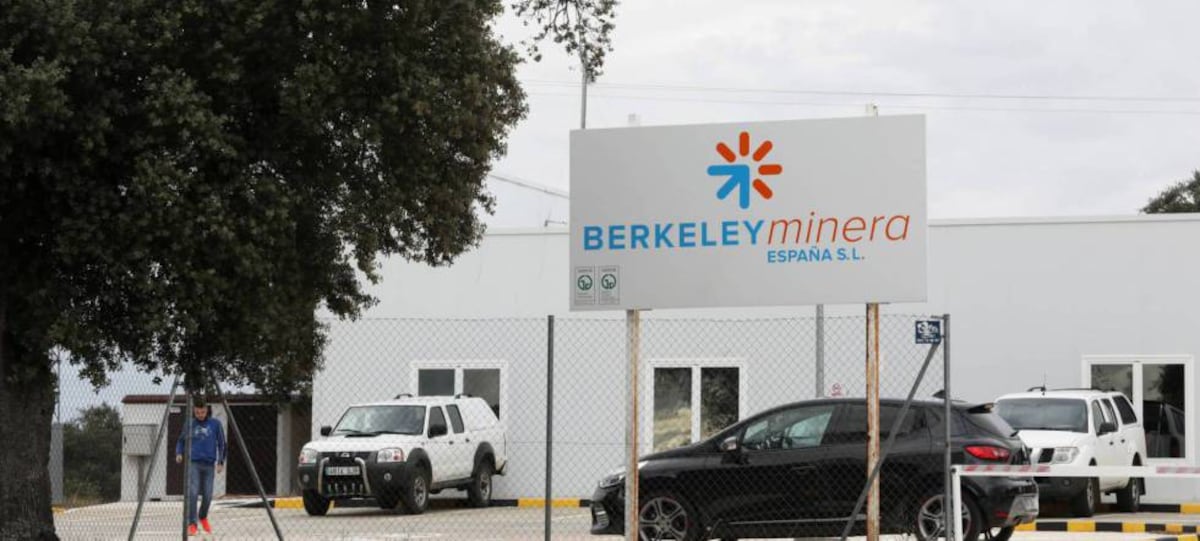
Berkeley Energy shares have risen more than 70% since Spain called a general election on 2 October.
The Australian company wants to develop a uranium mine in Retortillo, in the province of Salamanca, but it still cannot begin mining.
Investors appear to be betting that a change of government could remove some barriers, as they did after an earlier election announcement in 2023.
In 2021, Spain’s environment ministry refused permission to build the uranium-processing plant after the Nuclear Safety Council found serious problems with its safety analysis.
The company also needs other permits, and two it had previously obtained were overturned by courts in 2023.
Berkeley has taken Spain to international arbitration and is seeking about $1.25 billion, arguing that the state breached the Energy Charter Treaty.
The mine’s future remains uncertain, despite the share-price rise: the company reported a loss of 8.7 million Australian dollars for the year to June 2026 and has no active mine or uranium sales.

Berkeley Energía shares have risen more than 70% since Spain’s general election was called, as investors speculate that a change of government could help revive the company’s stalled uranium mine project.
The Australian company has not obtained the necessary approvals to operate its planned mine in Salamanca and has no active mining operations or mineral sales.
On Tuesday, the shares rose as much as 15% before closing down 3.9%.
Spain’s Ministry for Ecological Transition rejected construction approval for the uranium processing plant in 2021, citing a binding unfavorable assessment from the Nuclear Safety Council.
Berkeley is pursuing international arbitration against Spain and says it is seeking about $1.25 billion.
- Who
- Berkeley Energía, an Australian mining company, and its investors.
- What
- Berkeley shares have risen more than 70% amid speculation that a change of government could unblock its planned uranium mine.
- When
- Since October 2; the article was published on October 13, 2026.
- Where
- The planned mine is in Salamanca, Spain, including a processing plant in Retortillo.
- Why
- Investors expect a possible change of government to ease obstacles to developing the mine.
Investors betting on a possible government change
Spanish authorities opposing or withholding approvals
Mine project
Investors betting on a possible government change
Investors speculate a new government could help unblock the project.
Spanish authorities opposing or withholding approvals
Authorities have withheld or denied approvals; the Nuclear Safety Council cited deficiencies in safety analyses.
Prospects for development
Investors betting on a possible government change
Investors’ expectations have accompanied a rise of more than 70% in the shares.
Spanish authorities opposing or withholding approvals
A change in the central government would not guarantee the mine could operate because other permits are needed.
Spain’s Ministry for Ecological Transition denied construction approval for the uranium processing plant in Retortillo.
Berkeley shares rose sharply amid speculation following an early general election, and two permits the company had obtained were later annulled by courts.
Berkeley began international arbitration proceedings against Spain at the International Centre for Settlement of Investment Disputes.
The day before the election was called, according to the article, and the starting point for the reported share-price rise.
Berkeley shares rose as much as 15% before closing down 3.9%.
- Share-price change
- More than 70% rise since October 2
- Tuesday share move
- Rose as much as 15%; closed down 3.9%
- Planned mine
- Salamanca, Spain
- Claim against Spain
- About $1.25 billion
- Latest annual loss
- A$8.7 million for the year ended June 30, 2026
Related
Santander forecast to lead European bank profit growth through 2028
56 mins ago

Sacyr hires Alantra to explore sale of its industrial engineering business
56 mins ago
Alsa says 43.3% of its urban and metropolitan fleet is eco or zero-emission
1 hr ago

Viltex enters Spain’s inheritance search business with 2,000 cases identified
1 hr ago

What people are saying
numerous deficiencies
low reliability