Science & Tech · Science & Environment · 2 hrs ago
US-backed project aims to predict SPARC fusion plasma in under 20 minutes
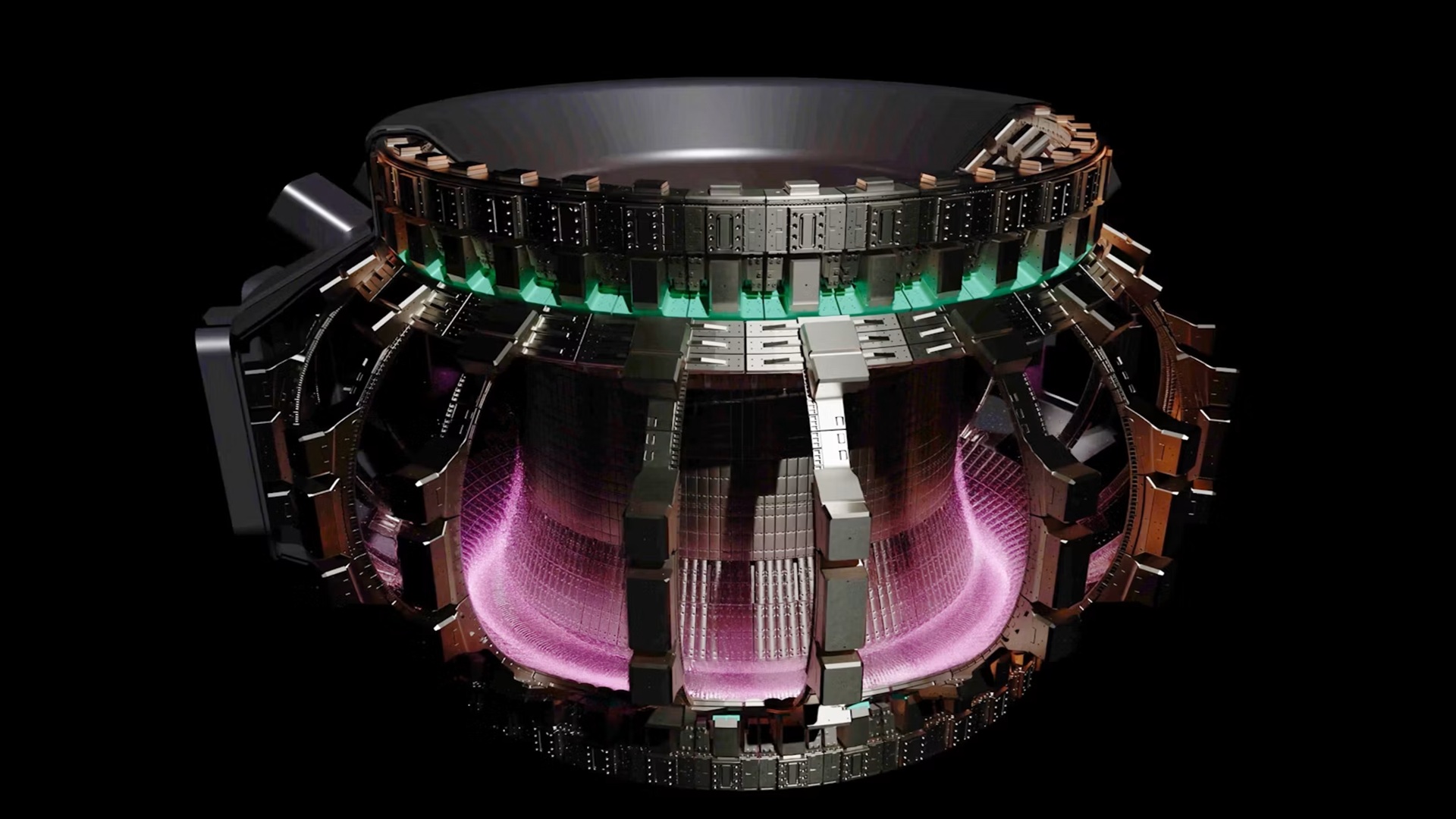
A US Department of Energy-backed project is developing a digital twin, or virtual model, of SPARC, a fusion device being built by Commonwealth Fusion Systems.
SPARC is a tokamak, which uses powerful magnetic fields to contain extremely hot plasma.
The team aims to use physics simulations, experimental data and advanced computing to predict a full plasma operating cycle in under 20 minutes.
That speed could help researchers study results and adjust conditions between experiments.
The model has not yet shown that it can meet the target or make accurate predictions in SPARC.
Before using it there, researchers plan to test and validate the system with data and experiments from Princeton Plasma Physics Laboratory’s NSTX-U facility.
The project is part of the US Department of Energy’s Genesis Mission and could eventually support CFS’s plans for a commercial fusion plant called ARC.

A US Department of Energy-backed project aims to predict a complete plasma pulse inside Commonwealth Fusion Systems’ SPARC reactor in under 20 minutes.
The project will build a digital twin combining physics simulations, experimental data and advanced computing.
The collaboration includes four DOE national laboratories, NVIDIA, Google DeepMind and university researchers.
Researchers plan to test and validate the digital twin workflows using PPPL’s NSTX-U before applying them to SPARC.
SPARC is under construction, and the proposed prediction speed and accuracy have not yet been demonstrated.
- Who
- Commonwealth Fusion Systems is leading the project with DOE national laboratories, technology companies and university researchers.
- What
- The team aims to develop a digital twin that predicts a complete SPARC plasma pulse in under 20 minutes.
- When
- The project is part of the Genesis Mission, which announced its Phase II awards on October 8. The publication date is October 12, 2026.
- Where
- The digital twin is intended for CFS’s SPARC fusion device; researchers will first test workflows using PPPL’s NSTX-U.
- Why
- To help researchers analyze experimental results and prepare adjustments between experiments, and to guide future reactor development.
This story does not have two clearly opposing sides.
The DOE’s Genesis Mission announced its Phase II awards.
Researchers plan to test and validate digital twin workflows using PPPL’s NSTX-U.
- Prediction target
- A complete plasma pulse in under 20 minutes
- Device
- CFS’s SPARC tokamak, currently under construction
- Simulation codes
- M3D-C1, TRANSP and XGC
- Initial test platform
- PPPL’s National Spherical Torus Experiment-Upgrade (NSTX-U)
- Genesis Mission awards
- Phase II awards announced October 8
What people are saying
PPPL will play a central role in this project, contributing foundational software engineering and SI models, core physics models, historical tokamak data and high-performance compute resources
Sources
Related news

Fire ant nest found at freight centre in Sydney’s inner west

Study raises concern offshore wind farms could reduce nearby rainfall

Riken study links limited food in young fruit flies to longer lives

Jonathan the tortoise’s gene switches may offer clues to long life

MathRocks Fest 4.0 to bring science educators to Mexico City in November

Young hammerhead sharks gather near Queensland beaches

China and Russia jointly identify tigers and leopards crossing their border

Balikpapan shortens school hours as wildfire smoke worsens air quality
BAE Systems unveils microwave and artillery systems to counter drone attacks

Texas oilfield wastewater may help cool data centers

South Korea forecast to turn colder and windier on Wednesday