Science & Tech · Science & Environment · 1 day ago
Hunting, low genetic diversity and habitat change drove Scandinavian aurochs losses

Aurochs were wild cattle that once lived across Europe, Asia and northern Africa; today’s farm cattle descend from them.
They disappeared from Scandinavia thousands of years before the species became extinct worldwide, with the last aurochs dying in Poland in the 17th century.
Researchers found that hunting sharply reduced Swedish populations and wiped out aurochs on Denmark’s Zealand island.
But the animals also had low genetic diversity, which began declining as they moved north after the last Ice Age.
Around 8,000 years ago, rising water formed the Danish-Swedish straits and cut off Scandinavia’s aurochs from other European populations.
Forests also replaced open landscapes, while habitats became fragmented and deteriorated.
The findings suggest that species can be pushed toward extinction by several pressures at once, and support conservation measures that connect habitats with ecological corridors.
The study does not set out a specific next step beyond this guidance for wildlife conservation.

Researchers say hunting, low genetic diversity and changing, fragmented habitat combined to drive the early decline of Scandinavian aurochs.
Hunting sharply reduced the Swedish population and contributed to the complete disappearance of aurochs from Zealand.
In southern Sweden, small numbers survived until at least 6,500 years ago as dense forests replaced open landscapes.
The aurochs began colonizing Scandinavia 11,700 years ago, and the migration probably involved a population bottleneck.
The findings support conservation plans that address multiple threats and connect habitats with ecological corridors.
- Who
- An international research team led by Lund University.
- What
- The team found that hunting, depleted genetic diversity and habitat change contributed to the decline of Scandinavian aurochs.
- When
- The decline occurred thousands of years ago; the sources do not state a single date for it.
- Where
- Scandinavia, including Sweden and the Danish island of Zealand.
- Why
- The sources attribute the decline to combined human pressure, low genetic diversity, and habitat fragmentation and deterioration.
This story does not have two clearly opposing sides.
I found it incredibly interesting to see how the genetic diversity of the aurochs decreased as you moved north from mainland Europe up through Jutland and then dropped further across Zealand and Scania. It’s a textbook example of a bottleneck in evolutionary genetics,
These ancient case studies reveal long-term patterns – which species are most vulnerable, how ecosystems shift and transform over time, and when and how human activity began shaping these environments,
Our results add nuance to our understanding of human impact on animal populations. They confirm that species rarely disappear because of a single factor. Conservation plans must therefore be comprehensive and consider multiple stressors at the same time. Our results support the need to establish ecological corridors for threatened wildlife, rather than isolated nature reserves,
Aurochs began colonizing Scandinavia after the last Ice Age, probably through a population bottleneck.
Genetic evidence indicates that Scandinavian aurochs remained in contact with the main European population.
Flooding of the land bridge formed the Danish-Swedish straits and marked the population’s complete isolation.
Small numbers of aurochs survived in southern Sweden.
The final disappearance of aurochs from Poland ended a decline that had lasted 8,000 years.
- Scandinavian colonization
- 11,700 years ago
- Complete isolation
- Around 8,000 years ago
- Southern Sweden survival
- At least 6,500 years ago
- Study publication
- 04 September 2026, The Holocene
- Study DOI
- 10.1177/09596836261477271
Sources
Related news
Researchers map hair-like sensory cells across squid bodies
Bellbird and Seriema Among the Loudest Birds Measured
Survey finds only 83 mature cheetahs across a vast area of South Africa

British Columbia rogue wave was nearly three times taller than nearby waves

Detached sea cucumber tissue remained active for more than three years
New book examines the survival skills of 75 fierce forms of nature

Air pollution reaches ‘very poor’ levels in towns near Manaus
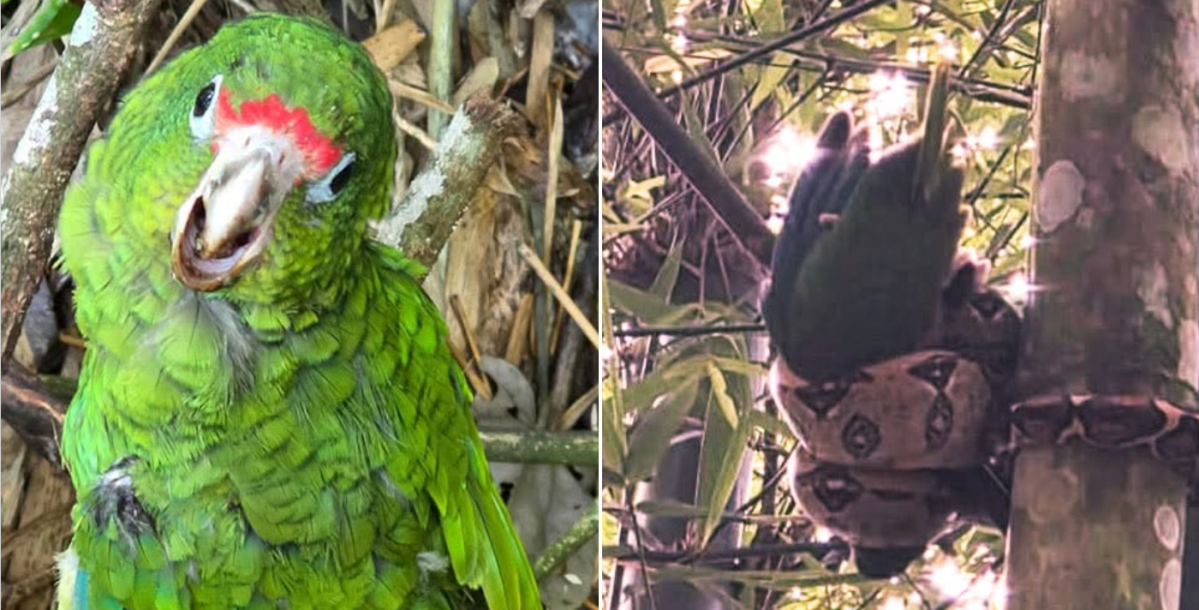
Young Puerto Rican parrot rescued from invasive boa

Warm, mostly sunny weather forecast across the Netherlands this week

Researchers confirm a new giant waterlily species in Colombia

Amazonas fires rise 271% in the first 10 days of October