

Science & Tech · Space · 2 hrs ago
CHIME detects ancient hydrogen that could help probe dark energy
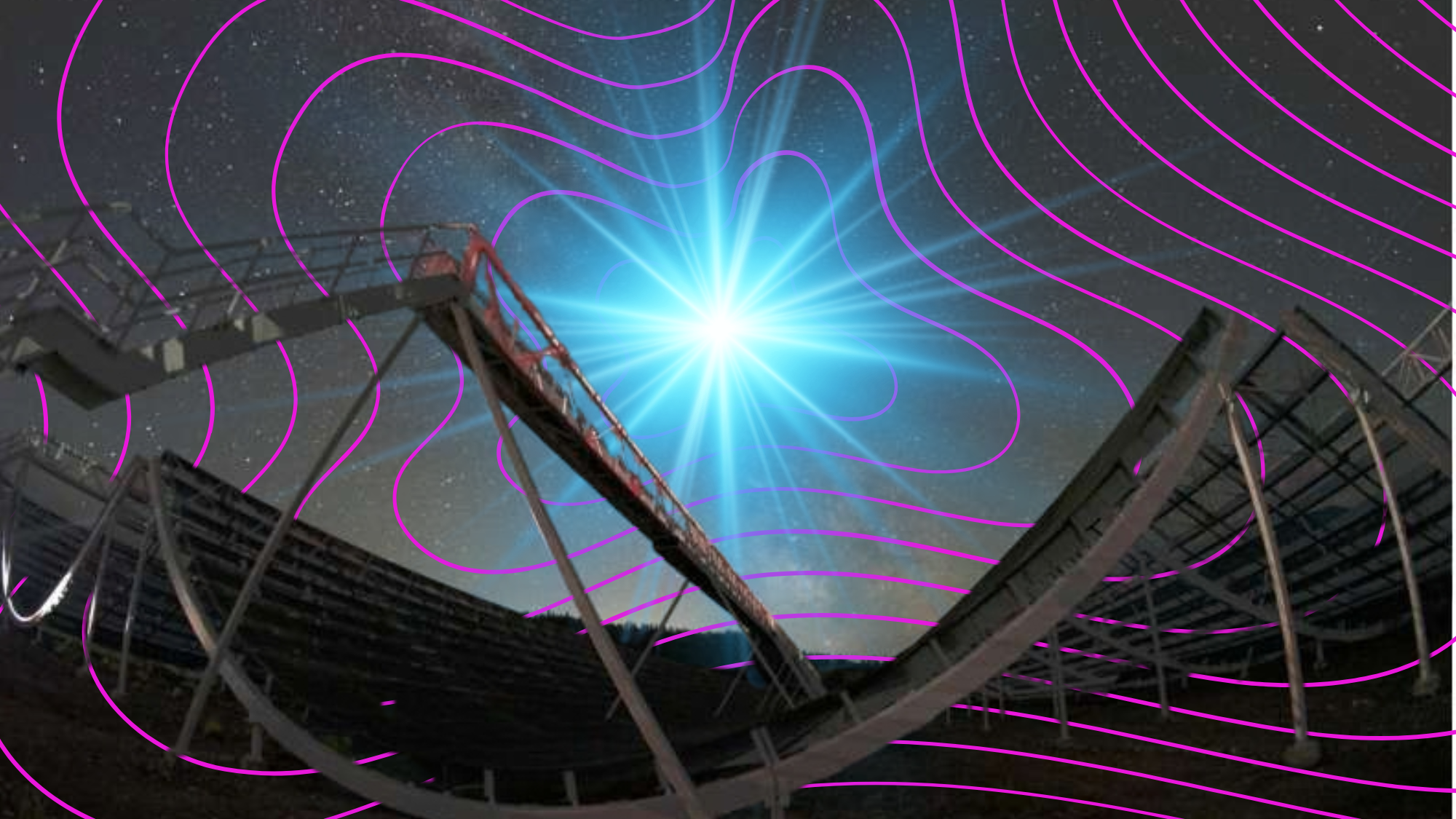
The CHIME telescope detected a faint radio signal from hydrogen in the early universe without relying on data from other telescopes.
CHIME is a Canadian-built instrument designed to investigate dark energy, the force linked to the universe’s accelerating expansion.
Hydrogen’s radio glow can show scientists how matter was spread across space in the past.
The team used 94 nights of observations from 2019 to detect the signal, from when the universe was about 5 billion years old.
Their measurements suggest about 2% of hydrogen was neutral atomic hydrogen at that time, broadly consistent with other measurements.
Previously, mapping this hydrogen required combining CHIME data with galaxy surveys, which can cost millions of dollars and cover only certain regions.
Using CHIME on its own could make dark energy research faster and less expensive, and the team has begun exploring its data for this purpose.

The CHIME experiment has shown it can detect faint radio emissions from hydrogen in the distant universe without relying on galaxy survey data.
The technique could offer a faster, less expensive way to investigate dark energy, which drives the universe’s accelerating expansion.
Using 94 nights of observations from 2019, researchers detected a hydrogen signal from when the universe was about 5 billion years old.
The team said roughly 2% of the hydrogen was in neutral atomic form at that time, broadly consistent with other measurements.
- Who
- Researchers with the Canadian Hydrogen Intensity Mapping Experiment (CHIME), including Mark Halpern, Arnab Chakraborty and Shabbir Shaikh.
- What
- CHIME detected faint radio emissions from ancient hydrogen on its own, a technique that could help investigate dark energy.
- When
- The signal was detected using 94 nights of observations from 2019. The article was published on 2026-10-13.
- Where
- The observations concern the distant universe. CHIME was conceived and built by Canadians.
- Why
- The detection could help scientists study dark energy and the distribution of matter across space.
This story does not have two clearly opposing sides.
Researchers used 94 nights of CHIME observations to detect a hydrogen signal from when the universe was about 5 billion years old.
Space.com reported that CHIME had demonstrated it could map the hydrogen radio glow without galaxy survey data.
- Instrument
- Canadian Hydrogen Intensity Mapping Experiment (CHIME)
- Observations
- 94 nights from 2019
- Age of universe at signal
- About 5 billion years
- Neutral atomic hydrogen
- Roughly 2% of hydrogen at that time
What people are saying
This is a completely new technique for probing the cosmos, delivered by an instrument that was conceived and built by Canadians.
Its faint radio emission acts like a cosmic tracer, revealing how matter is distributed across space.
Our data indicate that roughly 2% of the hydrogen in the universe was in neutral atomic form at this time, broadly consistent with other measurements.
Sources
Related news

Hubble data point to a possible second-generation planet around a white dwarf

NASA’s Perseverance rover sets record with 45.2km driven on Mars

New simulations suggest rare process forms Mars's giant Arsia Mons cloud

Aquarius is best seen on autumn evenings in the Northern Hemisphere

Landsat 9 captures a mosaic of farms around Taiwan’s longest river

Hubble captures a galaxy cluster that looks like a cosmic smile

Scientists say some planets may be more habitable than Earth

French astronaut Sophie Adenot says space brought a full range of emotions

NASA releases nearly 800 GB of Artemis II lunar data

SpaceX set to send solar arrays and supplies to the space station

Webb finds an unusually dense galaxy cluster in the early universe