Health · Medical Research · 1 hr ago
Study finds existing food preferences can hinder learning new food values
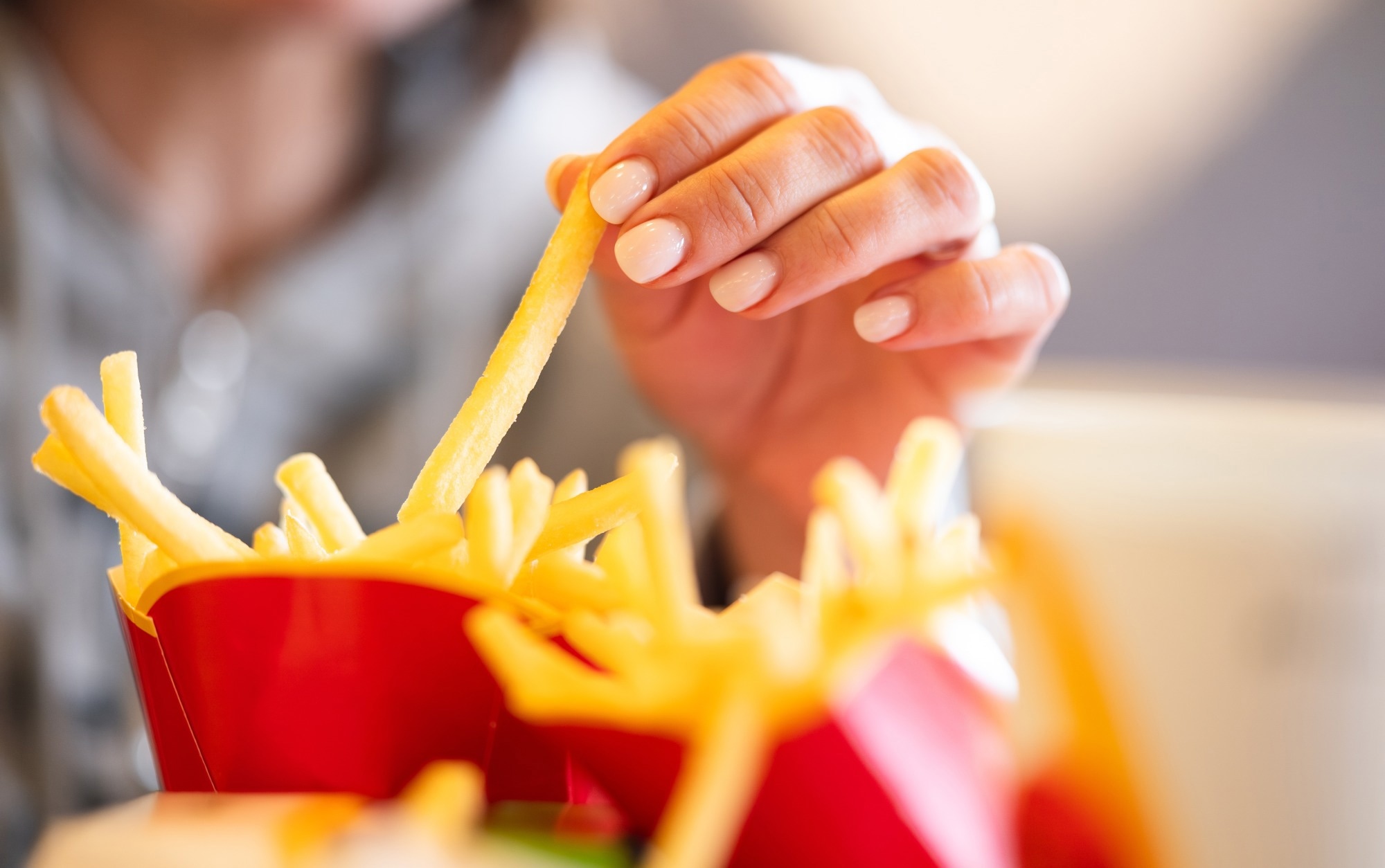
Researchers at Yale University studied how 279 adults learned new associations between snack foods and outcomes.
Participants first rated pictures of snacks, then predicted whether each of four selected foods would bring a positive or negative point value.
The point values had no monetary value, but participants could earn a bonus for accurate predictions.
The associations sometimes matched participants’ preferences and sometimes were reversed, without warning them when the switch would happen.
Participants made more accurate predictions when outcomes matched their existing preferences, and liking a food made it harder to learn an association that went against that preference.
This suggests familiar food preferences can influence how people respond to new information, which may matter for efforts to encourage healthy eating.
The study did not state what happens next.

A study of 279 adults found that existing food preferences can make it harder to learn new associations between foods and outcomes.
Participants predicted outcomes more accurately when the outcomes matched their existing likes and dislikes.
For liked foods, accuracy was higher when the outcomes matched preferences than when they conflicted with them.
The researchers said the pattern reflected stronger adherence to existing preferences, not greater flexibility.
The study was published in Communications Psychology.
- Who
- Researchers at Yale University studied 279 adults.
- What
- The study examined how existing food preferences affect learning when food-outcome associations change.
- When
- Participants were recruited in 2024–25. The study was published on October 13, 2026.
- Where
- Yale University in the United States conducted the research.
- Why
- Researchers aimed to understand how flexibly people update existing food values and how preferences affect that learning.
This story does not have two clearly opposing sides.
Researchers recruited participants in two cohorts and asked them to rate images of snack items.
Participants predicted outcomes linked to four selected foods while associations changed across blocks.
News-Medical reported on the study published in Communications Psychology.
- Participants
- 279 adults
- Mean age
- 37.6 years
- Study period
- 2024–25
- Food images rated
- 65 snack items
- Learning task
- Six blocks, with three congruent and three incongruent blocks
- Journal
- Communications Psychology
Sources
Related news

Pope Leo to have surgery to remove an early-detected lung nodule

Pope Leo XIV to have surgery to remove early-stage lung nodule

Favorite music linked to lower pain during needle procedures

‘Double diabetes’ combines type 1 diabetes with insulin resistance
Deworming Drug Slows Growth of Drug-Resistant Lung Cancer in Mice

Woman gives birth after ovarian tissue frozen for more than 20 years
Higher Weight at Dementia Diagnosis Linked to Lower Risk of Death

Four-week study tracks nighttime movement in dogs and their owners

Nearly One-Third of Older Adults With Cognitive Disorders Still Take Risky Drugs

Pregnancy diet linked to lower odds of babies having both colic and eczema

Yoga before bariatric surgery linked to lower noradrenaline levels