

Health · Medical Research · 1 hr ago
Gut Inflammation Reactivated Dormant Breast Cancer Cells in a Mouse Model
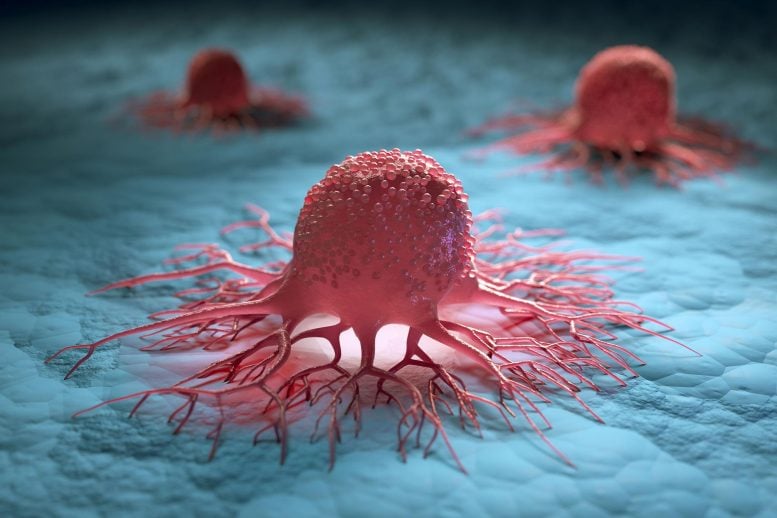
Breast cancer cells can spread to bone marrow and remain inactive for years after treatment of the original tumor.
Researchers at the Francis Crick Institute tested whether inflammation elsewhere in the body could disturb this dormancy.
In mice, gut inflammation triggered changes in a model of bone marrow and led more dormant breast cancer cells to begin dividing.
The team linked this effect to HMGB2, a molecule that stimulates cell growth.
They also found HMGB2 near actively dividing cancer cells in bone samples from people with breast or prostate cancer, but the mouse experiment does not show that gut inflammation causes cancer relapse in people.
The findings suggest that immune responses to inflammation may alter the environment around dormant cancer cells and could help explain how they become active again.

Researchers at the Francis Crick Institute found that gut inflammation reactivated dormant breast cancer cells in a mouse model.
The team used engineered bone tissue containing dormant metastatic cells to study how changes elsewhere in the body affect them.
Gut inflammation prompted the model’s bone tissue to produce more immune cells, while more dormant cancer cells began dividing.
The researchers identified HMGB2, a molecule linked to cell growth, as a factor that promoted cancer cell reactivation.
The findings suggest that immune responses to inflammation may disrupt the environment that keeps metastatic cancer cells dormant.
- Who
- Researchers at the Francis Crick Institute, including Ilaria Malanchi’s group.
- What
- Gut inflammation reactivated dormant breast cancer cells in a mouse model. The researchers linked the effect to increased immune cell production and HMGB2.
- When
- The study was published in Cell Reports in 2026. The exact date of the experiments is not stated.
- Where
- In a mouse model using engineered bone tissue grown beneath the skin.
- Why
- Inflammation prompted bone tissue to produce more immune cells and reorganize. HMGB2, whose levels rose, also promoted cancer cell reactivation.
This story does not have two clearly opposing sides.
Researchers developed an extramedullary bone model using bone tissue grown from skeletal stem cells beneath the skin.
The team added cells from a mouse mammary tumor to the replica bone, and most entered a dormant state.
Researchers induced intestinal colitis in mice whose replica bone hosted dormant metastatic cells.
The bone produced more immune cells, and more dormant cancer cells began dividing.
- Research institute
- Francis Crick Institute
- Study journal
- Cell Reports
- Model
- Engineered bone tissue grown beneath the skin in mice
- Inflammation trigger
- Intestinal colitis
- Molecule identified
- HMGB2
What people are saying
Cancer cells that have moved to another part of the body can stay dormant for years after the original tumor has been treated
It’s a worrying period for people, as they don’t know if these metastatic cells will reactivate, leading to a relapse.
We can’t wait five years to see if dormant cancer cells reactivate in mice, as this exceeds their lifespan
Even without inflammation elsewhere in the body, just the increased HMGB2 in the artificial bone was enough to stimulate more cancer cells to activate
Sources
Related news

Pope Leo to have surgery to remove an early-detected lung nodule

Woman gives birth after ovarian tissue frozen for more than 20 years
Higher Weight at Dementia Diagnosis Linked to Lower Risk of Death

Nearly One-Third of Older Adults With Cognitive Disorders Still Take Risky Drugs
Gut lining may remain vulnerable after IBD symptoms improve

Pope Leo XIV to have surgery to remove early-stage lung nodule

Researchers Seek Consensus on Sauna Health Benefits

YouTuber Pirulla describes recovery after severe ischemic stroke

HPV-vaccinated women had lower pregnancy risks in Swedish study

Pope Leo XIV to have lung nodule removed in surgery this week

Study links ADHD in adults over 50 to higher risk of cognitive impairment
