

Health · Medical Research · 1 hr ago
Four-week study tracks nighttime movement in dogs and their owners
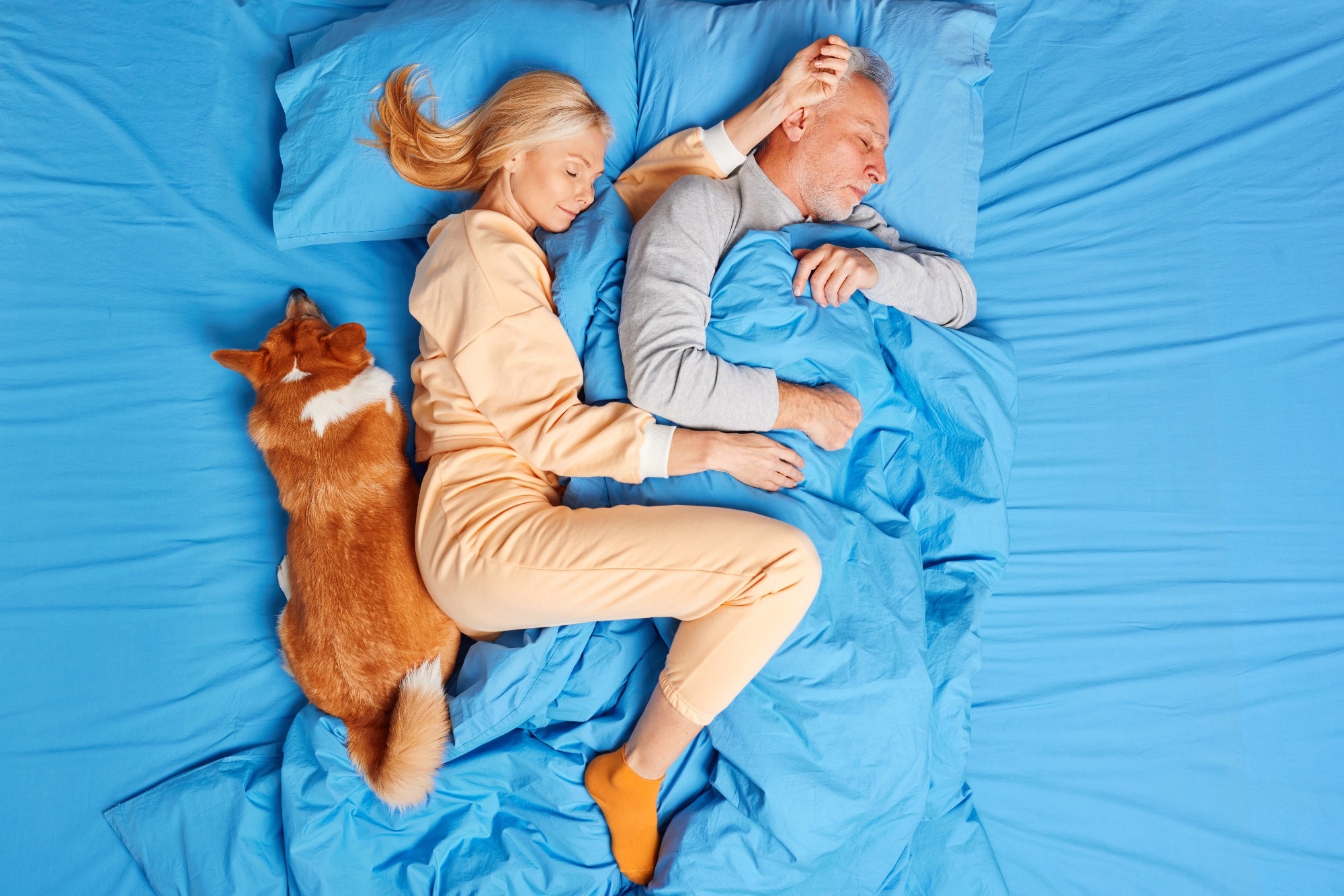
Researchers at the University of Toronto studied nighttime movement in people and their dogs in Ontario, Canada.
They recruited 25 adults and 38 huskies or malamutes and tracked activity for about four weeks in 2021.
People wore activity monitors on their wrists, while the dogs wore sensor-fitted collars.
The study examined whether sleeping arrangements and household details were linked to human sleep quality and dogs’ nighttime activity.
The monitors recorded movement, but they could not show directly whether a dog was asleep or awake.
In a questionnaire, nearly half of the adults said their dogs interrupted their sleep, while 72% said they felt safer with their dogs.
The study aimed to examine who moved first at night, but the available findings do not state what the activity analysis showed.

Researchers at the University of Toronto tracked nighttime movement in dogs and their owners for about four weeks.
The study recruited 25 adults and 38 dogs in Ontario, Canada.
From November 2 to December 9, 2021, participants wore activity sensors and researchers recorded movement in one-minute intervals.
The researchers examined how human and dog activity related in time, as well as sleep quality and household characteristics.
The dog sensors measured activity and inactivity, not sleep directly.
- Who
- Researchers at the University of Toronto studied 25 adults and 38 dogs.
- What
- The study tracked nighttime movement and examined its relation to human sleep quality and household characteristics.
- When
- Monitoring took place from November 2 to December 9, 2021. The article was published on October 12, 2026.
- Where
- The participants were from Ontario, Canada.
- Why
- The researchers sought to examine how humans and dogs time their nighttime activity and how sleeping arrangements relate to sleep and activity.
This story does not have two clearly opposing sides.
Researchers recruited adults and dogs from Ontario.
Sensors monitored human and dog activity for approximately four weeks.
News-Medical published its article about the study.
- Participants
- 25 adults and 38 dogs
- Location
- Ontario, Canada
- Monitoring period
- November 2–December 9, 2021
- Sensor interval
- Movement recorded in one-minute intervals
- Human-dog pairs
- 36 pairs in the final objective activity analyses
What people are saying
Who is disrupting whom? Examining the nighttime activity patterns of humans and their dogs
Sources
Related news

Pope Leo XIV to have surgery to remove early-stage lung nodule

Pope Leo to have surgery to remove an early-detected lung nodule
‘Double diabetes’ combines type 1 diabetes with insulin resistance

Study finds existing food preferences can hinder learning new food values
Deworming Drug Slows Growth of Drug-Resistant Lung Cancer in Mice

Woman gives birth after ovarian tissue frozen for more than 20 years
Higher Weight at Dementia Diagnosis Linked to Lower Risk of Death

Nearly One-Third of Older Adults With Cognitive Disorders Still Take Risky Drugs

Pregnancy diet linked to lower odds of babies having both colic and eczema

Yoga before bariatric surgery linked to lower noradrenaline levels
Gut Inflammation Reactivated Dormant Breast Cancer Cells in a Mouse Model
