Science & Tech · Space · 4 hrs ago
NASA predicts two solar eclipses in 2027
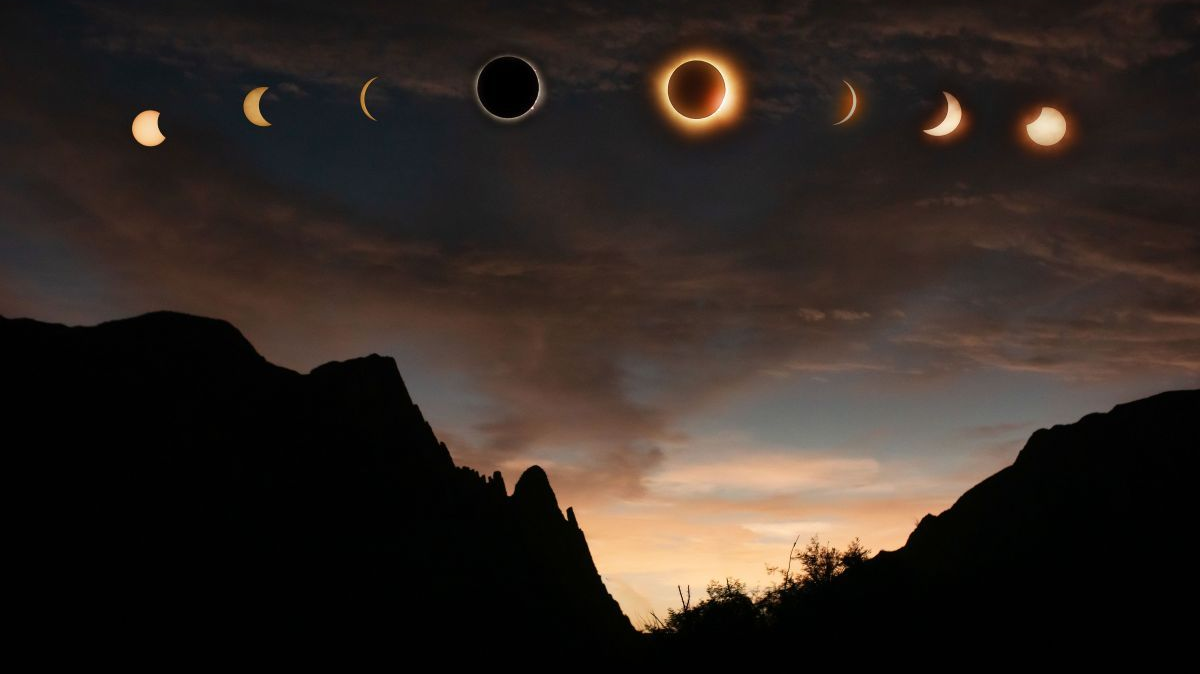
NASA predicts two solar eclipses in 2027.
An annular eclipse is expected on Feb.
6, followed by a total eclipse on Aug.
2.
Both happen when the Sun, Moon and Earth line up.
In a total eclipse, the Moon fully covers the Sun, while an annular eclipse leaves a bright ring visible.
NASA predicts the August total eclipse will last 6 minutes 23 seconds, making it one of the longest total eclipses.
The February annular eclipse is expected to last 7 minutes 51 seconds, also among the longest of its kind.

NASA predicts two solar eclipses in 2027, an annular eclipse on February 6 and a total eclipse on August 2.
The total eclipse is predicted to last 6 minutes and 23 seconds, while the annular eclipse is expected to last 7 minutes and 51 seconds.
A total eclipse occurs when the Moon fully covers the Sun, while an annular eclipse leaves a ring of sunlight visible.
The annular eclipse occurs when the Moon is at or near its farthest point from Earth and appears too small to cover the Sun completely.
- Who
- NASA predicts the eclipses.
- What
- An annular solar eclipse and a total solar eclipse are expected.
- When
- February 6 and August 2, 2027.
- Where
- Not stated.
- Why
- They occur when the Sun, Moon and Earth align; the Moon’s position relative to Earth determines the type of eclipse.
This story does not have two clearly opposing sides.
NASA predicts an annular solar eclipse lasting 7 minutes and 51 seconds.
NASA predicts a total solar eclipse lasting 6 minutes and 23 seconds.
- First eclipse
- Annular solar eclipse on February 6, 2027
- First eclipse duration
- 7 minutes 51 seconds
- Second eclipse
- Total solar eclipse on August 2, 2027
- Second eclipse duration
- 6 minutes 23 seconds
Sources
Related news
Perseverance rover sets record for driving distance on another world

SpaceX set to send solar arrays and supplies to the space station
SpaceX rocket plume creates a glowing ‘jellyfish’ in the dawn sky
NASA astronaut photographs auroras from the ISS with an iPhone

Hubble data point to a possible second-generation planet around a white dwarf
ORBES plans to send robots to the ISS and capture exterior footage

Vast engineer Brianna Clark works on technology for future space living
FAA analyst Kayla Bigham works to keep commercial spaceflight safe
Gold nanogap sensor distinguishes amino acid handedness
Halley's Comet disappointed many viewers in 1986 but advanced astronomy
New simulations suggest rare process forms Mars's giant Arsia Mons cloud