

Science & Tech · Space · 6 hrs ago
Experiment tests how water behaves in simulated lunar gravity
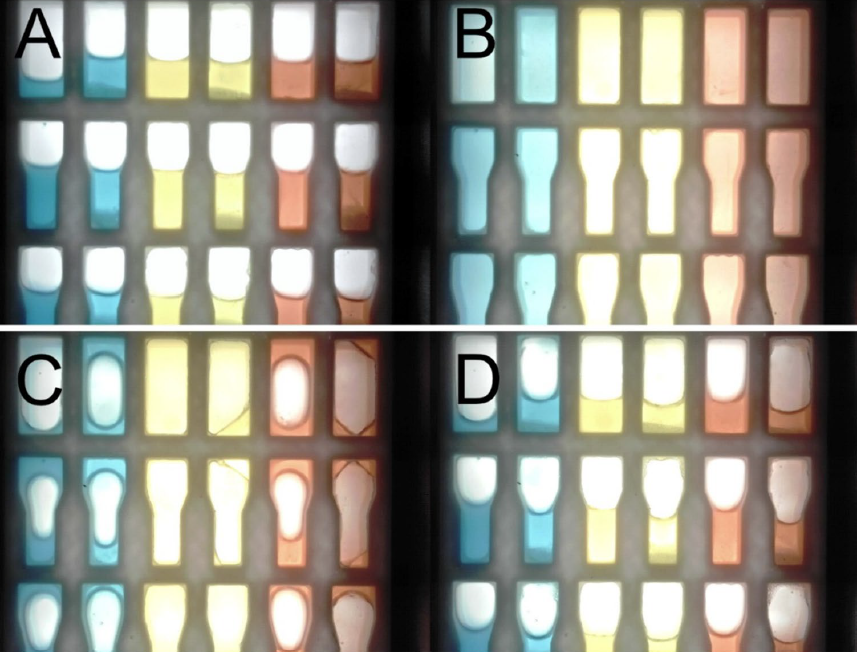
Researchers led by Karl Hasenstein of the University of Louisiana at Lafayette studied how water behaves in the Moon’s low gravity.
Their findings were published in the journal Microgravity Science and Technology.
Growing plants could help future astronauts get fresh food on the Moon, but water moves differently in low gravity than it does on Earth or in the near-weightlessness of the International Space Station.
Testing on the Moon is difficult, and brief flights that simulate low gravity do not last long enough for useful observations.
The team instead used an uncrewed New Shepard capsule in February 2025, which spun to create simulated lunar gravity for about two minutes.
Their experiment recorded how water, salt water and a glycerol solution moved in small test cavities, and the water’s curved surface was rounder than in stronger gravity.
Understanding this behavior could help researchers work out how to supply water to plant roots in lunar soil.

Researchers tested how water behaves in simulated lunar gravity during an uncrewed New Shepard flight.
The experiment used a capsule spinning at around 11 revolutions per minute to create an acceleration similar to lunar gravity.
It held 18 test cavities containing three different liquids and used a camera to record their menisci.
The findings may help researchers understand how to supply water to plants growing in lunar soil.
The research team was led by Karl Hasenstein of the University of Louisiana at Lafayette.
- Who
- A research team led by Karl Hasenstein of the University of Louisiana at Lafayette, including John Kiss and Christopher McKay.
- What
- The team tested how different liquids behave in simulated lunar gravity.
- When
- The flight experiment took place in February 2025. The paper was published recently, according to the article.
- Where
- Inside the uncrewed New Shepard 29 capsule, in simulated lunar gravity.
- Why
- To better understand how water behaves at lunar gravity, including how it might support plant growth on the Moon.
This story does not have two clearly opposing sides.
No direct quotes in the coverage so far.
After booster separation, the New Shepard 29 capsule spun to create simulated lunar gravity while the experiment ran for around two minutes.
Universe Today published an article about the experiment and the research paper.
- Mission
- New Shepard 29
- Simulated acceleration
- Around 1.76 m/s2
- Capsule spin
- Around 11 RPM
- Experiment duration
- Around two minutes
- Test cavities
- 18
- Liquids
- Deionized water, 30% glycerol solution and 0.8% saline solution
Sources
Related news
Taurid meteor showers may bring bright fireballs in November 2026

Former Apollo astronaut says he believes UFOs are demonic

SpaceX set for Dragon cargo launch from Florida's Space Coast
New measurement finds primordial helium makes up 24.58% of early matter

SpaceX lists CRS-35 mission

French astronaut Sophie Adenot says space brought a full range of emotions

Starlink's India launch remains on hold as security reviews continue
Voskhod 1 carries the first three-person crew into space

NASA releases nearly 800 GB of Artemis II lunar data

Astronomers trace record-distant radio burst to a young galaxy
Satellite image shows Namibia’s Etosha Pan in vivid false colors
