

Science & Tech · Science & Environment · 2 hrs ago
Researchers try to restore California kelp forests by reintroducing sunflower sea stars
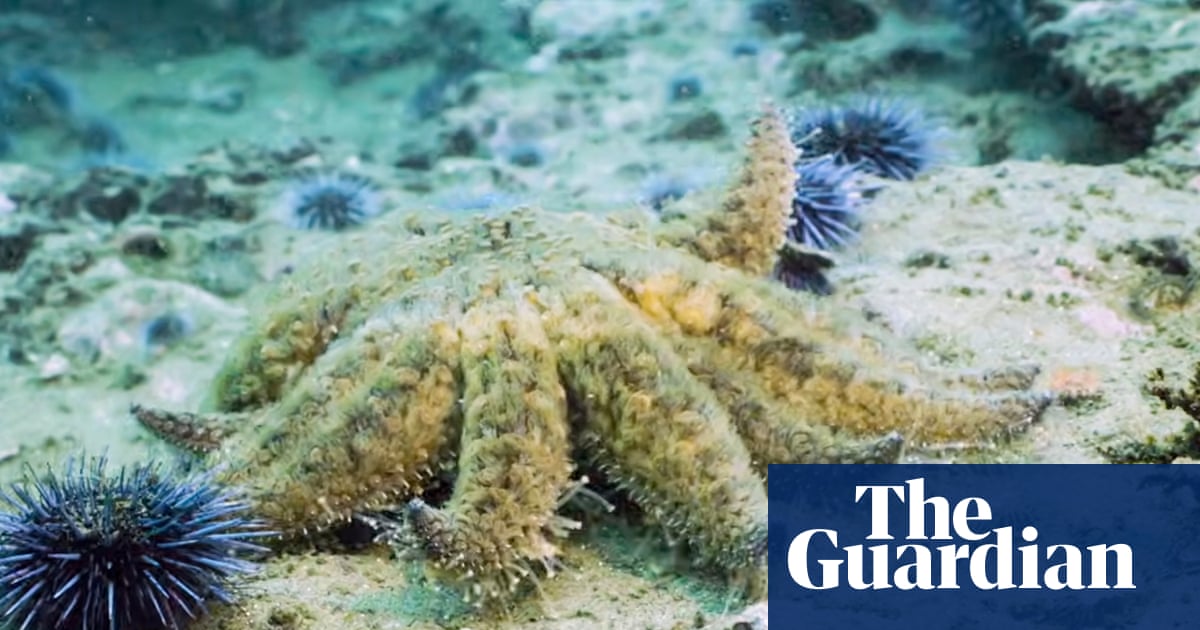
Researchers are returning sunflower sea stars to the waters off Monterey, California to help restore kelp forests.
The sea stars can have up to 24 arms and are critically endangered.
A marine heatwave that began around 2013 helped spread a disease that killed more than 90% of the Pacific population.
Without the sea stars, purple sea urchins multiplied and ate kelp across the seafloor.
The loss has been severe: one researcher says 95% of local kelp forests have disappeared in the past 10 to 12 years.
The sea stars eat urchins and make others hide and feed less, which could give kelp a chance to recover.
Researchers are placing the stars in open cages on the seabed so they can roam and help rebuild this underwater ecosystem.

Researchers off Monterey, California, are placing sunflower sea stars in open cages on the seafloor as part of an effort to restore kelp forests.
Sunflower sea stars eat purple sea urchins, whose populations grew after the stars were devastated by disease.
A marine heatwave beginning around 2013 helped spread sea star wasting syndrome, which wiped out more than 90% of the Pacific sunflower sea star population.
Reuven Bank of the Sunflower Star Laboratory said 95% of local kelp forests had disappeared in the previous 10 to 12 years.
- Who
- Researchers from the non-profit Sunflower Star Laboratory, including co-founders Ashley Kidd and Reuven Bank.
- What
- They are placing sunflower sea stars in open cages on the seafloor to help restore the species and California kelp forests.
- When
- The deployment was reported on 13 October 2026. The marine heatwave began around 2013.
- Where
- Off the coast of Monterey, California.
- Why
- Sunflower sea stars eat purple sea urchins, which have multiplied and consumed kelp after the stars declined.
This story does not have two clearly opposing sides.
A marine heatwave raised water temperatures along the west coast and accelerated the spread of sea star wasting syndrome.
The disease wiped out more than 90% of the Pacific sunflower sea star population, while sea urchins multiplied and kelp forests declined.
Researchers off Monterey were reported placing sunflower sea stars in open cages on the seafloor.
- Deployment site
- Off Monterey, California
- Species
- Sunflower sea star
- Maximum number of arms
- 24
- Pacific population lost
- More than 90%
- Kelp forests lost
- 95% in the previous 10 to 12 years
What people are saying
Dive No 1 … stars in the water.
They can have up to 24 arms, and we want to bring them back.
95% of our kelp forests have disappeared in the last 10 to 12 years.
Urchins and other grazers smell a sunflower star coming and they take off in fear.
Sources
Related news

Honeybee stingers keep pumping venom after detaching from the insect

Pacific buoy recorded a 17.6-metre rogue wave nearly three times its neighbours

A 1960 study predicted a population doomsday for November 13, 2026

Rain may ease heat in Telangana over the next four days

Land carbon storage rebounded in 2025 after two years of decline

Political identity shapes trust in science in Brazil, columnist argues

International timekeepers set to vote on ending leap seconds

Amazon fires and a strong El Niño threaten regional rainfall

Mining pressures protected areas as wildlife populations decline in Africa

Maynooth Researchers Build a DNA Computer That Needs No Continuous Power

Cape Town plans to relocate two baboon troops from Simon’s Town
