Science & Tech · Science & Environment · 1 day ago
Thai flower mimics figs to lure wasps while providing a nursery for flies

A rare vine found only in Thailand has flowers that look and smell like figs.
Fig wasps are drawn inside, but they cannot lay eggs there; some leave carrying the vine’s pollen.
Tiny Megaselia flies visit the flowers more often and can use them as a place for their young to grow.
The flowers do not make nectar, so the insects are not visiting for a sugary meal.
Fig wasps usually pollinate particular kinds of figs, and the vine appears to exploit that close relationship by copying a fig’s cues.
The researchers describe this as the first known case of one flower deceiving one pollinator while rewarding another.
Their findings show two different pollination strategies operating in the same flower.

The Thai vine Heterostemma ficoides mimics figs to attract fig wasps, which carry its pollen but cannot lay eggs in its flowers.
Small Megaselia flies pollinate the plant more often and can use its flowers as a place to raise their young.
Researchers describe the flower as the first known case of one flower both deceiving one pollinator and rewarding another.
The plant’s flowers resemble figs in shape and scent, and produce no nectar.
Heterostemma ficoides grows only in Thailand and was first described in 2019.
- Who
- The plant Heterostemma ficoides, fig wasps and Megaselia flies.
- What
- Researchers found that the flower deceives fig wasps while providing a nursery for flies.
- When
- The plant was first described in 2019; the study’s publication date is not stated in the article text.
- Where
- Northern Thailand.
- Why
- The flower’s fig-like appearance and scent attract wasps, while flies pollinate it and can raise their young inside.
This story does not have two clearly opposing sides.
Our findings show how a single flower can integrate two contrasting pollination strategies – deception and mutualism – to exploit two very different pollinators.
The mimic H. ficoides not only strikingly resembles figs in appearance but also produces similar chemical cues.
Heterostemma ficoides was first described.
Researchers compared the scents of the vine’s flowers, a fig shrub’s flowers and a related vine’s flowers.
In Y-shaped tube tests, female fig wasps chose the scent of the vine’s flowers more often than chance would explain.
Researchers observed that wasps did not prepare to lay eggs in the flowers, while small flies used them to mate and lay eggs.
- Plant
- Heterostemma ficoides
- Range
- Thailand only
- First described
- 2019
- Scent compounds
- 21 of the vine flower’s 22 compounds also occurred in the fig’s scent
- Wasps exiting flowers
- More than 80 percent of the wasps crawled back out
Sources
Related news
Researchers map hair-like sensory cells across squid bodies
Bellbird and Seriema Among the Loudest Birds Measured

Survey finds only 83 mature cheetahs across a vast area of South Africa

British Columbia rogue wave was nearly three times taller than nearby waves

Detached sea cucumber tissue remained active for more than three years
New book examines the survival skills of 75 fierce forms of nature
Researchers confirm a new giant waterlily species in Colombia

Air pollution reaches ‘very poor’ levels in towns near Manaus

Showers and morning fog forecast in parts of Türkiye
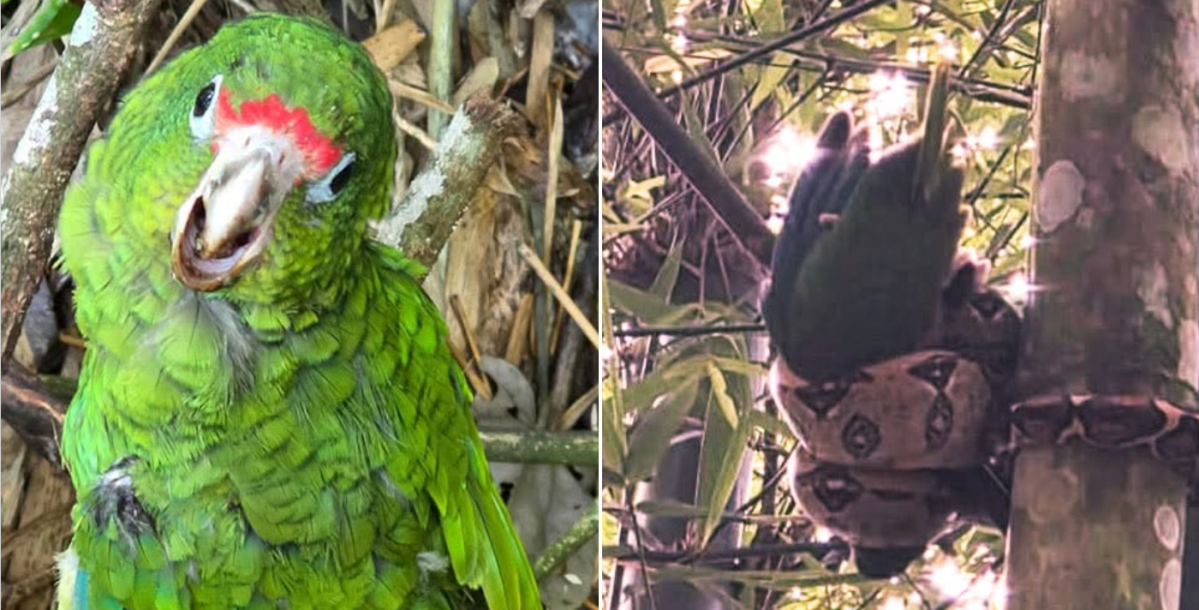
Young Puerto Rican parrot rescued from invasive boa

Warm, mostly sunny weather forecast across the Netherlands this week