

Science & Tech · Science & Environment · 1 hr ago
Tiny archaeon has one of the smallest genomes ever found
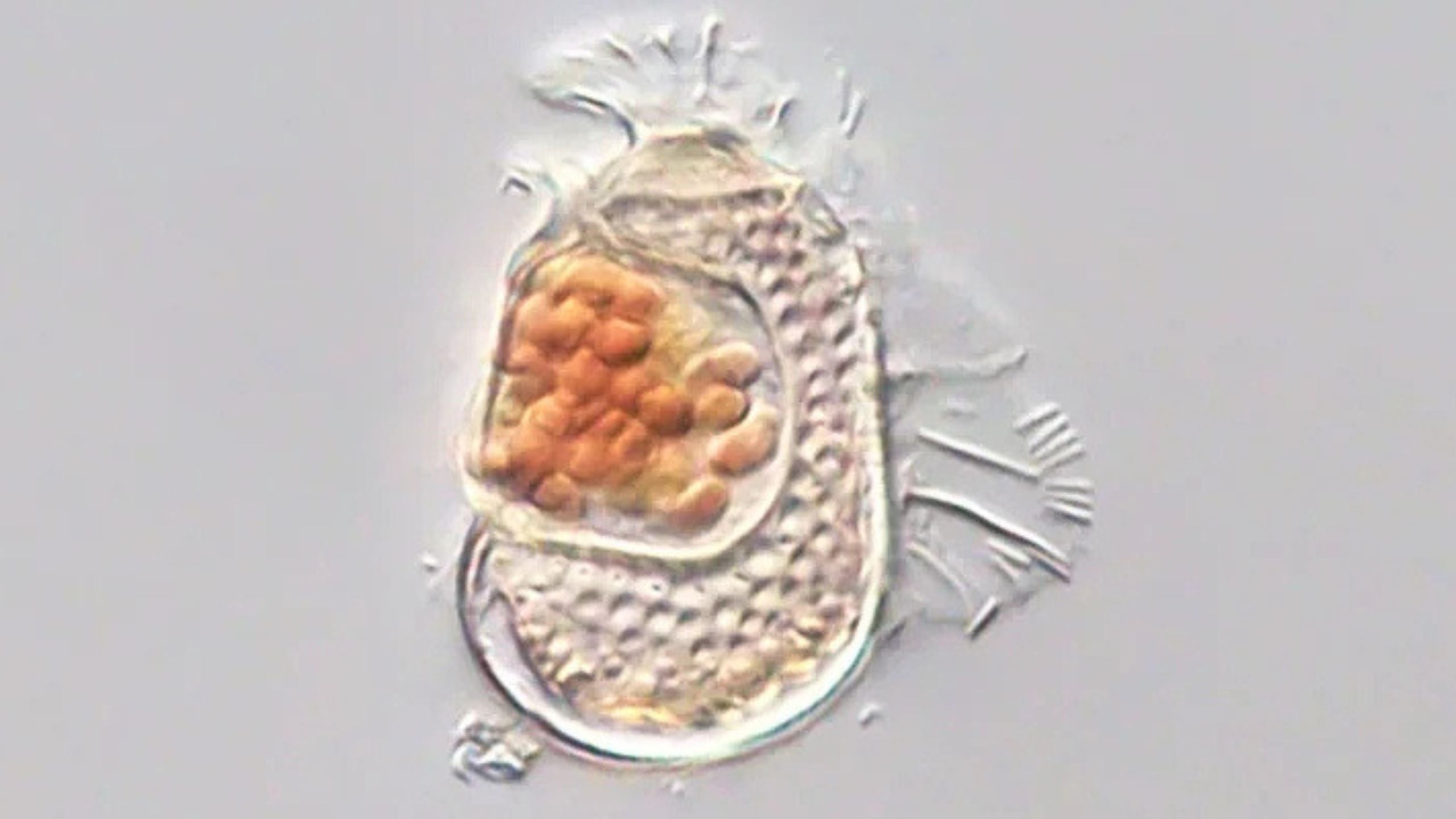
Researchers found a tiny archaeon inside plankton collected from surface seawater off Shimoda, Japan.
Named Sukunaarchaeum mirabile, it has a genome of just 238,000 DNA base pairs, among the smallest recorded for any organism.
Archaea are single-celled organisms with a distinct evolutionary history from bacteria, and this is the smallest archaeon scientists have seen.
Its genome lacks almost all the genes needed for metabolism, so it may not be able to sustain itself independently.
Scientists are considering whether it is a parasite that relies on its plankton host, though its lifestyle is not confirmed.
The organism has only been identified through its genetic material and has not yet been seen under a microscope.
Researchers say the discovery may help clarify how simple a living cell can be while still reproducing and maintaining its genetic information.

Researchers have identified Sukunaarchaeum mirabile, an archaeon with a genome of just 238 kilobase pairs.
The microbe was found among genetic material collected from plankton in seawater off Shimoda, Japan.
It lacks almost all the genes needed to maintain its metabolism, and researchers suggest it may be a parasite.
The discovery raises questions about how simple a living cell can be while still reproducing and maintaining its genetic information.
- Who
- An international team of biologists and computer scientists described Sukunaarchaeum mirabile.
- What
- Researchers identified an archaeon with a 238-kilobase-pair genome, among the smallest found in an organism.
- When
- The paper was published in 2026. A preprint appeared in 2025.
- Where
- In genetic material from plankton collected in surface seawater off Shimoda, Japan.
- Why
- Researchers were profiling cyanobacteria associated with plankton to study how the symbiosis evolved; they found the archaeon in the process.
This story does not have two clearly opposing sides.
A preprint about Sukunaarchaeum was released.
The paper describing the microbe was published in Current Biology.
- Name
- Sukunaarchaeum mirabile
- Genome size
- 238 kilobase pairs
- Domain
- Archaea
- Collection location
- Surface seawater off Shimoda, Japan
- Host plankton
- Citharistes regius
What people are saying
The key to defining life is whether something can replicate itself, and whether it can do this autonomously
This exciting discovery provides new clues about how simple a living cell can become while remaining capable of reproducing and maintaining its own genetic information
The near-complete absence of recognizable metabolic pathways in Sukunaarchaeum suggests that it can neither sustain itself independently nor provide an obvious metabolic benefit to its host
Sources
Related news

Honey bee stingers use two pistons to pump venom continuously

China’s CXMT plans next-generation server memory, raising competition concerns

Pacific buoy recorded a 17.6-metre rogue wave nearly three times its neighbours

A 1960 study predicted a population doomsday for November 13, 2026

Two powerful earthquakes strike the Mid-Atlantic Ridge

Study finds Sri Lanka’s cobras form a distinct genetic lineage

Jonathan the tortoise’s gene switches may offer clues to long life
Long Island center restores monarch butterfly grounded by refried beans

Kerala forest research director receives international scientist award

Researchers propose ancient diving helped humans develop endurance

KLE Tech HackFest brings 534 students together to build solutions
