1 week ago
High Court Grants Posthumous Regularisation to Punjab Jail Warder
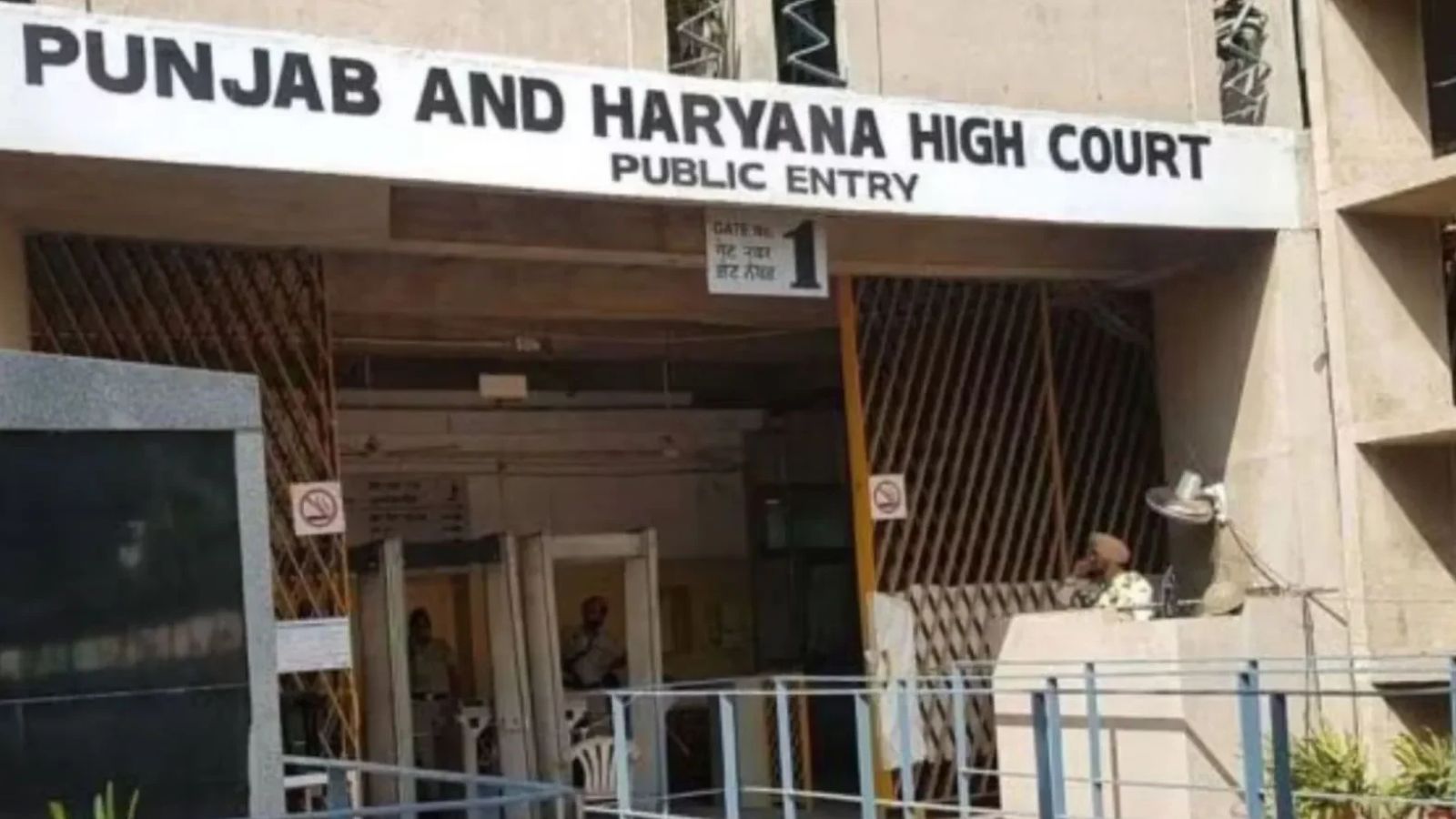
Shingara Singh worked as a jail warder for Punjab for almost 27 years.
He was hired temporarily in 1989 but was never officially made a regular employee.
He died in 2016 before the government completed his regularisation.
Because he was not regularised, his family was denied pension and other benefits.
His widow took the case to the Punjab and Haryana High Court.
The government argued that Singh could not be regularised after death and pointed to problems in his service record.
The court said the government had not shown proof that Singh was properly considered for regularisation.
It ordered Punjab to treat him as regular from the date applicable to similar employees and pay the family the benefits owed.

The Punjab and Haryana High Court ordered regularisation of Shingara Singh’s service nearly 10 years after his death.
Singh worked as an ad hoc jail warder from 1989 until his death in 2016.
The court directed Punjab to provide family pension and other retiral benefits with 6% annual interest.
His widow, Kashmir Kaur, challenged the rejection of his regularisation and pension claims.
The court said an accrued right to regularisation could not be defeated because no formal order was issued before Singh died.
- Who
- Shingara Singh, his widow Kashmir Kaur, the Punjab government, and the Punjab and Haryana High Court.
- What
- The High Court ordered posthumous regularisation of Singh’s service and payment of family pension and other retiral benefits.
- Where
- Punjab, including Central Jail Patiala and Central Jail Faridkot; the case was heard by the Punjab and Haryana High Court.
- When
- Singh was appointed in 1989 and died on November 11, 2016; the order was pronounced on August 18, nearly 10 years after his death.
- Why
- The court found that Singh’s right to regularisation had accrued during his lifetime and could not be denied because the department failed to issue a formal order.
Widow’s and employee’s claim
Punjab government’s position
Right to regularisation
Widow’s and employee’s claim
Singh was appointed against a sanctioned post, served continuously for nearly 27 years, and had acquired a right to regularisation during his lifetime.
Punjab government’s position
The State argued that Singh remained an ad hoc employee throughout his service and that no regularisation order had been issued before his death.
Treatment compared with other warders
Widow’s and employee’s claim
Singh’s counsel said warders appointed alongside him, including some juniors, were regularised between 1992 and 2001 under government instructions issued in 1993.
Punjab government’s position
Punjab maintained that regularisation could not be granted posthumously, and therefore the widow could not claim benefits available to regular employees.
Service record and departmental committee
Widow’s and employee’s claim
The widow’s counsel said Singh’s case had been placed before a departmental committee but was ignored; the court found the State had not produced records showing that he was notified or rejected by the committee.
Punjab government’s position
The State cited unauthorised absences, punishments, and mostly average or below-average Annual Confidential Reports in opposing the claim.
Key facts
- Employee
- Shingara Singh, a Punjab jail warder
- Initial appointment
- Appointed on an ad hoc basis against a sanctioned post on November 7, 1989; he joined on December 2, 1989.
- Length of service
- Nearly 27 years
- Date of death
- November 11, 2016
- Court direction
- Punjab must regularise his service from the deemed date applicable to similarly situated employees.
- Benefits ordered
- Family pension and other consequential retiral benefits
- Interest
- 6% annually
Quotes
Justice Sandeep Moudgil
Punjab and Haryana High Court judge
“The real question is whether the deceased had acquired an enforceable right to regularization during his lifetime... and whether such accrued right could thereafter be defeated merely because no formal order had been passed before his death.”
 indianexpress.com
“A plea unsupported by any official record cannot be accepted to deprive an employee of valuable service rights accrued over decades.”
indianexpress.com
Sources
Related news

High Court Rejects SRO 520 Benefit for 179 J&K Wagers

Former UP cop, 85, wins 25-year fight for inspector promotion

Patna High Court Reconsiders Family Pension Claim of Second Wife

Supreme Court Rejects Post-Retirement Switch Between Pension Schemes

Telangana Rights Panel Acts Over Retired Engineer’s Delayed Salary

Private Hospitals Flag Ayushman Bharat Payment Delays and Claim Deductions

Punjab Announces Statewide Awareness Drive on BC Certificates

NDA Personnel Found Dead On Pune Railway Track; Inquiry Ordered

Bajwa Questions Punjab Government Over Pending Employee DA Arrears
BJP Alleges Punjab Cash-for-Transfer Network, Seeks Mann Resignation