

1 hr ago
Report Says Iranian Hardliners Derailed US-Iran Peace Deal
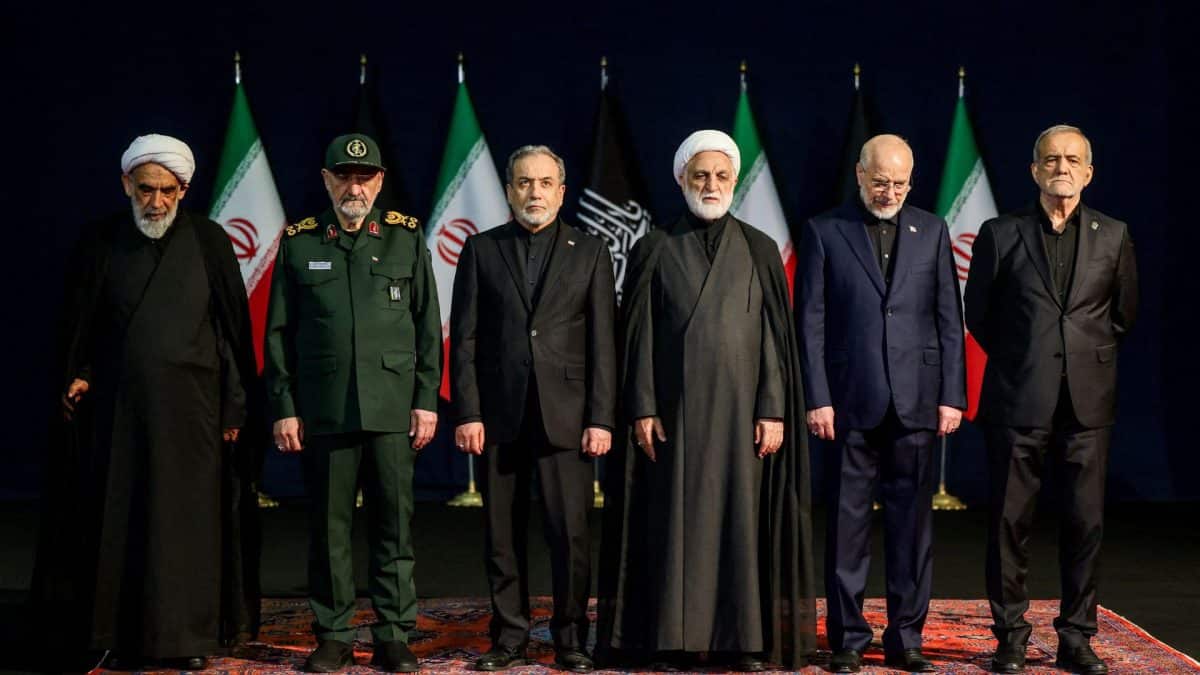
A report says some Iranian military commanders attacked ships even though Iran’s president and military chief said they had not approved it.
The attacks happened in the Strait of Hormuz during a fragile pause in fighting between Iran and the United States.
The United States responded with strikes, and the peace deal reportedly fell apart.
Investigators linked the attacks to Hossein Taeb, a former intelligence leader.
Taeb was reportedly supported by Mojtaba Khamenei, Iran’s new Supreme Leader.
Iranian officials disagree about whether the Supreme Leader actually ordered the attacks.
Some Iranian leaders want negotiations to end the war.
Other hardliners want Iran and its allies to keep fighting and widen the conflict.

A New York Times report says rogue Iranian commanders attacked three commercial ships in the Strait of Hormuz in July.
President Masoud Pezeshkian and IRGC chief Ahmad Vahidi reportedly said they had not authorized the attacks.
Investigators reportedly linked the operation to former IRGC intelligence chief Hossein Taeb, a close ally of Mojtaba Khamenei.
The United States retaliated after the attacks, triggering strikes that reportedly collapsed the interim peace deal.
Iranian moderates favor negotiations, while IRGC and clerical hardliners have pushed to expand the conflict through regional allies.
- Who
- Iranian military factions, President Masoud Pezeshkian, IRGC chief Ahmad Vahidi, former intelligence chief Hossein Taeb, and Mojtaba Khamenei.
- What
- A reported unauthorized attack on three commercial ships allegedly triggered US retaliation and derailed an interim US-Iran peace deal.
- Where
- The initial attacks occurred in the Strait of Hormuz, while later escalation involved the Red Sea, Yemen, and the Bab al-Mandeb.
- When
- The attacks reportedly occurred in July, during weeks of an ensuing ceasefire; the conflict had expanded further by the following week.
- Why
- The report says hardliners wanted to overturn the peace deal and continue the conflict, while moderates sought a negotiated end to the war.
Negotiation Faction
Hardline Faction
Whether to continue the peace process
Negotiation Faction
Masoud Pezeshkian and allied officials sought to preserve negotiations and reach a negotiated end to the war.
Hardline Faction
Hardliners within the clergy and IRGC reportedly believed the interim deal was a mistake and wanted to continue the conflict until victory.
Authority for the ship attacks
Negotiation Faction
Pezeshkian and Ahmad Vahidi reportedly said they had not authorized the attacks, and Pezeshkian doubted claims that Iran’s Supreme Leader had directly approved them.
Hardline Faction
Field commanders reportedly relied on an order allowing them to attack ships violating Iran’s control of the Strait of Hormuz without waiting for central approval.
Expanding the regional conflict
Negotiation Faction
Pezeshkian and Mohammad Bagher Ghalibaf warned that broader attacks on regional energy facilities could deepen Iran’s crisis.
Hardline Faction
Hardliners reportedly supported using Iran’s allies, including the Houthis and Iraqi Shiite groups, to increase pressure on the United States and its allies.
Key facts
- Reported source
- The New York Times, citing interviews with Iranian officials and reviews of senior officials’ statements.
- Initial attacks
- Three commercial ships were reportedly attacked in the Strait of Hormuz.
- Iranian president
- Masoud Pezeshkian reportedly demanded answers after learning of the attacks.
- Alleged mastermind
- Former IRGC intelligence chief Hossein Taeb was reportedly identified as the driving force behind the attacks.
- US response
- The United States reportedly retaliated, beginning a cycle of tit-for-tat strikes.
- Internal divide
- Moderates led by Pezeshkian, Abbas Araghchi, and Mohammad Bagher Ghalibaf favored negotiations, while hardliners sought continued conflict.
- Regional escalation
- The report says Iran-backed Houthis expanded operations around the southern gateway to the Red Sea.
Sources
Related news

Iran threatens offensive in Hormuz as US peace talks stall
Iran Seeks Dialogue as U.S. Strikes Trigger Regional Retaliation

Iran Signals Ceasefire Return If US Honors Commitments

US Denies Iran’s Claim of Vessel Strike Near Hormuz
Iran Claims Strike on US Vessel as Hormuz Fighting Escalates
Iran and US Trade Vessel Strikes Around Strait Hormuz
Pakistan Backs Saudi Arabia After Houthi Attacks Threaten Energy

Pakistan backs Saudi Arabia after Houthi attacks threaten regional security
Jaishankar, Saudi Foreign Minister Discuss West Asia Conflict, Ties
Trump Says He Does Not Care About Iran-Gulf Meeting
