2 weeks ago
Bangladesh dismisses UN report on Al-Qaeda cells as assumption-driven

A group of experts who work for the United Nations wrote a report about a dangerous group called Al-Qaeda.
The report said Al-Qaeda might be trying to start new groups in a country called Bangladesh.
The leader in charge of Bangladesh's safety, called the Home Minister, said the report is just a guess.
He said the government will not do anything because of the report.
The report also talked about a group called AQIS, which is Al-Qaeda's branch for that part of the world.
The report said AQIS attacked a famous fort called the Red Fort in India.
Some police officers in Bangladesh said they did not have any special information about this danger.
But another police expert said Bangladesh's ability to fight terrorism got weaker in the last two years.
He said experienced teams were weakened and watching suspects was reduced.
So, some people think there is a danger, and other people think the report is just guessing.

Bangladesh's Home Minister Salahuddin Ahmed called a UN Security Council report on Al-Qaeda cells 'assumption-driven' and said no action will be taken based on it.
The 38th report of the Analytical Support and Sanctions Monitoring Team said AQIS was 'trying to exploit Bangladesh to establish cells there.'
The report said AQIS evolved from a fragmented group into a regional terrorist entity with decentralised small cells and logistics and financial networks.
The report officially attributed the November 2025 attack on the Red Fort in Delhi to AQIS.
A senior CTTC officer said Bangladesh's counter-terrorism capacity weakened during the two-year interim regime, while police said they had no specific information on AQIS cell risk.
- Who
- Bangladesh's Home Minister Salahuddin Ahmed; the UN Security Council's Analytical Support and Sanctions Monitoring Team; AQIS
- What
- Bangladesh dismissed a UN Security Council report warning that Al-Qaeda in the Indian Subcontinent (AQIS) was trying to establish cells in the country.
- Where
- Bangladesh; the report also referenced the Red Fort in Delhi, India.
- When
- The report was issued last week; Bangladesh responded on Monday.
- Why
- The government considers the report 'assumption-driven' and not a basis for action.
Government's position
Security concerns
UN report credibility
Government's position
Bangladesh's government says the report is 'assumption-driven' and will not act on it; the Home Minister has not even read it.
Security concerns
The UN report says AQIS is evolving into a regional terrorist entity and trying to exploit Bangladesh to establish cells.
Counter-terrorism capacity
Government's position
Bangladesh police say they have no specific information on AQIS cell risk.
Security concerns
A senior CTTC officer says counter-terrorism capacity suffered over the past two years, with experienced teams weakened and surveillance on terrorism suspects curtailed.
Key facts
- Report
- 38th report of the Analytical Support and Sanctions Monitoring Team
- Committee
- UN Security Council 1267 Sanctions Committee
- Subject
- ISIL and Al-Qaeda, including AQIS
- Bangladesh's response
- Dismissed as 'assumption-driven'; no action to be taken
- Home Minister
- Salahuddin Ahmed
- Cited attack
- November 2025 Red Fort attack in Delhi, attributed to AQIS
- Interim regime
- Led by Muhammad Yunus after Sheikh Hasina's government fell on August 5, 2024
- Elections
- February 12, installing Tarique Rahman's government
Quotes
Salahuddin Ahmed
Bangladesh Home Minister
“We are not taking this (report) into consideration. I have not read the report yet. Besides, as far as I have heard, it says they have assumed that such a thing could happen. So, we are not taking any action based on an assumption‑driven report.”
 telegraphindia.com
Senior Counter Terrorism and Transnational Crime unit officer (anonymous)
Unidentified police officer from Bangladesh’s CTTC unit
“Experienced teams were weakened and surveillance on terrorism suspects released on bail was curtailed.”
telegraphindia.com
Sources
Related news
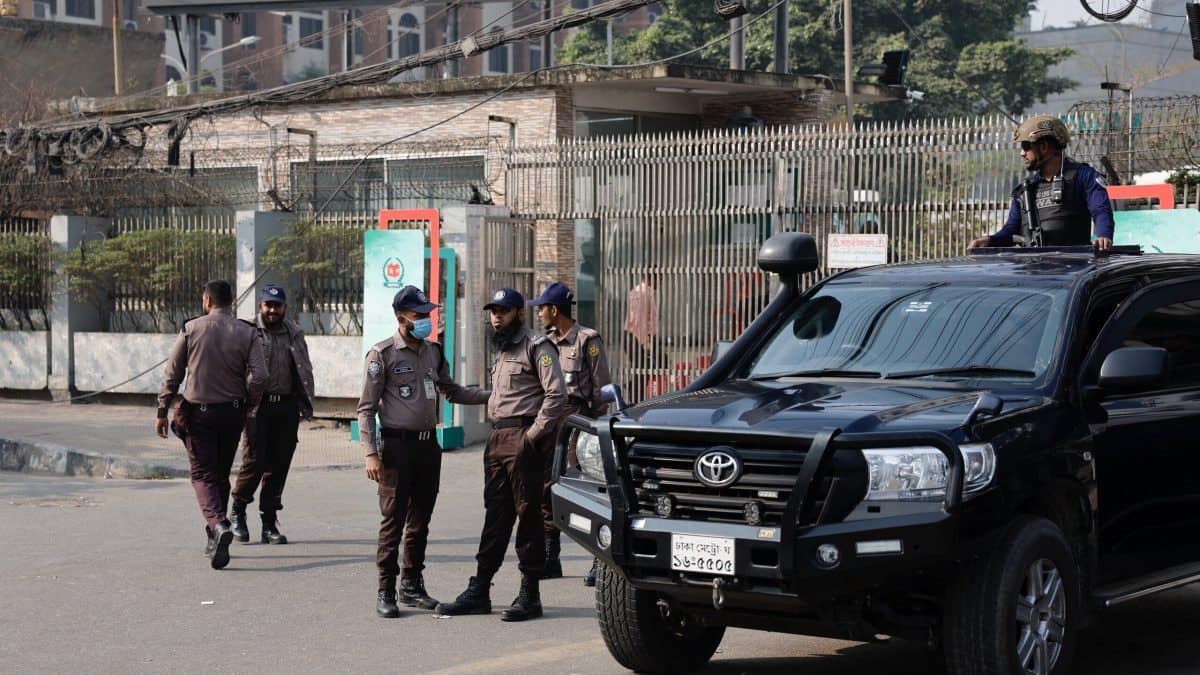
UN Warning Highlights Bangladesh’s Evolving Islamist Terrorism Threat

UN Security Council report attributes Red Fort blast to AQIS
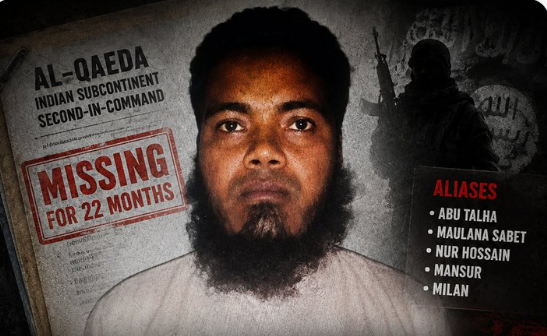
Wazed Claims Fugitive Al-Qaeda Leader Lives Freely in Bangladesh

Sheikh Hasina's Son Warns India Bangladesh Became 'Another Pakistan'

Bangladesh Faces Renewed Fears Over Islamist Militancy Resurgence

Sheikh Hasina's Son Warns Bangladesh Is Now India's 'Eastern Pakistan'

India’s Record Wheat Harvest Opens $1.5 Billion Export Window

West Bengal CM Crushes Nearly 2 Lakh Seized Syrup Bottles
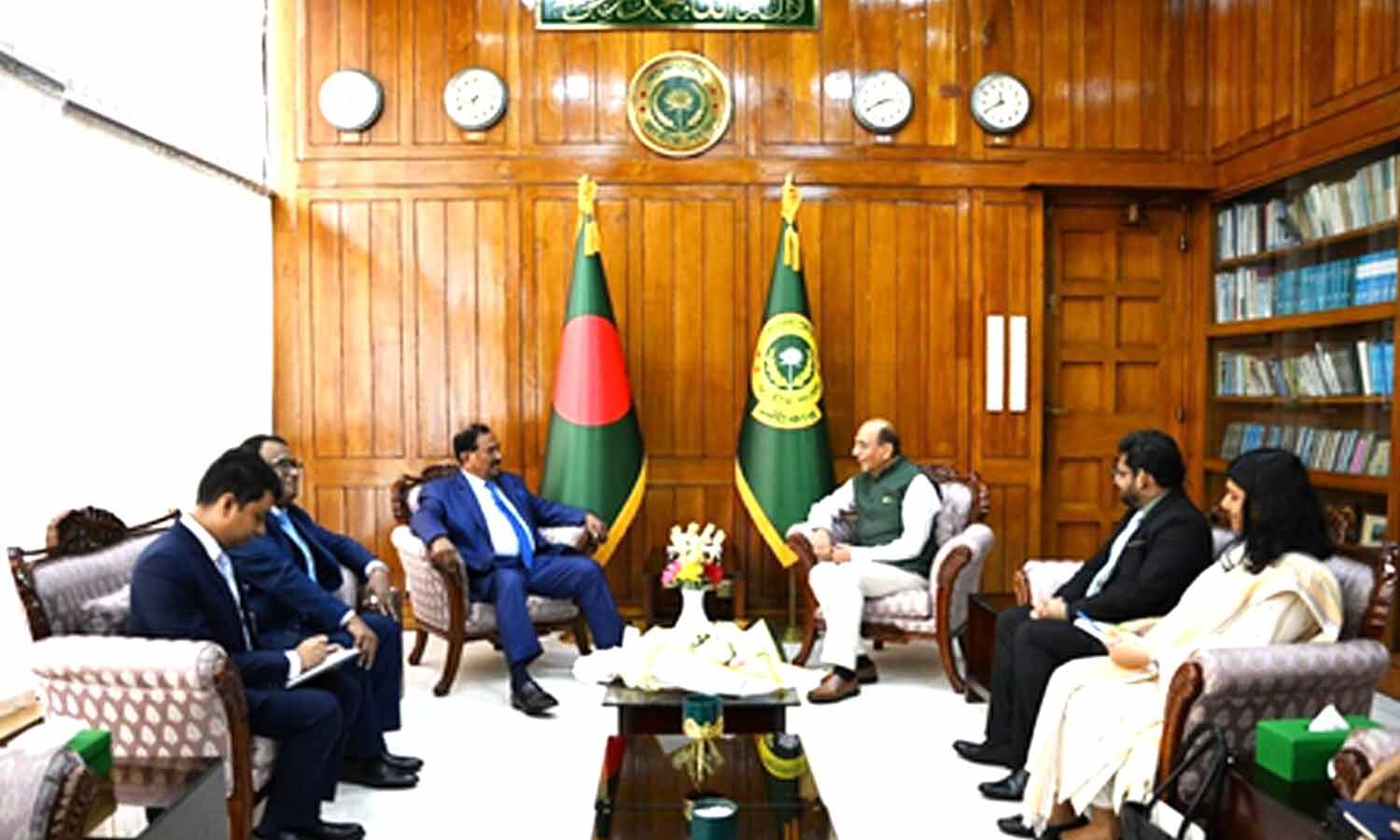
India, Bangladesh Seek Deeper Parliamentary and People-to-People Ties

Bangladesh Radicalisation Raises Concerns About Security Spillover Into India

Bengaluru Police Transfer 31 Bangladeshi Nationals for Deportation