1 week ago
UN Warning Highlights Bangladesh’s Evolving Islamist Terrorism Threat
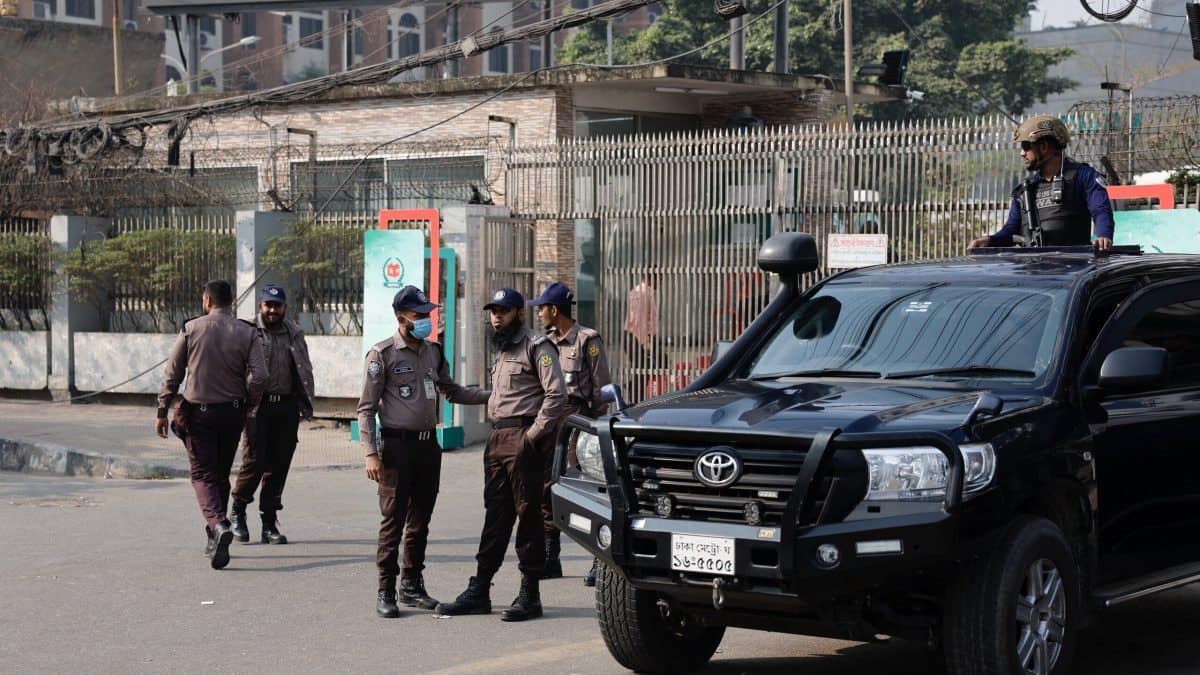
The United Nations warned that a group linked to al-Qaeda may be trying to build small networks in Bangladesh.
Bangladesh’s home minister said the warning was based on assumptions.
The article says Bangladesh has sometimes denied that terrorism was a serious problem.
In the past, hidden groups later carried out large attacks, including bombings across much of the country in 2005.
Other groups have also been inspired by al-Qaeda or Islamic State.
Security forces reduced the ability of these groups to launch major attacks after 2016.
However, terrorist networks can split into smaller groups and continue quietly.
The author says Bangladesh should investigate the warning without exaggerating it.
The suggested response is careful intelligence work, lawful policing, and learning from history.

A United Nations monitoring team reported concern that Al-Qaeda in the Indian Subcontinent may be trying to establish cells in Bangladesh.
Home Minister Salahuddin Ahmed dismissed the assessment as assumption-based and said the government was not taking it into account.
Bangladesh has previously underestimated Islamist networks, including before the 2005 nationwide bombing campaign by Jamatul Mujahideen Bangladesh.
Jihadist groups in Bangladesh have repeatedly fragmented, changed names, and maintained links to wider transnational movements.
Security operations weakened terrorist organisations after the 2016 Holey Artisan Bakery attack, but the article warns that suppression does not guarantee eradication.
- Who
- The United Nations Security Council monitoring team, Bangladesh’s government, and Islamist terrorist networks including Al-Qaeda in the Indian Subcontinent.
- What
- A UN warning about possible AQIS efforts to establish cells in Bangladesh has renewed debate over the country’s terrorist threat.
- Where
- Bangladesh, including Dhaka and locations across the country.
- When
- The warning was reported early this month; the article also refers to major attacks in 2005 and 2016.
- Why
- The concern is that dispersed terrorist networks, ideologies, financing, recruitment, and international links may survive periods of reduced violence.
Threat Requires Scrutiny
Warning Is Unproven
Meaning of the UN assessment
Threat Requires Scrutiny
The article argues that the cautious UN warning should be investigated because Bangladesh has previously underestimated evolving terrorist networks.
Warning Is Unproven
Salahuddin Ahmed said the government understood the report to be assumption-based and was not taking it into account.
Scale of the threat
Threat Requires Scrutiny
The author says Bangladesh faces a real but smaller, intermittent, and fragmented terrorism problem that does not require a large visible organisation.
Warning Is Unproven
The article notes that Bangladesh does not face terrorism on the scale of Pakistan or Britain and cautions against sensationalising the danger.
Counterterrorism record
Threat Requires Scrutiny
Security operations after the Holey Artisan attack substantially weakened terrorist groups and reduced their ability to stage spectacular attacks.
Warning Is Unproven
The article also highlights allegations of extrajudicial killings, enforced disappearances, politicised prosecutions, and authoritarianism linked to counterterrorism under Sheikh Hasina.
Key facts
- UN assessment
- The UN monitoring team reported “some concern” that AQIS was attempting to exploit Bangladesh to establish cells.
- Government response
- Home Minister Salahuddin Ahmed described the report as assumption-based and said the government was not taking it into account.
- 2005 bombing campaign
- Jamatul Mujahideen Bangladesh detonated hundreds of bombs on August 17, 2005, across 63 of Bangladesh’s 64 districts.
- 2016 attack
- Terrorists killed 22 people at the Holey Artisan Bakery in Dhaka in July 2016.
- AQIS formation
- Al-Qaeda announced Al-Qaeda in the Indian Subcontinent in 2014.
- Counterterrorism results
- Security agencies disrupted plots, dismantled cells, and captured or killed important operatives after the 2016 attack.
- Historical pattern
- The article says Bangladeshi jihadist networks have repeatedly fragmented, changed names, and resurfaced in different forms.
Sources
Related news

Bangladesh dismisses UN report on Al-Qaeda cells as assumption-driven

Bangladesh Faces Renewed Fears Over Islamist Militancy Resurgence

Sheikh Hasina's Son Warns India Bangladesh Became 'Another Pakistan'
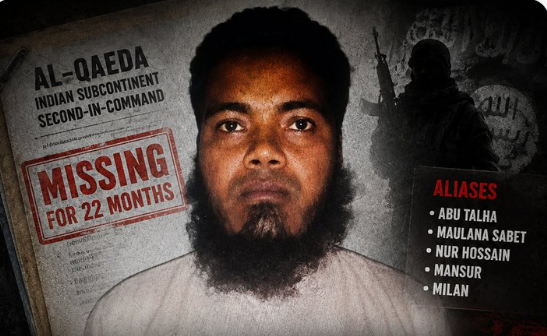
Wazed Claims Fugitive Al-Qaeda Leader Lives Freely in Bangladesh

Bangladesh Is Becoming 'Another Pakistan', Warns Hasina's Son

Bangladesh Radicalisation Raises Concerns About Security Spillover Into India

India’s Record Wheat Harvest Opens $1.5 Billion Export Window

West Bengal CM Crushes Nearly 2 Lakh Seized Syrup Bottles

India, Bangladesh Seek Deeper Parliamentary and People-to-People Ties

Bengaluru Police Transfer 31 Bangladeshi Nationals for Deportation