3 weeks ago
India's ₹23,731-crore bet on turning waste into fuel: 3 stocks
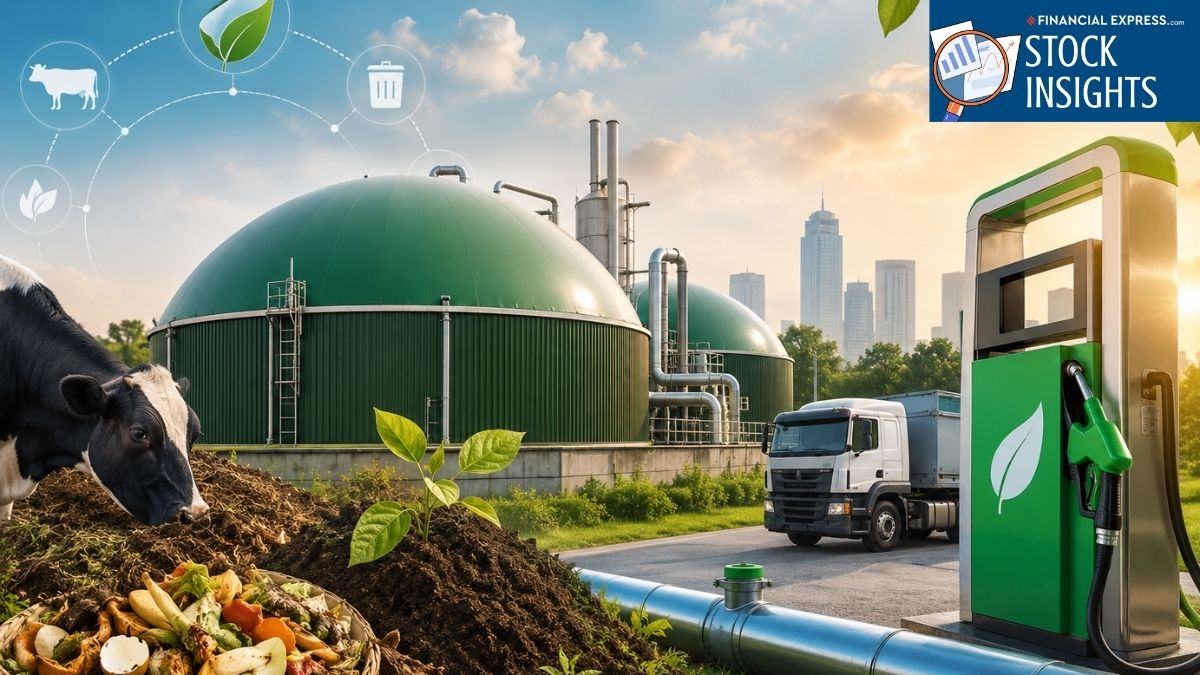
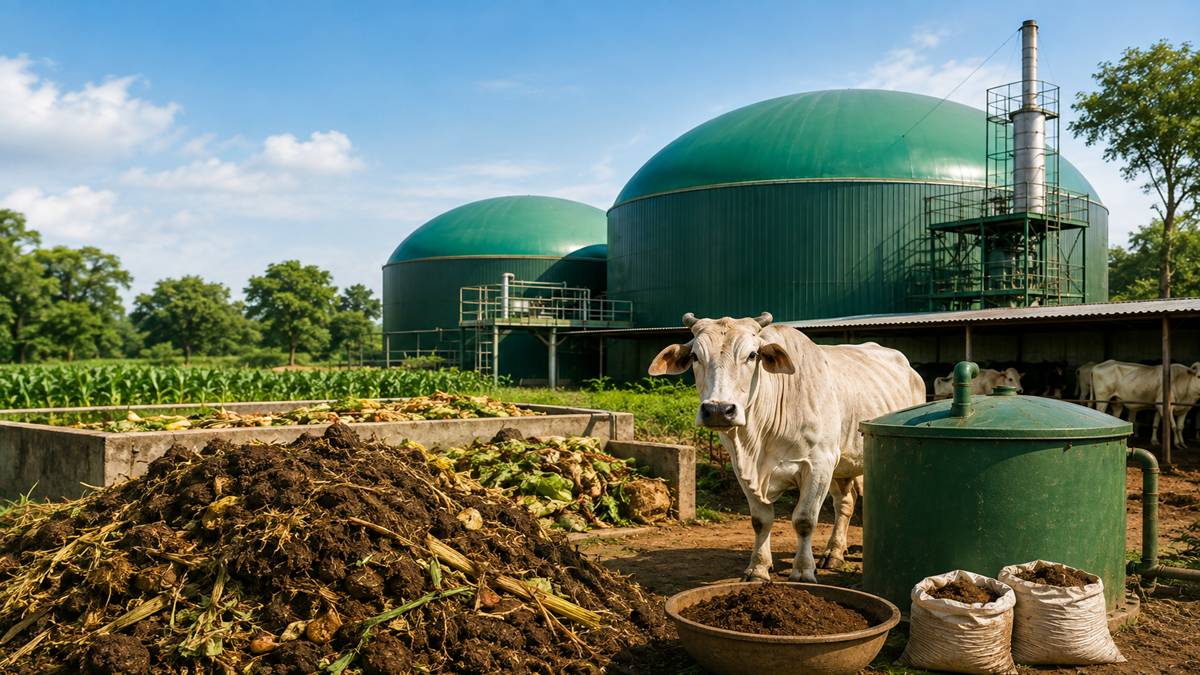
India is making a type of clean fuel called compressed biogas, or CBG, from waste like animal dung, food scraps, and farm leftovers.
The government approved a big plan worth ₹23,731 crore to help companies build CBG plants.
It will also slowly require fuel sellers to mix more CBG into their fuel each year.
Three companies are working hard on this opportunity.
Praj Industries made special technology called RenGas that turns waste into biogas at a lower cost.
Va Tech Wabag built a plant that turns sewage into cooking gas for about 3,500 homes.
TruAlt Bioenergy is building many more plants with partners from Japan and India.
These companies can also sell organic fertiliser made from the leftover waste.
The CBG sector is still very new, so whether it succeeds depends on how well these companies build and run their plants.

The Indian government approved a ₹23,731 crore GOBARdhan scheme to boost compressed biogas (CBG) production with assured prices and capital support.
India's CBG blending obligation will rise from 1% in FY26 to 3% in FY27, 4% in FY28 and 5% by FY29.
Praj Industries' proprietary RenGas technology claims the industry's highest-yielding biogas with 30% lower operating costs, backed by MoUs with BPCL and Indian Oil.
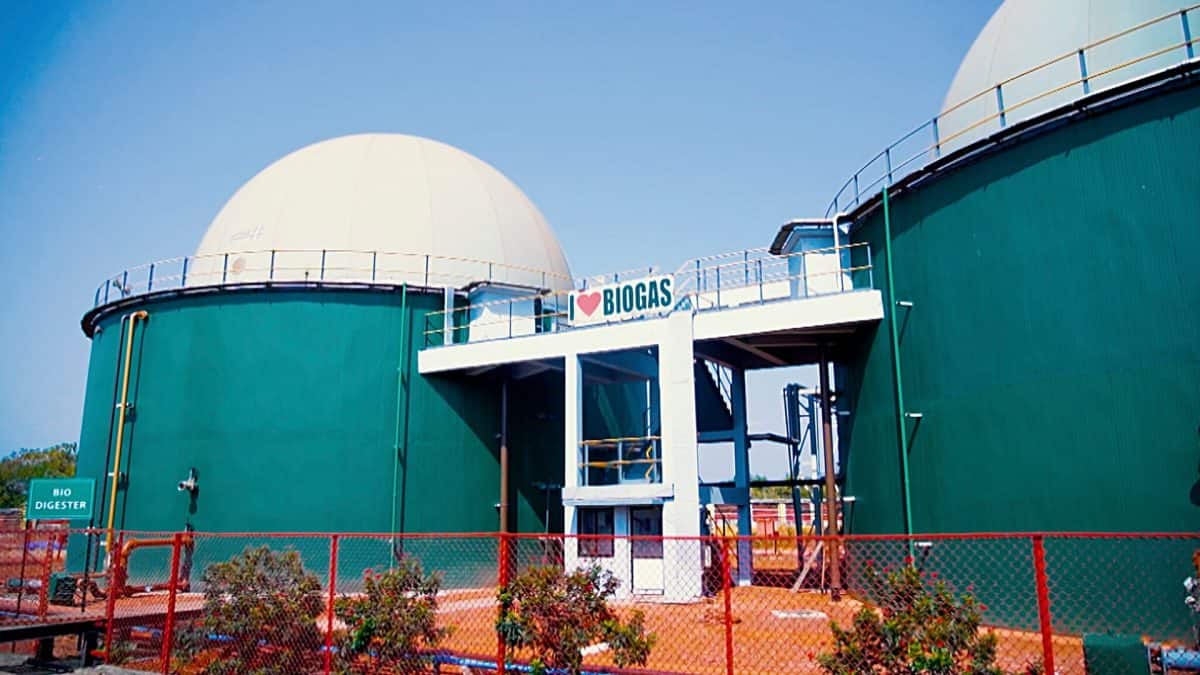
Va Tech Wabag's first CBG project at Ghaziabad's 70 MLD sewage treatment plant can supply cooking gas to about 3,500 homes or fuel 400 vehicles.
TruAlt Bioenergy has 24 CBG plants in its long-term pipeline, with near-term Sumitomo and GAIL JV plants representing a peak capacity of 132 TPD.
- Who
- The Indian government (which approved the GOBARdhan scheme) and companies Praj Industries, Va Tech Wabag and TruAlt Bioenergy.
- What
- A push to scale compressed biogas (CBG) production from organic waste, backed by government funding, rising blending obligations and new commercial plants.
- Where
- India — including Ghaziabad (Uttar Pradesh), Karnataka and Maharashtra; TruAlt's JV partner Sumitomo Corporation is based in Japan.
- When
- As of August 2026 (article dated 08 August 2026), with blending targets running from FY26 to FY29 and order book figures as of 31 March 2026.
- Why
- To boost renewable fuel output from waste, contribute to energy sovereignty, and create commercial opportunities through assured prices and offtake.
Growth Optimists
Execution Skeptics
Policy support vs execution risk
Growth Optimists
Government funding, assured prices, rising blending obligations and guaranteed offtake give CBG producers clear visibility and demand for their output.
Execution Skeptics
CBG is still at a nascent stage, and sector growth will depend on project execution, capacity utilisation, and whether policy support actually translates into operating capacity.
Valuations
Growth Optimists
Companies like Praj Industries and Va Tech Wabag are well positioned with proprietary technology, a strong order book and strategic partnerships.
Execution Skeptics
Praj's profitability has been hit by weakness in its ethanol segment, and Va Tech Wabag now trades at a premium to its five-year EV/EBITDA and the industry median, so execution must justify the re-rating.
Key facts
- Government scheme
- GOBARdhan — ₹23,731 crore approved for CBG production with assured prices and capital support
- Blending obligation
- 1% in FY26, rising to 3% (FY27), 4% (FY28) and 5% (FY29)
- State policy example
- Maharashtra introduced a ₹500 crore CBG policy
- Praj Industries
- RenGas technology; highest-yielding biogas with 30% lower operating costs
- Va Tech Wabag order book
- ₹17,235 crore as of 31 March 2026, over four times its FY26 revenue
- Va Tech Wabag first CBG plant
- Ghaziabad 70 MLD sewage plant; cooking gas for ~3,500 homes or 400 vehicles
- TruAlt Bioenergy
- 24 CBG plants in pipeline; peak capacity 152 TPD; Q1 FY27 CBG revenue ₹11.3 crore, up 11% YoY
- GAIL offtake guarantee
- 80-90% of daily production from TruAlt's GAIL JV plants
Sources
Related news
India’s Rs 23,731 Crore GOBARdhan Scheme Fuels CBG Investment Debate
Cabinet approves Rs 23,731-crore GOBARdhan scheme to boost CBG production
Cabinet Clears Rs 23,731 Crore GOBARdhan Scheme to Boost Biogas
Cabinet approves Rs 23,731 crore GOBARdhan scheme for biogas fuel
India approves Rs 23,731 crore GOBARdhan biogas scheme

Cabinet Approves GOBARdhan Bioenergy Scheme and Guwahati-Tezpur Highway

Tukaram Mundhe Warns Indians About Food Safety Risks

Maharashtra Family Welcomes First Daughter in Nearly 200 Years

Maratha Protesters Block Highway Supporting Manoj Jarange Patil

Maharashtra Mountaineers Join Search for Missing Nepal Trekkers
CJP Highlights Poor Conditions in Nagpur Government Schools