2 days ago
Pakistan Rights Body Questions PoK Polls, Condemns Protest Force

A rights group in Pakistan investigated protests in Pakistan-occupied Kashmir.
It said the government may have used too much force against demonstrators.
Families told the group that some protesters were killed or badly hurt.
The group could not confirm the total number of deaths because it could not reach Rawalakot.
Protest leaders claimed that many hundreds had died, but Pakistan’s federal government denied that claim.
The group also said recent elections may not have been trustworthy.
It pointed to violence, limited communications, postponed voting and restrictions on political groups and journalists.
It asked for independent investigations and for peaceful political cases to be reviewed.

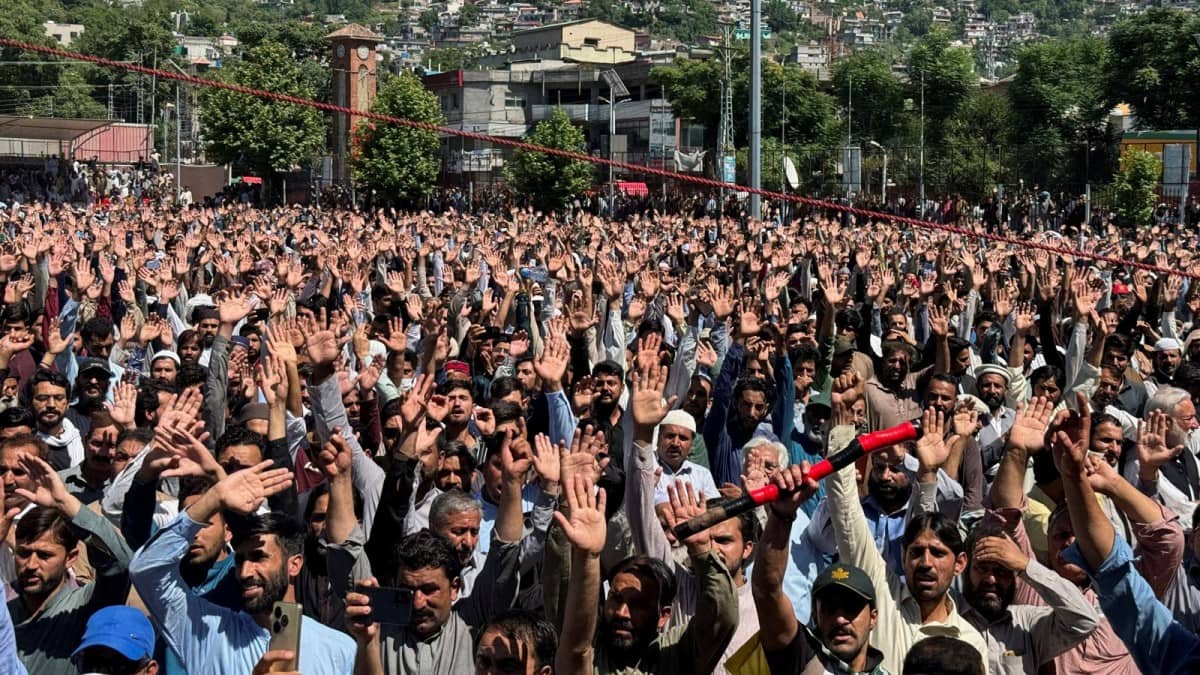
The Human Rights Commission of Pakistan said security forces used disproportionate force against protesters in Pakistan-occupied Kashmir.
The commission linked the unrest to longstanding political and socioeconomic grievances, institutional distrust and governance failures.
It questioned the credibility of July 27–August 10 elections, citing violence, phased polling, communications restrictions and alleged rigging.
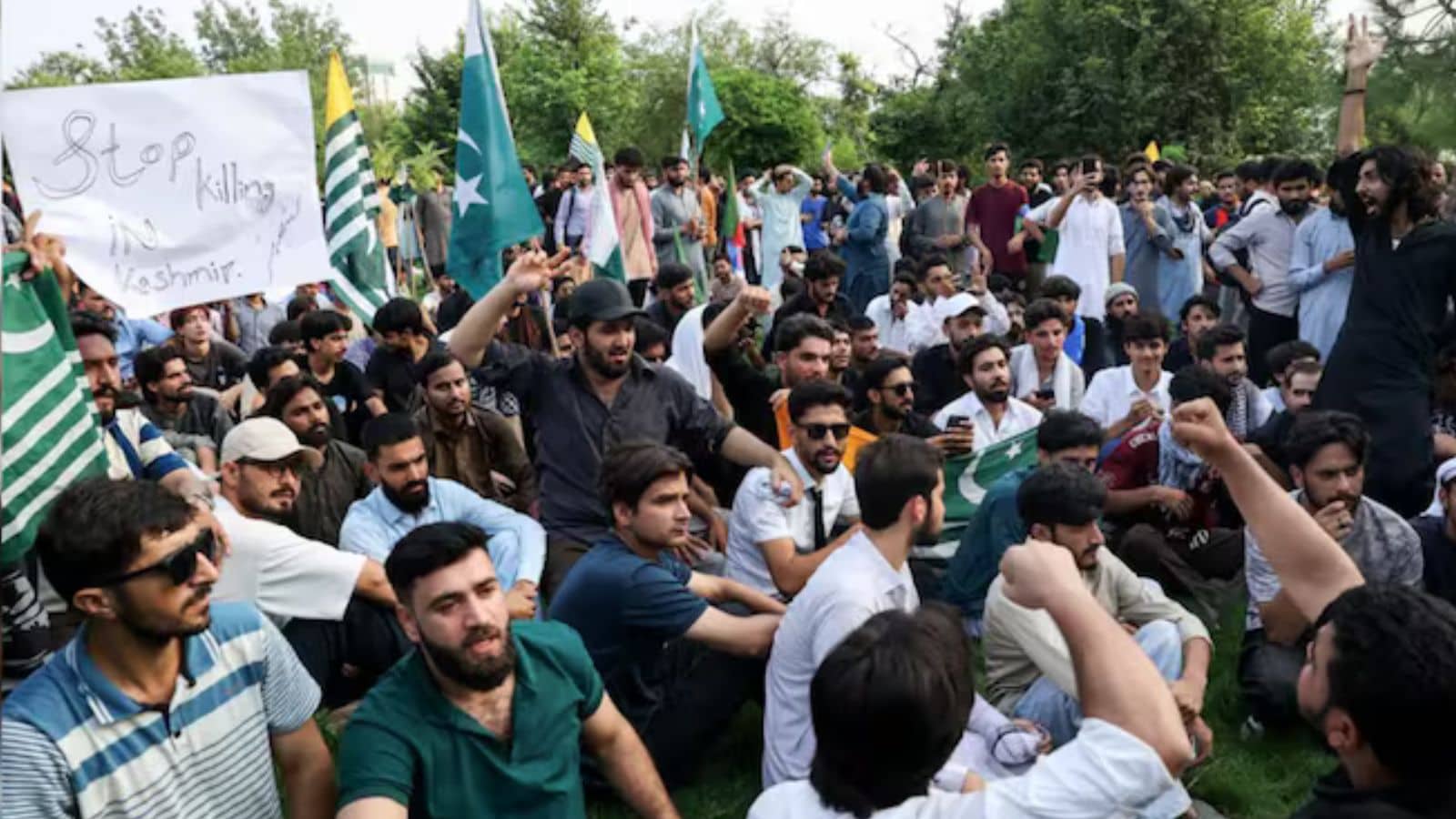
The Joint Awami Action Committee claimed hundreds of protesters were killed, while Pakistan’s federal government rejected the figures.
The HRCP called for independent investigations into deaths, injuries, detentions, prosecutions and alleged electoral irregularities.
- Who
- The Human Rights Commission of Pakistan, protesters organized by the Joint Awami Action Committee, Pakistan’s government and security forces.
- What
- The HRCP reported alleged disproportionate force against protesters and questioned the credibility of elections in Pakistan-occupied Kashmir.
- Where
- Pakistan-occupied Kashmir, including areas such as Rawalakot, Poonch, Sudhnoti and Muzaffarabad.
- When
- The unrest began in June; elections were held from July 27 to August 10, and the report was released on August 30.
- Why
- Protests were attributed to political and socioeconomic grievances, opposition to the 12 refugee seats, institutional distrust and governance deficits.
Rights Critics and Protesters
Pakistan Government and Supporters
Use of force
Rights Critics and Protesters
The HRCP cited allegations of lethal and excessive force, including claims from families that security forces killed or seriously injured protesters, and called for an independent investigation.
Pakistan Government and Supporters
The federal government disputed the protesters’ reported death toll; the HRCP said it received conflicting accounts and could not independently establish the full scale or circumstances of civilian casualties.
Election credibility
Rights Critics and Protesters
The HRCP said heavy security deployment, communications restrictions, phased polling, boycotts and postponed constituencies raised serious questions about whether the elections were credible. India’s Ministry of External Affairs called the exercise a complete farce.
Pakistan Government and Supporters
The elections proceeded for most directly elected seats, and the resulting assembly selected Barrister Iftikhar Gillani as prime minister, although the article does not provide a detailed government response to the HRCP’s credibility concerns.
Protest movement and restrictions
Rights Critics and Protesters
The Joint Awami Action Committee said the establishment manipulated 12 refugee seats to install a preferred prime minister. The HRCP criticized the proscription of the group, anti-terrorism cases and restrictions on activists, journalists and political workers.
Pakistan Government and Supporters
Pakistan proscribed the Joint Awami Action Committee under an anti-terrorism law after negotiations failed, while authorities cited the law-and-order situation in connection with postponed voting and security measures.
Key facts
- Election schedule
- Voting for the 45 directly elected seats took place in three phases from July 27 to August 10.
- Assembly seats
- The assembly has 53 seats: 45 directly elected and eight reserved for women, technocrats and clerics.
- Postponed constituencies
- Voting in seven directly elected constituencies was postponed because of the law-and-order situation.
- Protester casualty claim
- The Joint Awami Action Committee claimed more than 40 people were killed during the first polling phase and about 400 since early June; the federal government rejected the claim.
- Security-force casualties
- The Kashmir police chief reportedly said around 38 security personnel had been killed since June.
- Political composition
- The Pakistan Muslim League-Nawaz held 31 of the current 46 seats, while the Pakistan Peoples Party held 14.
- Communications restrictions
- The HRCP said the shutdown disrupted banking, education, commerce, transport, public administration and healthcare.
Quotes

Human Rights Commission of Pakistan
Pakistan’s independent human rights body and author of the fact-finding report
“Heavy deployment of security personnel, prolonged communications restrictions, boycott by major political actors, phased polling and postponement of seven constituencies raised wider questions about the credibility of the electoral process.”
 theprint.in
“An increasingly confrontational state response, including the disproportionate use of force has further deepened polarisation and eroded public trust.”
theprint.in

Randhir Jaiswal
Spokesperson for India’s Ministry of External Affairs
“This so-called local election in PoK is a complete farce. The real happening is that of public protests and wanton killings by Pakistani forces. Such hollow exercises cannot hide reality.”
theprint.in
Sources
Related news
Pakistan Rights Body Questions Force and PoK Election Credibility

PoK Unrest Exposes Cracks in Pakistan's Kashmir Narrative: Report
Third Phase of PoK Polls Held Amid Rigging Allegations, Clashes
Pakistan postpones third phase of PoK elections amid ongoing unrest
Why Asim Munir May Be Softening Toward Imran Khan
Pakistan Supreme Court Returns Government Plea Over Khan Transfer
Javed Akhtar Lashes Out at Pak President Over Hindu Remarks