3 weeks ago
Indigenous radio collar fitted to Bhuvaneshwari herd elephant in Hassan

People who look after forests in Hassan, in the Indian state of Karnataka, wanted to keep track of a big elephant from a group called the Bhuvaneshwari herd.
Elephants sometimes walk close to villages, which can be dangerous for people and for the elephants.
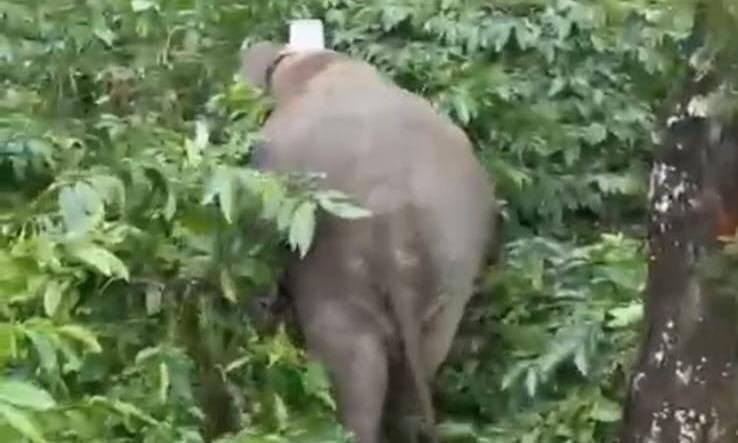
To help keep everyone safe, the forest workers put a special collar around the elephant's neck that sends signals, like a smartwatch that shows where someone is.
This collar was made in India.
Before that, the elephant wore a collar made in another country, but it stopped working because its battery ran out.
Animal doctors and helpers carefully caught the elephant, checked that it was healthy, and put the new collar on.
They even brought gentle helper elephants to make the job safer.
After the check-up, the elephant was let go back into the forest.
Now the forest workers can see where the elephant goes and warn villages if it comes too close.
It is the third elephant family in Hassan to get one of these new Indian-made collars.

The Forest Department fitted an indigenous radio collar on an elephant from the Bhuvaneshwari wild elephant herd in the Belur Range of Hassan district.
The tracking device will allow officials to monitor the elephant's movements continuously and respond quickly when it nears human settlements.
A foreign-made collar fitted about three years ago had stopped functioning after its battery life expired.
The operation was supervised by veterinary officers Wasim, Adarsh and Vinayak, with help from six kumki elephants from Nagarahole and Dubare camps.
Indigenous radio collars have now been fitted to elephants from three wild elephant herds in Hassan district.
- Who
- The Karnataka Forest Department, veterinary officers and six kumki elephants
- What
- Fitted an indigenous radio collar on an elephant from the Bhuvaneshwari wild elephant herd
- Where
- Belur Range, Hassan district, Karnataka
- When
- On Monday
- Why
- To continuously track the elephant's movements and reduce human-elephant conflict
Key facts
- Herd
- Bhuvaneshwari wild elephant herd
- Location
- Belur Range, Hassan district, Karnataka
- Collar type
- Indigenous radio collar
- Purpose
- Monitor elephant movements and reduce human-elephant conflict
- Previous collar
- Foreign-made; stopped functioning after battery expired
- Supervising veterinary officers
- Wasim (Bandipur Tiger Reserve), Adarsh (Mysuru Circle), Vinayak (Bhadra Tiger Reserve)
- Kumki elephants deployed
- 6, from Nagarahole and Dubare Elephant Camps
- Herds fitted in Hassan district
- 3
Sources
Related news
Indigenous Elephant Tracking Collars Replace African Collars in Hassan

Pawan Kalyan orders drone surveillance for wild elephants near Tirupati
Elephant Herd Movement Prompts Alerts Across Tirupati’s Seshachalam Forest
Elephant Herd Near Chandragiri Prompts Alert and Monitoring

Dy CM Kalyan highlights measures to curb human-wildlife conflict

Northeast Frontier Railway, Assam Coordinate to Protect Elephants

Tiger Carcass Found in Chamarajanagar Farm as Probe Begins
Study Links India’s Elephant Conflict to Harvest Season
World Elephant Day 2026: India's best parks to see elephants

Telangana Yet to Unlock Tiger Reserve Economy Despite Forest Wealth