2 weeks ago
Panel Proposes Capping Private Hospital Room Tariffs at Hotel Rates
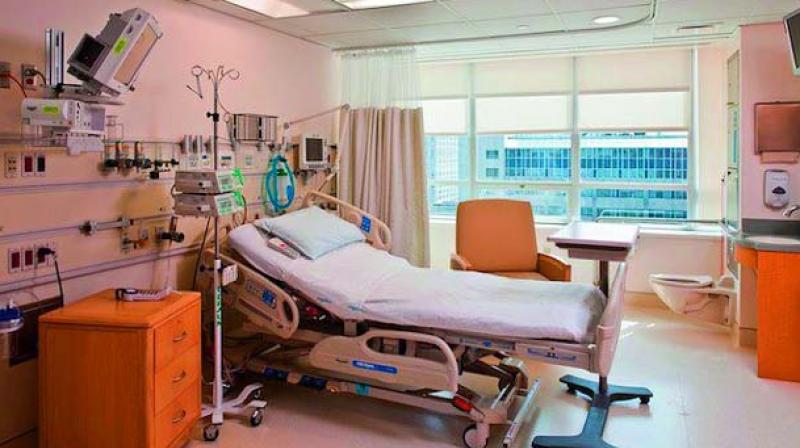
In India, a government committee wants to make staying in a private hospital room cheaper.
They suggested that hospitals in big cities should not charge more for a basic room than a nearby three-star hotel.
This is because staying in a private hospital costs a lot more than staying in a government hospital.
The committee also wants hospitals to tell patients what treatment will cost before they are admitted.
They want fixed prices for surgeries and an official who can look into very big bills.
But doctors and hospital managers say a hospital room is not like a hotel room.
Hospital rooms need special air filters, emergency power, medical gases, nurses, and monitoring machines.
They worry that capping prices could stop hospitals from building better facilities and offering advanced care.
The new rules are only suggestions for now, so nothing has changed yet.

The Parliamentary Standing Committee on Health and Family Welfare recommended capping basic room tariffs in private hospitals in large metro cities at average three-star hotel rates.
The proposal includes a mandatory benchmark, separate billing for services and items, fixed package rates for surgeries, and pre-admission disclosure of estimated treatment costs.
Committee data shows average hospitalisation costs of around ₹6,631 in government facilities versus more than ₹50,500 in private hospitals.
Doctors and hospital administrators argue hotel rates ignore hospital infrastructure, clinical care, and safety systems, and caps could discourage investment in advanced care.
The recommendations are not yet mandatory and would require government acceptance and state-level regulatory or legal measures.
- Who
- The Parliamentary Standing Committee on Health and Family Welfare, with opposition from doctors and private hospital administrators in India.
- What
- A proposal to cap basic room tariffs in private hospitals in large metro cities at nearby three-star hotel rates, along with fixed surgery package rates and pre-admission cost disclosure.
- Where
- Large metropolitan cities in India.
- When
- Exact date not specified in the articles.
- Why
- To narrow the sharp gap between public and private hospitalisation costs and make healthcare more affordable and transparent.
Committee and Affordability Advocates
Hospital Administrators
Room Tariff Benchmark
Committee and Affordability Advocates
Capping basic room tariffs at average three-star hotel rates in metro cities would bring charges closer to what patients can afford and improve transparency.
Hospital Administrators
A hospital room is part of the clinical care environment, with infection control, emergency power, medical gases, nursing and monitoring equipment, so hotel rates are not an accurate benchmark.
Price Regulation Approach
Committee and Affordability Advocates
Making room tariff caps mandatory, with fixed package rates for surgeries and pre-admission cost disclosure, protects patients from inflated and unclear bills.
Hospital Administrators
A blanket price cap that ignores the cost of delivering care could unintentionally discourage investment in advanced healthcare infrastructure and quality systems.
Cost Control Strategy
Committee and Affordability Advocates
Controlling the visible room component of the bill helps make healthcare more affordable for patients.
Hospital Administrators
The solution should address the entire healthcare cost ecosystem; a joint task force should develop a costing framework based on actual delivery costs and regional variations.
Key facts
- Proposal
- Cap basic private hospital room tariffs at average three-star hotel rates in large metro cities
- Proposing body
- Parliamentary Standing Committee on Health and Family Welfare
- Average government hospitalisation cost
- Around ₹6,631
- Average private hospitalisation cost
- More than ₹50,500
- Other recommendations
- Fixed package rates for surgeries; pre-admission cost disclosure; fast-track ombudsman for billing disputes
- Status
- Not yet mandatory; requires government acceptance and state-level regulatory or legal measures
- Main critics
- Dr Hemanth Kaukuntla, Dr Kishore B Reddy and Mahendra Pala
Quotes
Dr. Hemanth Kaukuntla
Senior cardiothoracic surgeon at Revona Century Hospital
“"A price cap that looks only at what the patient pays, without adequately considering the underlying cost of delivering that care, could unintentionally discourage investment in advanced healthcare infrastructure."”
 deccanchronicle.com
“The cost of delivering advanced healthcare is driven by significant investments in infrastructure, medical technology, highly skilled manpower, patient safety and quality systems.”
deccanchronicle.com
Sources

Related news
Parliamentary Panel Seeks Cap on Private Hospital Room Charges

Panel seeks three-star hotel cap on private hospital room tariffs
Private hospitalisation costs nearly 8 times more than government hospitals

Allahabad High Court Flags Huge Disparity in Private Hospital Fees

India Plans Health Insurance Reforms To Lower Medical Costs

Bengal clinical establishment commission chairperson's final prescription for health reform

Parliamentary Panel Urges Nationwide Mandatory Cancer Reporting in India

Parliamentary panel recommends mandatory kidney tests every six months