

2 days ago
RBI’s Rs 14.6 lakh crore shield shows rupee liquidity limits
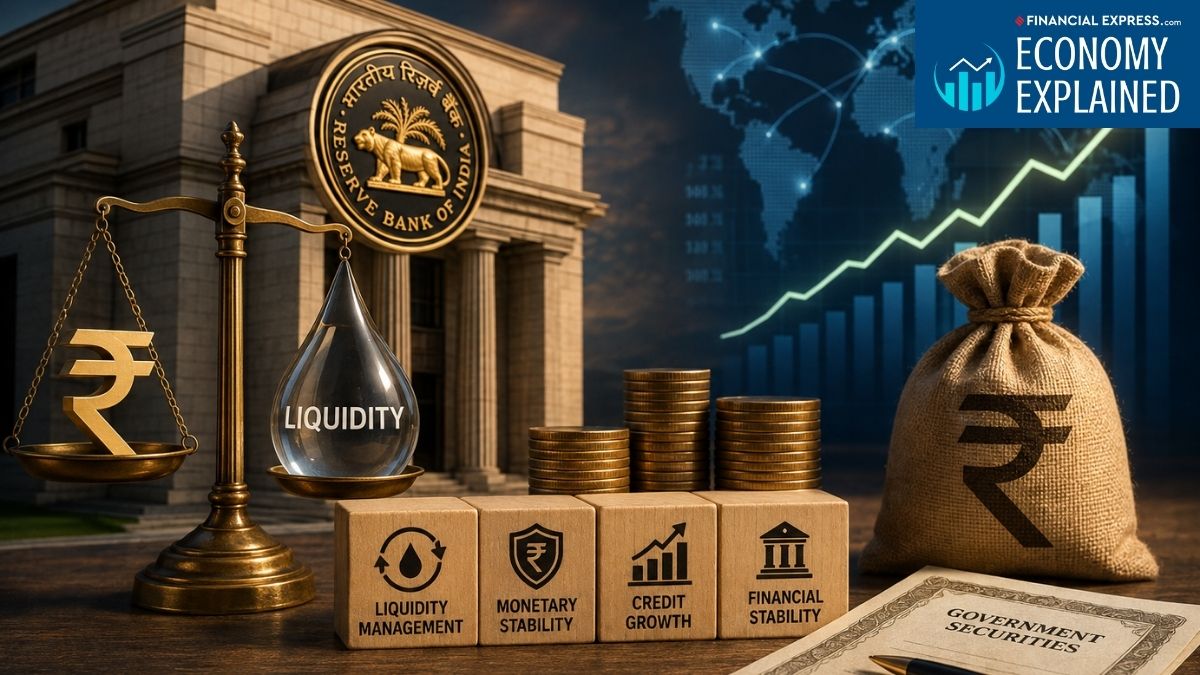
The RBI helps keep money moving through India’s banking system.
It has added a very large amount of rupee liquidity, including by buying government bonds.
But buying bonds cannot solve every problem affecting the rupee.
Higher oil prices and foreign investors taking money out of India can reduce foreign-currency inflows and weaken the rupee.
RBI action in the foreign-exchange market can also remove rupees from the banking system.
To help, the RBI encouraged overseas Indians and companies to bring foreign currency into India for several years.
These programmes brought in much more money than expected.
If inflation rises, the RBI may first absorb extra liquidity before considering higher interest rates.

The Reserve Bank of India provided Rs 14.67 lakh crore of liquidity support in FY2025-26, up from Rs 8.02 lakh crore the previous year.
Open market purchases reached Rs 8.28 lakh crore in FY2025-26, nearly half of the year’s gross government market borrowing.
West Asia-related oil-price increases and foreign investor outflows created external pressure on the rupee and foreign-exchange reserves.
The RBI promoted longer-term foreign-currency inflows through FCNR(B) deposits, overseas foreign-currency borrowings and external commercial borrowings.
These channels mobilised $72.848 billion by August 21, 2026, prompting the RBI to close the FCNR(B) window on August 31, ahead of schedule.
- Who
- The Reserve Bank of India, overseas Indians, public-sector undertakings, banks and foreign investors.
- What
- The RBI provided extensive domestic liquidity and encouraged foreign-currency inflows to support the financial system and the rupee.
- Where
- India’s banking, bond and foreign-exchange markets.
- When
- The measures covered FY2025-26; reported inflows were measured through August 21, 2026, and the FCNR(B) window is due to close on August 31, 2026.
- Why
- Domestic liquidity pressures coincided with foreign-exchange outflows, higher crude oil prices, a wider trade deficit and pressure on the rupee.
Domestic Liquidity Support
External Stability And Inflation Control
Role of bond purchases
Domestic Liquidity Support
OMO purchases can ease domestic liquidity shortages, support credit growth and improve monetary-policy transmission.
External Stability And Inflation Control
OMO purchases do not directly resolve foreign-exchange outflows, higher import costs or the external pressure weakening the rupee.
Managing surplus liquidity
Domestic Liquidity Support
Further liquidity support may help maintain orderly conditions and support lending while credit growth remains strong.
External Stability And Inflation Control
If inflation risks increase, the RBI may need to absorb excess durable liquidity before considering a rate hike.
Tools for absorption
Domestic Liquidity Support
CRR adjustments and longer-tenor VRRR operations could absorb liquidity without relying primarily on OMO sales.
External Stability And Inflation Control
OMO sales may affect bond yields and the government borrowing programme, while VRRR effectiveness depends on bank participation.
Key facts
- Total liquidity support
- Rs 14.67 lakh crore in FY2025-26, compared with Rs 8.02 lakh crore in FY2024-25.
- OMO purchases
- Rs 8.28 lakh crore in FY2025-26.
- CRR cuts
- Rs 2.5 lakh crore in FY2025-26, compared with Rs 1.16 lakh crore in FY2024-25.
- Foreign-currency inflows
- $72.848 billion mobilised through FCNR(B) deposits, OFCBs and ECBs by August 21, 2026.
- FCNR(B) deposits
- $65.397 billion of the reported inflows.
- FCNR(B) closure
- The RBI plans to close the window on August 31, 2026, earlier than the original September 30 deadline.
- Potential next steps
- The RBI could consider CRR adjustments or longer-tenor variable-rate reverse repos to absorb surplus liquidity.
Sources
Related news

Dollar inflows strengthen rupee but challenge RBI liquidity management
Rupee breathes via borrowed dollars as RBI swap window closes

India’s Forex Reserves Hit Record High on Foreign Inflows
RBI Forex Swap Attracts Record $136.37 Billion Inflows

FCNR(B) Inflows Cross $100 Billion as RBI Closes Window
RBI Forex Swap Facility Draws $72.85 Billion in Inflows

India Prepares Pilot for Tokenised Corporate Bonds

Foreign Investors Extend Indian Equity Buying Streak in August

Four Small-Cap Stock Picks for Long-Term Investors Now

PPFAS Mutual Fund Changes Features Across Five Funds
