11 months ago
Scientists Puzzled by Repeating Gamma-Ray Burst: GRB 250702B
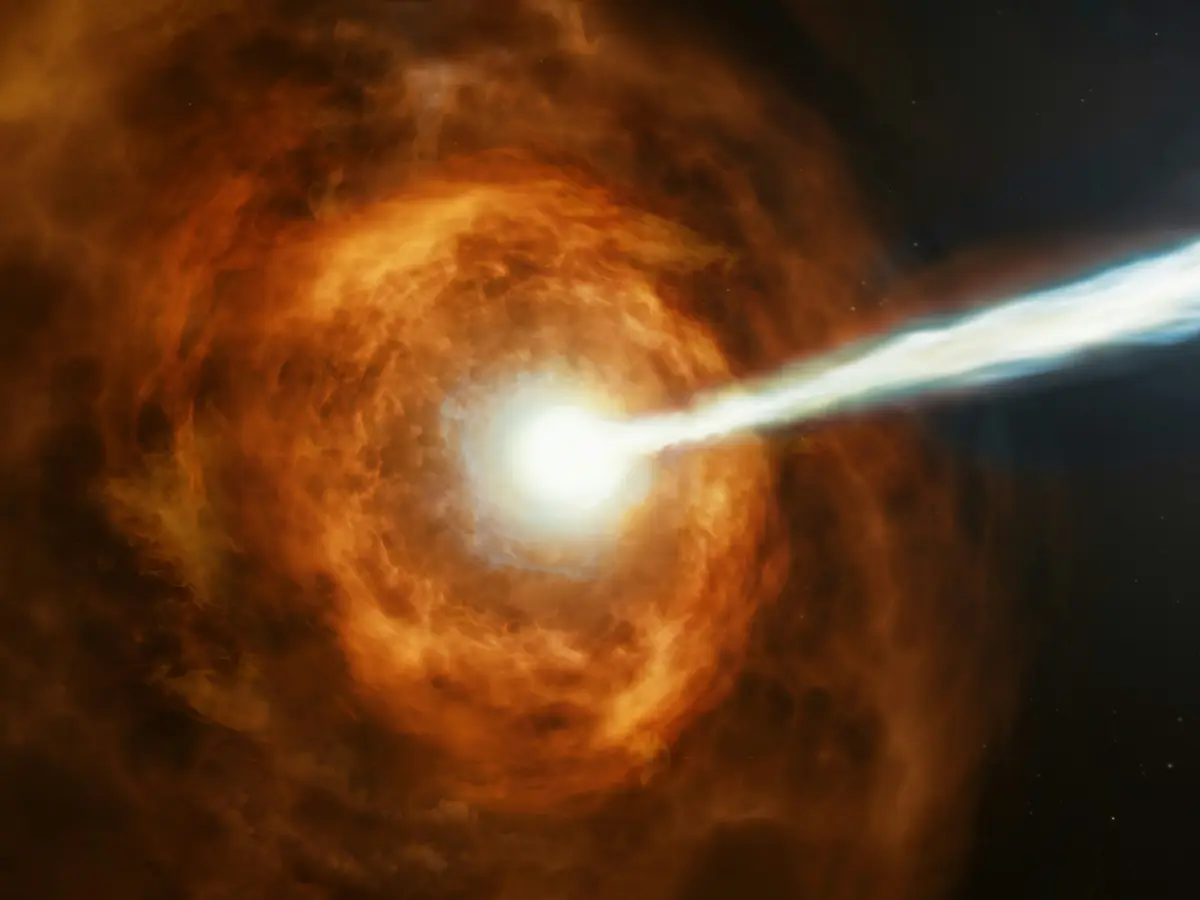
Imagine a massive explosion in space, like the death of a star, but happening multiple times!
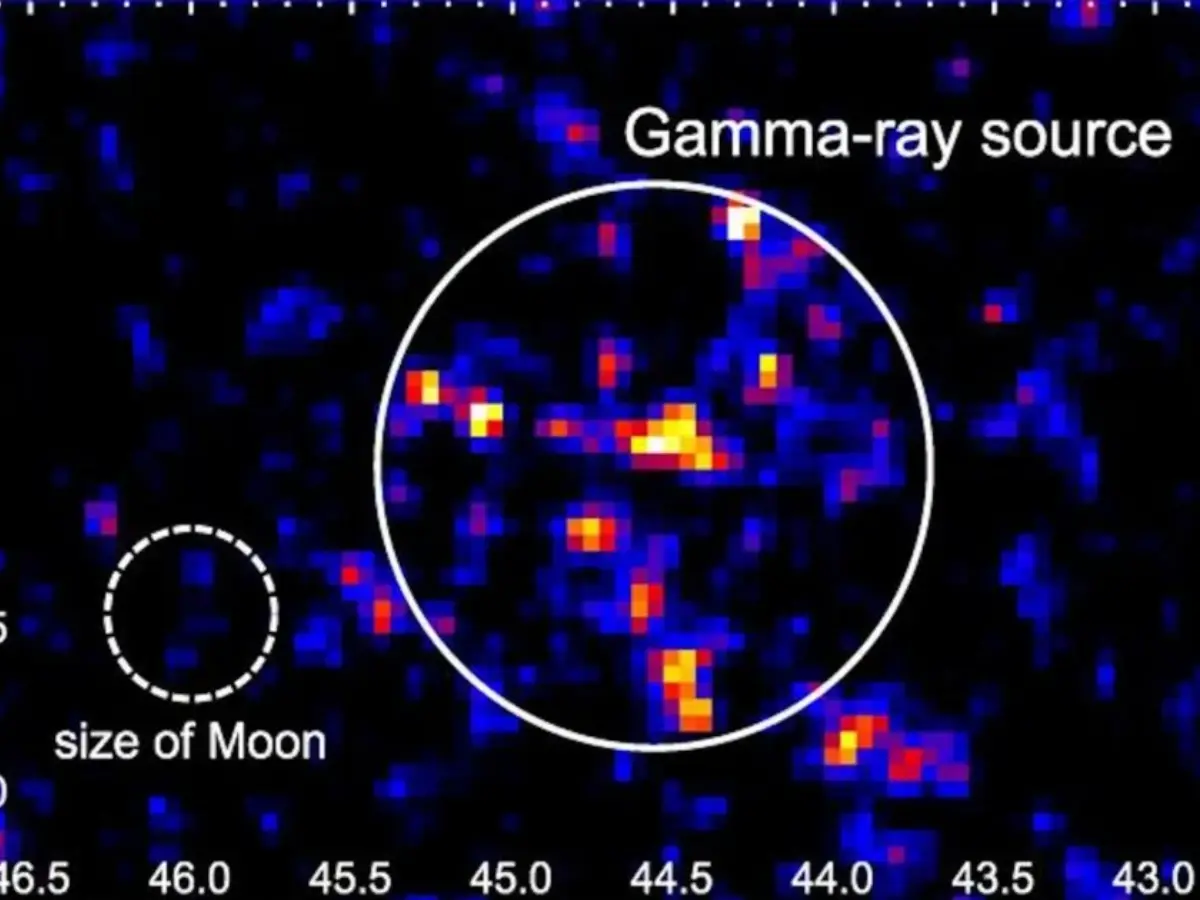
Scientists have found a gamma-ray burst, called GRB 250702B, that is repeating.
This is very strange because stars usually explode only once.
This burst is also much longer than others.
The light from this event is coming from billions of light-years away, making it difficult to study.
Scientists are puzzled and are considering different theories, like a collapsing star or a black hole consuming another star, but the exact cause is still unknown.

Scientists are studying a repeating gamma-ray burst (GRB) called GRB 250702B.
The GRB was first detected by NASA's Fermi Gamma-ray Space Telescope.
The burst is significantly longer than typical GRBs.
The event is repeating, happening multiple times.
The source of the burst is billions of light-years away.
- Who
- Scientists, including Martin-Carrillo and Andrew Levan
- What
- Observing a repeating, unusually long gamma-ray burst (GRB) called GRB 250702B
- Where
- From a source billions of light-years away
- When
- First detected on July 2 by NASA's Fermi Gamma-ray Space Telescope
- Why
- To understand the origins of the unusual GRB and its repeating nature, which is unlike anything observed before.
Unanswered Questions
Hypotheses
GRB Cause
Unanswered Questions
The exact cause of GRB 250702B remains unknown.
Hypotheses
Possible causes include a collapsing star or a black hole consuming a star.
Key facts
- Event Type
- Repeating Gamma-Ray Burst (GRB)
- GRB Designation
- GRB 250702B
- First Detected
- July 2 by NASA's Fermi Gamma-ray Space Telescope
- Duration
- 100-1000 times longer than typical GRBs
- Periodicity
- Repeating multiple times
- Distance
- Billions of light-years away
- Telescopes Involved
- Fermi Gamma-ray Space Telescope, Einstein Probe, Very Large Telescope (VLT)
Quotes
Martin-Carrillo
An astronomer at University College Dublin, Ireland, and coauthor of the study
“This event is unlike any other seen in 50 years of GRB observations.”
 wionews.com
“GRBs are catastrophic events, so they are expected to go off just once because the source that produced them does not survive the dramatic explosion.”
wionews.com
Andrew Levan
Co-lead author and Radboud University astronomer
“This is 100-1000 times longer than most GRBs”
wionews.com