1 hr ago
Why Airport Parking in India Costs More and Earns More
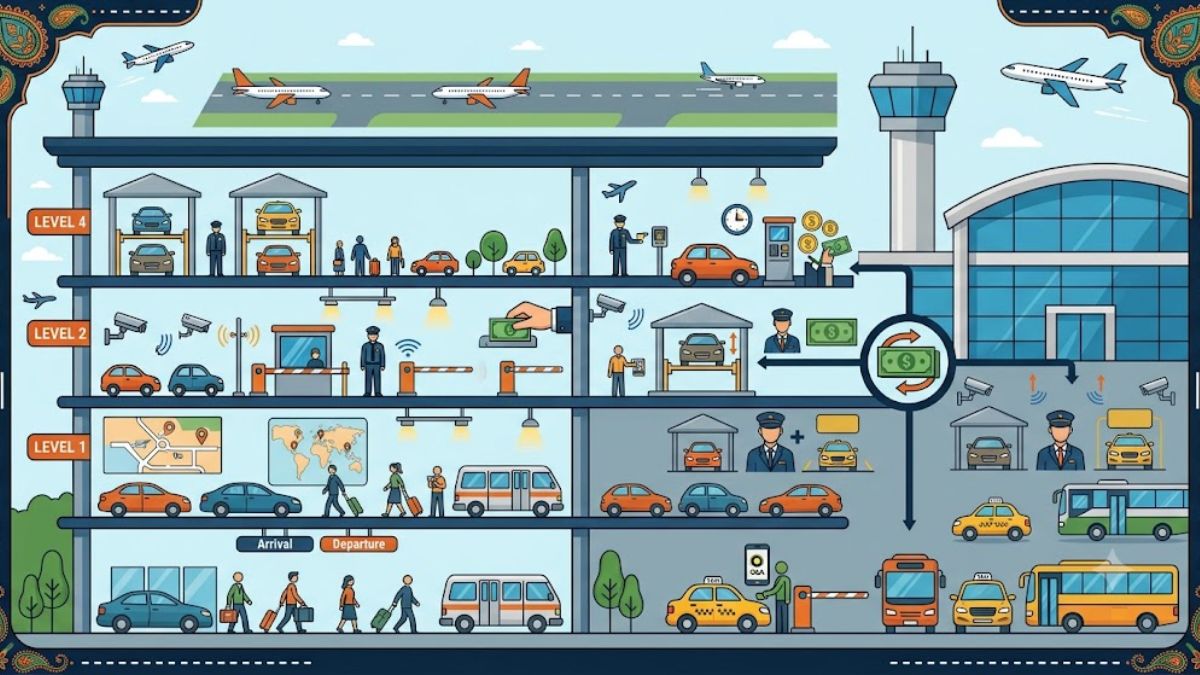
Airport parking in India can cost a lot because airports are expensive and tightly controlled places.
They need security systems, lights, cameras, traffic management and workers all day and night.
Land near terminals is limited, which makes nearby parking more valuable.
The price also depends on how long a car stays and whether the space is premium or general.
Delhi and Mumbai airports charge different rates for different time periods.
Airports usually treat parking as a business service separate from flight charges.
Some parking is run by outside companies under contracts with the airport.
Experts say airports can earn more by improving parking and offering services such as valet parking, digital reservations and EV charging.
They also say prices should remain convenient and affordable for passengers.

Delhi airport charges private cars Rs 160 for up to 30 minutes and Rs 600 for four to 24 hours.
Mumbai airport’s general private-car parking costs Rs 230-250 for 30 minutes to one hour and Rs 600 for four to 24 hours.
Experts cite scarce terminal-adjacent land, security, surveillance, infrastructure, staffing and 24-hour operations as major cost drivers.
Parking tariffs vary by airport, demand, available space, parking duration, location and concession arrangements.
Airports can increase parking revenue through better utilisation, premium and valet services, advance booking, automated systems and EV charging rather than only higher prices.
- Who
- Airport operators, parking concessionaires, drivers and aviation experts including Vandana Singh and B.V.J.K. Sharma.
- What
- The article explains why airport parking in India is expensive and how it generates non-aeronautical revenue.
- Where
- Indian airports, with examples from Delhi airport and Chhatrapati Shivaji Maharaj International Airport in Mumbai.
- When
- The article does not specify when the quoted tariffs or comments were issued.
- Why
- Costs reflect scarce terminal-adjacent land, security, infrastructure, operations and the need to manage limited parking capacity.
Revenue and operations
Affordability and convenience
Why parking costs more
Revenue and operations
Airport operators and experts say tariffs reflect scarce land near terminals, heavy security and infrastructure requirements, continuous staffing and the need to manage peak vehicle movements.
Affordability and convenience
For drivers, even short waits can produce bills of several hundred rupees, making parking duration part of the travel budget and raising concerns about convenience and affordability.
How airports should increase earnings
Revenue and operations
Parking is a recurring non-aeronautical revenue source, and airports can improve earnings through premium spaces, better utilisation and differentiated services.
Affordability and convenience
The article’s experts caution that growth should not rely simply on higher tariffs; economy options, digital booking, valet services, EV charging and convenient ground-mobility links should also be developed.
Key facts
- Delhi private-car parking
- Rs 160 for up to 30 minutes; Rs 250 for 30 minutes to one hour; Rs 320 for one to two hours; Rs 600 for four to 24 hours.
- Mumbai general parking
- Rs 230 for 30 minutes to one hour at Terminal 1 and Rs 250 at Terminal 2; both list Rs 600 for four to 24 hours.
- Mumbai premium parking
- Terminal 2 premium parking costs Rs 900 for four to 24 hours, compared with Rs 600 for general parking.
- Major cost factors
- Land, construction, security, surveillance, access control, lighting, fire and safety systems, traffic management, maintenance and 24-hour manpower.
- Revenue classification
- Vehicle parking is generally treated as a non-aeronautical service.
- Possible contract models
- Airports may receive a fixed licence fee, minimum guarantee, revenue share or a combination when parking is outsourced.
Quotes
B.V.J.K. Sharma
Chief Executive Officer of Navi Mumbai International Airport
“Airport parking is fundamentally different from conventional city parking because it operates within a highly regulated, security-intensive, and infrastructure-heavy environment. Airports have substantial costs related to land, terminal connectivity, security systems, surveillance, technology-enabled parking management, lighting, maintenance, manpower, and round-the-clock operations.”
 financialexpress.com
“Parking tariffs are typically determined based on factors such as airport category, passenger traffic, land and infrastructure costs, operating expenses, competitive benchmarks, and the commercial terms of the parking concession.”
financialexpress.com
Sources
Related news

India Plans Next Airport Privatization Wave With Smaller Lots

Navi Mumbai Airport Gets Waiver to Attract International Routes

BMC Proposes 10 Percent Mumbai Parking Fee Hike
Chennai Airport Opens Rs 22.88-Crore Pickup Plaza for Cabs

Noida Airport Faces Slow Growth, Losses and Tough Competition
Delhi Metro Builds Revenue Beyond Fares Through Station Commercialisation

Mumbai Airport Customs Seize Gold, Weed In 130 Smuggling Cases

Bombay High Court Says Duty-Free Shops Must Follow Indian Laws
Businessman’s Fake Airport Story Triggers Mumbai Kidnapping FIR
Mumbai Airport Customs Arrest Man Over Alleged Vietnam Gold Smuggling