6 days ago
Delhi Metro Builds Revenue Beyond Fares Through Station Commercialisation
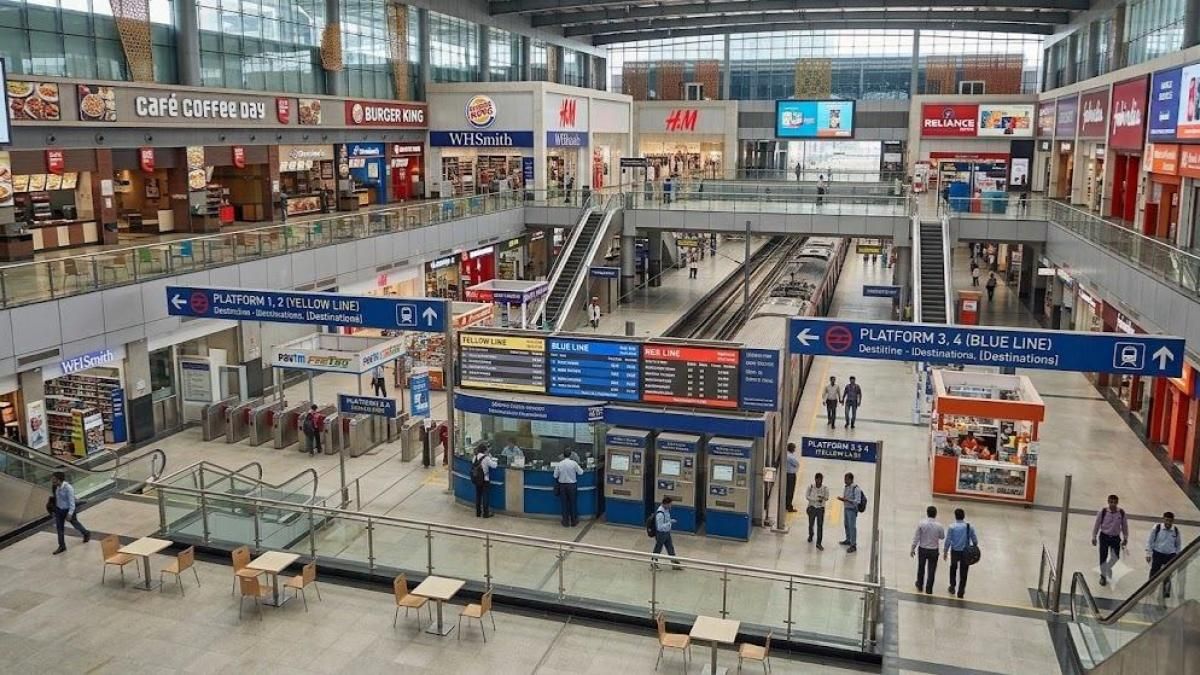
Delhi Metro is finding ways to earn money besides selling tickets.
Some stations now have shops, cafés, ATMs, lockers and other services.
This extra income can help pay for rising operating costs.
It may also reduce the need for frequent fare increases.
DMRC says non-fare revenue is about one-fifth of its passenger-fare revenue.
The corporation has developed commercial spaces while keeping safety and passenger movement as priorities.
New services include digital lockers, smart vending and EV charging.
The Metro Sarthi app also connects passengers with tickets and other travel services.
The challenge is to add useful businesses without making stations difficult to use.

Delhi Metro is expanding commercial activity at stations to diversify revenue beyond passenger fares.
DMRC says non-fare revenue is approximately 20% of fare-box, or traffic, earnings.
Revenue sources include advertising, commercial leasing, kiosks, ATMs, telecom infrastructure and property development.
Station projects include retail, food outlets, parking, offices, shopping complexes and multiplexes.
Digital lockers, smart vending, EV charging and the Metro Sarthi app are expected to support future growth.
- Who
- The Delhi Metro Rail Corporation and businesses operating in or around its stations.
- What
- DMRC is expanding commercial development and technology-enabled services to increase non-fare revenue.
- Where
- Across Delhi Metro stations and nearby properties, including Rajiv Chowk, Kashmere Gate, Nehru Place and Dwarka Sector 21.
- When
- The strategy has been used since Phase I, with further expansion planned in Phase IV and beyond.
- Why
- To help cover rising operating costs, limit reliance on socially sensitive fare increases and maintain service quality.
Revenue Expansion
Passenger-First Planning
Role of commercial activity
Revenue Expansion
More shops, leasing, advertising and property development can diversify income and reduce dependence on fares.
Passenger-First Planning
Commercial activity should remain secondary to safety, accessibility, passenger convenience and efficient movement.
Station transformation
Revenue Expansion
Stations can become mixed-use urban or neighbourhood hubs with retail, food, offices, parking and entertainment facilities.
Passenger-First Planning
Transit-oriented development must be carefully planned around Delhi’s space constraints and commuter-focused travel behaviour.
Future services
Revenue Expansion
Digital lockers, smart vending, EV charging, battery swapping and integrated app services can create new commercial opportunities.
Passenger-First Planning
New services should be selected and designed primarily to improve the passenger journey rather than crowd or complicate stations.
Key facts
- Non-fare revenue
- Approximately 20% of DMRC’s fare-box, or traffic, earnings.
- Operational network
- More than 400 kilometres.
- Revenue sources
- Advertising, train wrapping, station co-branding, leasing, kiosks, ATMs, telecom infrastructure and property development.
- Technology services
- Digital lockers, smart vending, EV charging and battery-swapping facilities.
- Digital platform
- Metro Sarthi offers metro ticketing, first- and last-mile options, event and monument tickets, Noida Metro tickets and DTC bus ticketing through ONDC.
- Commercial examples
- Shastri Park IT Park, Kashmere Gate food outlets, Janakpuri West parking, Nehru Place and Akshardham shopping complexes, and Dwarka Sector 21’s multiplex-cum-shopping facility.
- Financial exception
- DMRC attributed operational profitability to supplementary income except during the Covid-affected financial years 2020-21 and 2021-22.
Quotes

Delhi Metro Rail Corporation
Delhi’s metro operator and infrastructure organization
“Infact, the next phase of Delhi Metro station development is expected to build on these commuter-centric services already introduced by DMRC. A number of initiatives such as, tech-enabled digital lockers (“Smart Boxes”), smart vending, EV charging, battery swapping, etc., are acting as the core drivers transforming Delhi Metro stations from mere transit stops into multi-functional urban micro-hubs.”
 financialexpress.com
“Property Development is being looked at as a viable Revenue stream/source, so that in a city like Delhi and its peripheries, fares can be kept reasonable without compromising on the quality of service.”
financialexpress.com
Sources
Related news

Mumbai Metro Invites Bids for Retail Spaces at 34 Stations
Delhi High Court Asks DMRC to Consider Toilets, Baby-Feeding Facilities

Maharashtra to Develop 147 MSRTC Properties in PPP Mode

CAG: Bangalore Metro Missed 2007 Ridership Projections Even by 2023
Delhi Metro's New Subsidiary DMIL Bids for Five Overseas Projects