1 day ago
Bill Gates Warns AI Could Bring Permanent Job Losses
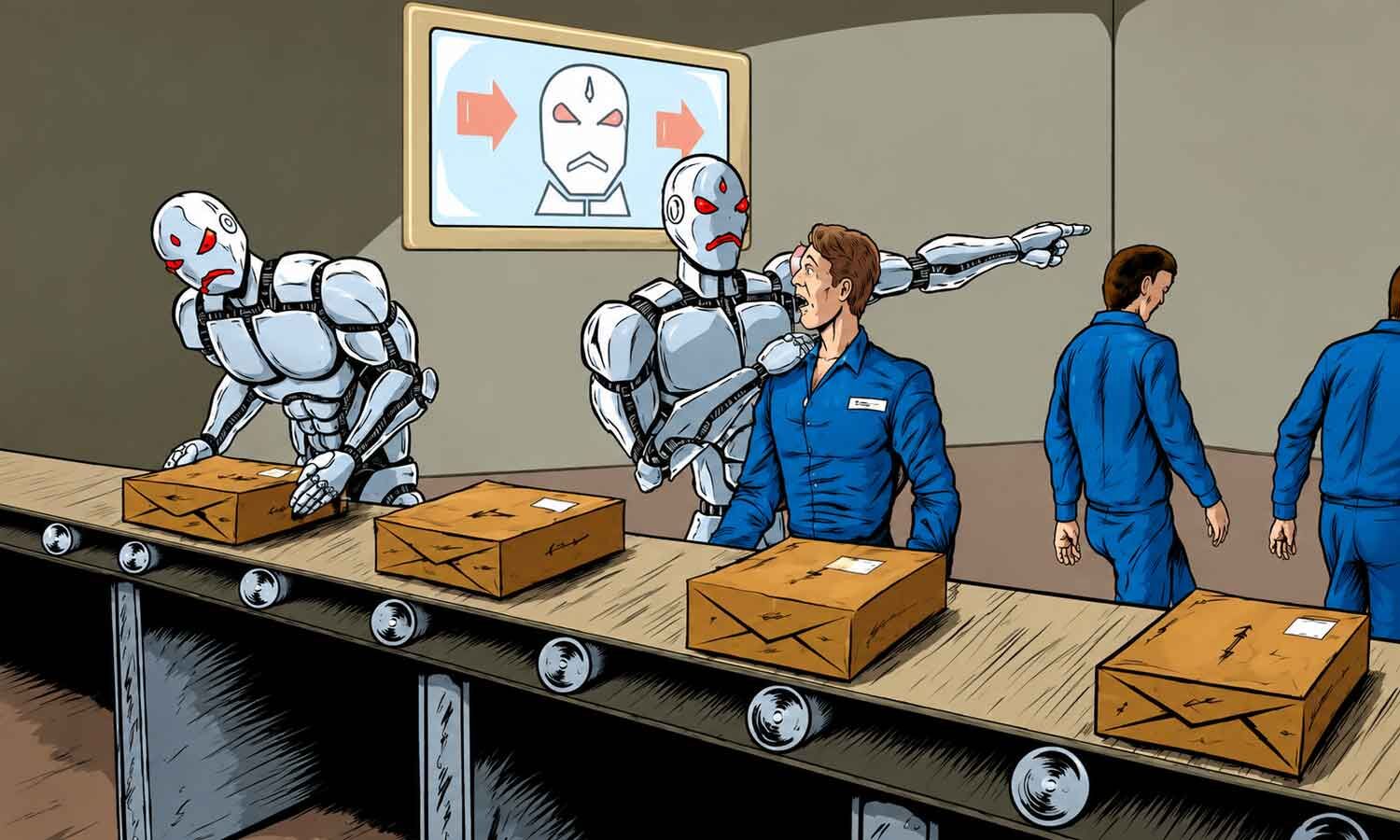
Bill Gates says computers and robots are becoming powerful very quickly.
He worries they may do many jobs that people do today.
This could make it hard for some people to earn money and pay for important things.
He also says AI could help criminals attack computer systems, create dangerous biological tools or make convincing fake information.
Bernie Sanders agrees that these risks need urgent attention.
Nvidia chief executive Jensen Huang has a different view and believes AI will create many new kinds of work.
Researchers have produced very different estimates of how many jobs or tasks could be automated.
Gates has suggested taxing automation and protecting some types of work from being replaced.

Bill Gates warned that rapidly advancing artificial intelligence could cause permanent job losses, security threats and social damage.
He said AI and smart robots may replace work in white-collar, construction and hospitality roles, widening economic gaps.
Gates also cited cheaper cyberattacks, biological-weapons risks, fraud, deepfakes and possible harm from AI companions.
Bernie Sanders endorsed Gates’s concerns and urged action, while Jensen Huang predicted AI would create work on an unprecedented scale.
Studies estimate widely varying automation risks, and Gates has suggested taxing automation while protecting some jobs from AI.
- Who
- Bill Gates raised the warnings; Bernie Sanders supported them, while Nvidia chief executive Jensen Huang offered a more optimistic view.
- What
- The discussion concerns AI-related job displacement, security dangers, social harms and possible government responses.
- Where
- The essay appeared on GatesNotes, Gates’s personal website; several cited job estimates concern the United States and global work.
- When
- Gates published his essay on August 30; the article also references studies from 2013, 2016 and 2017 and Sanders’s December 2025 comments.
- Why
- The concerns arise because AI is advancing rapidly and may automate work while increasing cyber, biological, fraud and misinformation risks.
AI Risk Warnings
AI Growth Optimism
Impact on employment
AI Risk Warnings
Gates and Sanders warn that AI and robots could permanently displace workers, deepen economic inequality and make it difficult for people to pay for essentials.
AI Growth Optimism
Jensen Huang predicts that AI will create work on an unprecedented scale.
Need for government action
AI Risk Warnings
Gates proposes taxing automation and reserving certain categories of work from AI, while Sanders has called for urgent action and a pause in frontier development.
AI Growth Optimism
The article presents Huang’s forecast of large-scale job creation but does not describe specific policy proposals from him.
Security and social risks
AI Risk Warnings
Gates and Sanders cite cyberattacks, bioterrorism, fraud, deepfakes, misinformation and psychosocial harm as serious dangers requiring immediate attention.
AI Growth Optimism
The article does not provide a detailed response from Huang or other AI proponents to these specific risks.
Scale of automation
AI Risk Warnings
Some estimates project substantial exposure: 47 percent of US jobs in one Oxford study, 38 percent in a PwC study and roughly half of global work tasks in a McKinsey analysis.
AI Growth Optimism
The OECD’s task-based estimate was much lower, placing 9 percent of US jobs at high risk; the article notes that some studies measure technical possibility rather than actual unemployment.
Key facts
- Gates’s essay
- A roughly 6,000-word essay published on GatesNotes on August 30.
- US job cuts mentioning AI
- AI was cited in 112,713 announced US job cuts through July, about 24 percent of the total.
- Oxford estimate
- A 2013 study estimated that 47 percent of US jobs could be technically automatable within a decade or two.
- OECD estimate
- A 2016 task-based study estimated that 9 percent of US jobs faced a high risk of automation.
- PwC estimate
- A 2017 study estimated that 38 percent of US jobs could face a high risk of automation by early 2030.
- McKinsey estimate
- About 50 percent of work tasks worldwide were estimated to be already automatable; rapid adoption could automate 30 percent of global work activities by 2030.
- Proposed automation tax
- Gates suggested taxing automation and robots; MIT economists cited a possible tax of 1 to 4 percent of the value of automation and autonomous systems.
Quotes

Bernie Sanders
US senator who endorsed Gates’s warnings about artificial intelligence.
“poses a grave threat to jobs and the future of humanity”
 thehansindia.com
“We must act before it’s too late”
thehansindia.com
Sources
Related news

Sanders Backs Gates Warning About AI Job Losses
Bill Gates Warns AI Could Equalize or Deepen Injustice

Bill Gates Urges Token Tax as AI Threatens Jobs

Bill Gates Urges Human-Only Jobs and Tougher AI Rules

Bill Gates Warns AI Transition Will Bring Turbulent Change

Bernie Sanders and Bill Gates Warn AI Could Erase Jobs

Indian Pantry Staples Gain Premium Appeal Through Trust and Traceability

Audit Firms Adapt to Digital Businesses and Data Deluge

OpenAI's ChatGPT Ads Launch Reshapes India's Digital Advertising Landscape

Dombivli Software Developer Allegedly Loses ₹11 Lakh In Dating-App Fraud