11 months ago
China's Curbs Hinder India's EV Battery Production

China is making it difficult for Indian companies to make advanced EV batteries.
They've restricted the export of key technology and materials needed for LFP batteries, which are becoming popular because they are cheaper.
This is causing delays for companies like Reliance and Exide as they try to build factories.
The problem is similar to when India had trouble getting the materials to build rare earth magnets, used in electric motors.
Now, Indian companies risk falling behind in a market where LFP batteries are expected to be the dominant technology, as China controls the supply chain.

China's export controls hinder India's EV battery production using LFP technology.
Indian firms struggle to access advanced LFP tech and materials like synthetic graphite.
Reliance, Exide, and JSW face delays, and some are considering NMC batteries.
LFP batteries are cost-effective and gaining market share globally.
China dominates LFP technology, potentially putting Indian firms at a disadvantage.
- Who
- Indian EV battery manufacturers
- What
- Facing delays due to Chinese export controls and materials sourcing issues
- Where
- India
- When
- Ongoing, with increasing challenges in 2024
- Why
- China's restrictions hinder access to advanced LFP battery technology.
Key facts
- Companies Affected
- Reliance, Exide, JSW, Tata Agratas, Amara Raja
- Technology
- LFP (Lithium Iron Phosphate) Batteries
- Chinese Controls
- Export controls on LFP battery technology and raw materials
- Raw Materials
- Synthetic Graphite
- Production Status
- Many Indian firms behind schedule
- Market Share
- LFP batteries expected to dominate market
Timeline
China curbed rare earth magnet exports, impacting India's EV supply.
These new rules caused production delays.
Also restricted were minerals vital to electronics and EV batteries.
Key battery tech and materials exports faced further clampdowns.
Indian EV production now anticipates setbacks and delays.
Quotes
one of the executives
working on sourcing cells for EVs
“We are not going to compromise on the performance and safety of vehicles, as that would hurt consumer confidence. Indian firms must match the technology offered by competitors. Otherwise, auto firms will be reluctant to source cells—unless the government imposes import restrictions”
 livemint.com
“There is no outright ban, but suppliers face problems in getting their documentation cleared. There are a lot of delays”
livemint.com
Vikram Handa
managing director at lithium-ion battery material maker Epsilon Advanced Materials Ltd
“For cell manufacturers who want to get into the LFP manufacturing, there are some challenges in sourcing mature technology”
livemint.com
“Synthetic graphite, which is required for LFP, also requires an export licence. If you take two steps back and you just think about what has happened in rare earths, the same messaging is coming in synthetic graphite.”
livemint.com
CRU International Ltd
London-based business intelligence firm
“China’s export restriction policy on high-end LFP technology is ensuring it will remain in the hands of Chinese companies, while non-Chinese firms generally take longer to achieve and scale up similar cost and technical advancements for LFP”
livemint.com
Praveen Pothumahanty
partner at consulting firm EY Parthenon
“The truth of the matter is that Chinese players dominate the LFP technology and raw materials required for developing the tech. Even if firms source licences for the technology, the problem is that Chinese players may not give you the latest technology. So, by the time the factory is ready, the technology is already years behind Chinese players”
livemint.com
Sources


Related news

Putin Faces Western Isolation While Russia Builds Non-Western Ties
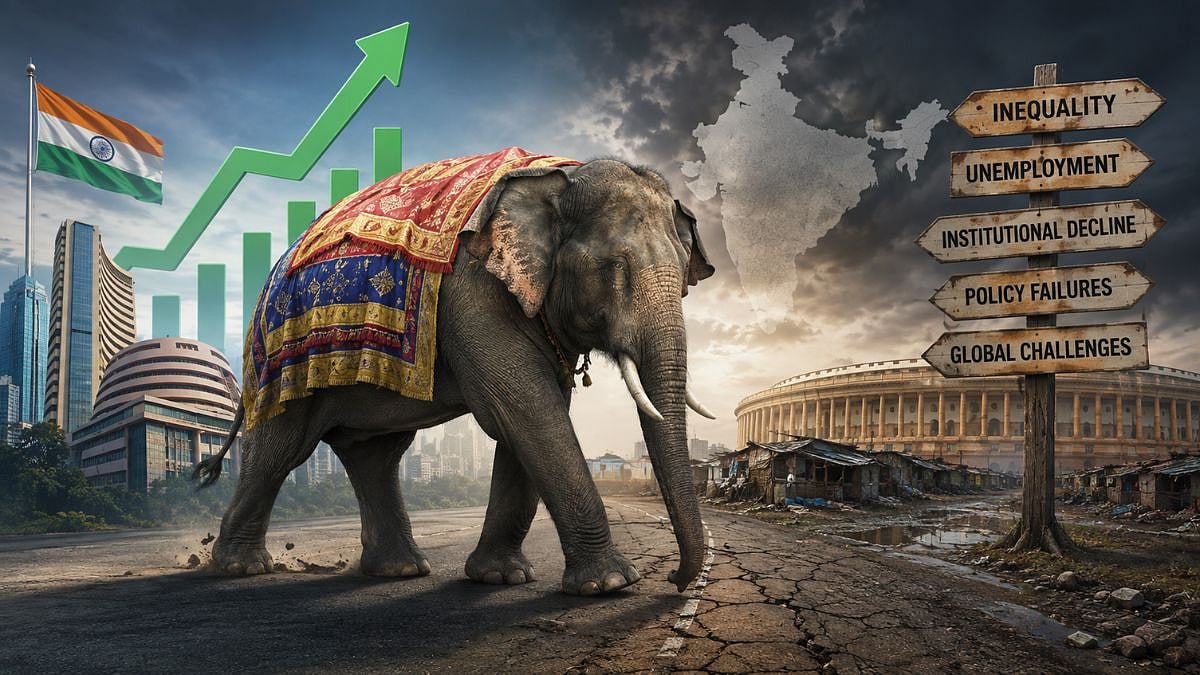
India’s Global Power Ambitions Face Economic and Democratic Setbacks
India’s 7.8% Growth Broad-Based, but Jobs Remain Challenge
India Pursues Global Mineral Pacts to Secure Supply Chains

Nepal Plans New Landslide Warning System Along China Border