5 hrs ago
UN Says World Will Exceed Paris Warming Limit
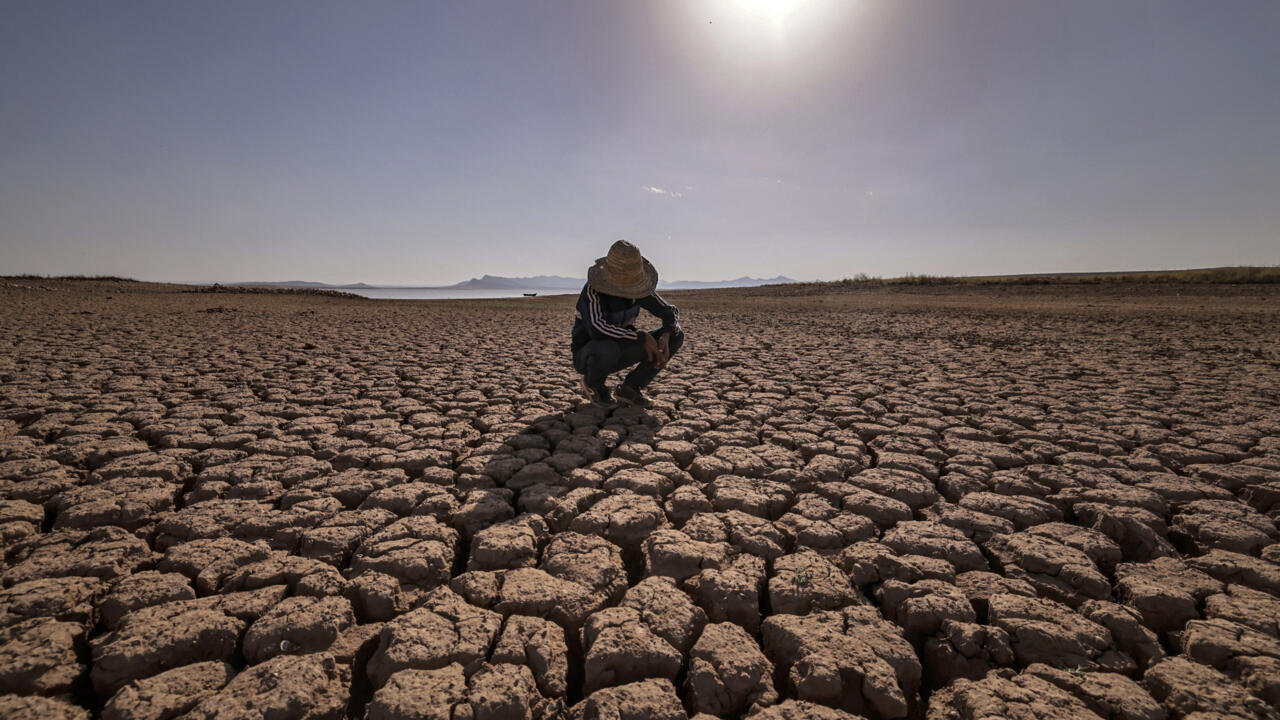
The United Nations says the world will probably become warmer than the limit set in the Paris climate accord.
That limit is 1.5 degrees Celsius above temperatures before widespread industrialization.
Scientists say this limit will be crossed within the next few years.
The world may then become even warmer before temperatures can slowly fall again.
More warming could mean stronger disasters, rising seas, less food, and less water.
Some animals and plants could disappear, and some places could become difficult to live in.
Countries should cut fossil fuel use quickly to keep the warming peak as low as possible.
They also need to help people adapt to damage that cannot be avoided.
Scientists suggest removing carbon dioxide from the air, but some experts say this would be expensive and unreliable.

A United Nations report says Earth will cross the 1.5°C warming threshold within the next few years.
The report projects warming could peak at 1.8°C under ambitious policies or reach 2.6°C by 2100 under current policies.
Scientists recommend limiting the peak, adapting to unavoidable damage, and eventually removing carbon dioxide from the atmosphere.
Overshoot could bring decades of worsening disasters, rising seas, food and water shortages, illness, and species loss.
Experts disagree over whether large-scale carbon removal can reliably return temperatures below 1.5°C.
- Who
- The United Nations, climate scientists, and governments are the main actors discussed.
- What
- A United Nations report says the world will overshoot the 1.5°C warming limit and should limit the peak before cooling temperatures back below it.
- Where
- The effects are global, affecting Earth, including vulnerable regions and communities worldwide.
- When
- The report was issued Wednesday; the 1.5°C threshold is expected to be crossed within the next few years, with overshoot potentially lasting many decades.
- Why
- Coal, oil, and gas use has driven warming, while delayed emissions cuts have made crossing the threshold increasingly likely.
Overshoot Strategy Supporters
Overshoot Strategy Critics
Whether the 1.5°C goal remains useful
Overshoot Strategy Supporters
United Nations officials and some scientists say 1.5°C remains the goal, even if the world must approach it from above after temporarily exceeding it.
Overshoot Strategy Critics
Critics describe the situation as extremely difficult and question whether the report clearly demonstrates a realistic path back below the threshold.
Value of limiting peak warming
Overshoot Strategy Supporters
Supporters say every tenth of a degree avoided means less damage, and reducing the peak and the time spent above 1.5°C can make the future safer.
Overshoot Strategy Critics
Critics warn that overshoot could last many decades and would still bring serious or irreversible harm, including tipping points.
Carbon dioxide removal
Overshoot Strategy Supporters
The report says atmospheric carbon removal will be needed to cool the planet after the overshoot, alongside ending fossil fuel use.
Overshoot Strategy Critics
Other scientists characterize large-scale carbon removal as unreliable, expensive, and unlikely to provide a dependable way out.
Key facts
- Warming threshold
- 1.5°C above mid-19th-century, or pre-industrial, temperatures
- Current warming
- About 1.4°C above pre-industrial levels, based on a 20-year average
- Most optimistic projection
- Warming peaks at about 1.8°C around mid-century if countries pursue ambitious climate goals
- Current-policy projection
- Temperatures could reach about 2.6°C above pre-industrial levels by 2100
- Expected threshold crossing
- The world is expected to pass 1.5°C within the next few years
- Proposed response
- End fossil fuel use, adapt to unavoidable impacts, and remove carbon dioxide from the atmosphere
- Tree-planting estimate
- The report says planting trees could reduce global temperatures by at most about 0.1°C
Quotes

Antonio Guterres
United Nations Secretary-General
“Let's be very clear, 1.5 target is still the goal. But now we need to approach it differently from above.”
 deccanchronicle.com
“Humanity is speeding past the limit to avoid climate catastrophe.”
deccanchronicle.com
Rob Jackson
Stanford University climate scientist
“We were unable to stop the runaway train of global emissions to avoid 1.5 C of warming. Now overshoot scenarios require us to stop the train quickly and to back it up. Is it our best hope? Absolutely. Is it likely? Absolutely not.”
deccanchronicle.com
Sources
Related news
UN Report Says World May Breach 1.5°C, Return Possible
UNEP Report Says 1.5°C Breach Is Now Inevitable

UN Warns of Rising Sea Levels Threatening India

Musk Warns Climate Action Alone May Not Save Humanity

Musk Warns Sustainable Energy Alone Cannot Save Humanity