3 weeks ago
Hot days could last four hours longer by 2100: study

Scientists studied very hot hours of weather, not just hot days.
They found that by the year 2100, hot days could have four extra hours of extreme heat.
Even regular days could get three more extremely hot hours.
This would happen if the world keeps getting warmer from greenhouse gases.
Poorer countries would be affected the most.
Since 1981, most of the world's land has already seen more very hot hours.
Every ten years, about 62 more hot hours are added on average.
Looking at heat hour by hour helps us find danger that daily reports miss.
This can help build better heat warnings and keep people healthy and safe.

Hot days could see an extra four hours of extreme heat by the end of the century under a high-emissions scenario, a study found.
Days not classified as hot could gain an additional three hot hours that daily metrics overlook.
The findings were published in the journal Nature Climate Change by researchers including those from China's Sun Yat-sen University.
More than 80% of the world's land area showed an increase in heat, with an average of 62 additional extreme-heat hours per decade between 1981 and 2023.
Low and middle-income countries account for more than three-quarters of both current and projected heat exposure.
- Who
- Researchers from China's Sun Yat-sen University and Southern Marine Science and Engineering Guangdong Laboratory.
- What
- A study finding that hot days could gain four extra hours of extreme heat by late century under a high-emissions scenario, with three more hot hours on non-hot days.
- Where
- Global land areas worldwide; researchers are based in China.
- When
- Based on global hourly data from 1981-2023, with projections to the end of the 21st century.
- Why
- To capture hourly heat exposure overlooked by daily temperature metrics and support heat risk management and public health planning.
Key facts
- Journal
- Nature Climate Change
- Extra hot hours per hot day by 2100
- 4 hours
- Extra hot hours on non-hot days
- 3 hours
- Average extreme heat per summer
- Approximately 269 hours
- Average increase per decade (1981-2023)
- 62 hours
- World land area showing increase
- More than 80%
- Projected population exposure increase by late century
- Sixfold
- Heat exposure shared by low and middle-income countries
- More than three-quarters
Quotes
Authors of the study
Researchers from Sun Yat‑sen University and Guangdong Laboratory
“Each hot day will gain about four hot hours, and a further three hot hours will occur on non‑hot days, which daily metrics overlook.”
 rediff.com
 telegraphindia.com
“HHEs (hourly heat extremes) are emerging worldwide and exhibit marked unequal exposure across regions and generations.”
rediff.com
telegraphindia.com
Sources

Related news

Climate Heat Stress Threatens India’s Children and Elderly

Climate Change Exposes Millions Of Indian Children To Heat Stress
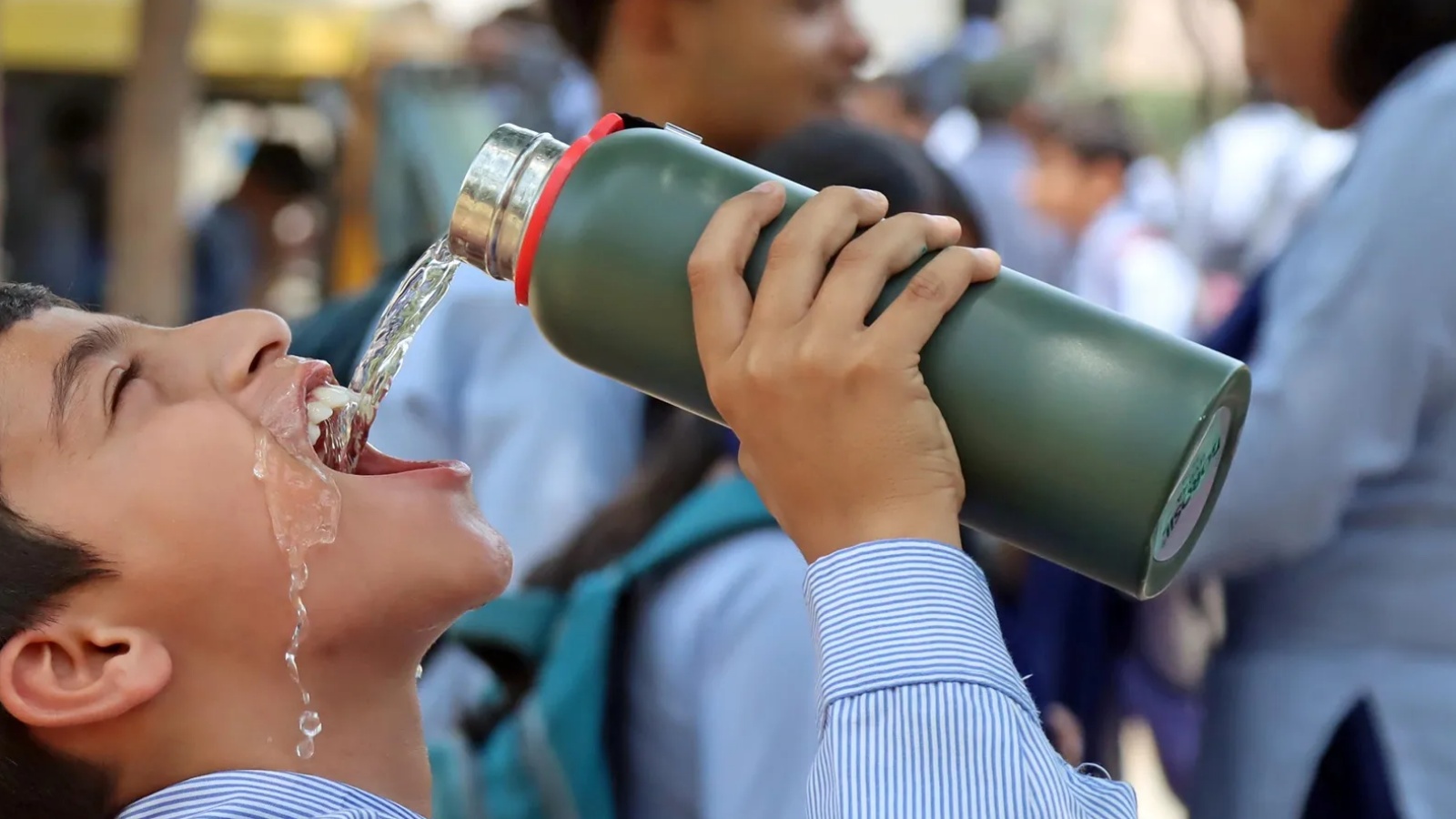
Climate Change Exposes 145 Million Indian Children to Heat Stress

Rising Humid Heat Could Bring 4,000 Annual Deaths to Lucknow

Japan’s farmers shift to nighttime work as heat intensifies