3 weeks ago
Russia proposes direct rail link to India amid Hormuz tensions
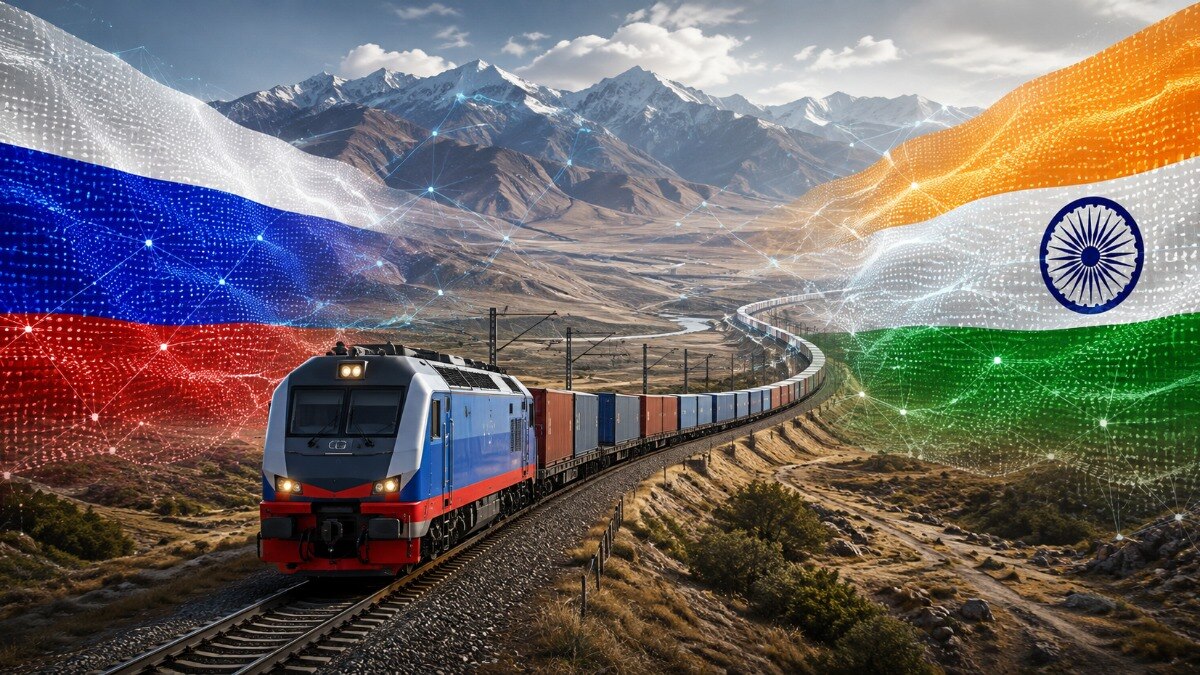
Russia wants to build a very long train track to India.
Right now, a lot of oil travels by ship through narrow sea passages, but one of those passages, the Strait of Hormuz, has become dangerous because of a war between the US and Iran.
Another passage, the Bosphorus, is controlled by Turkey, which belongs to NATO.
Russia wants a train route so it does not have to depend on ships going through those narrow straits.
The train would need to pass through Afghanistan and Pakistan to reach India.
But Pakistan does not get along well with Afghanistan or India right now, which makes this very hard.
There was a similar big project before, a pipeline called TAPI, that was supposed to carry gas from Turkmenistan to India through Afghanistan and Pakistan.
That pipeline was started decades ago but was never finished.
So building this new rail link would be a major challenge.
Russia is looking at new ways to move goods because shipping through the Strait of Hormuz has become risky.

Russia has proposed a direct rail link to India that would bypass the Strait of Hormuz and the Bosphorus, both key shipping chokepoints.
About 25% of global oil trade and roughly 20% of LNG shipments pass through the Strait of Hormuz.
Russia ships hundreds of thousands of barrels per day through its Black Sea hub of Novorossiysk, with the Bosphorus handling about 3.3 million barrels per day in the first half of 2025.
The proposed Russia-Afghanistan-Pakistan-India rail corridor faces obstacles due to Pakistan's deteriorated relations with both Afghanistan and India.
The proposal follows US and Israeli military action against Iran on February 28 and IRGC restrictions on traffic through the Strait of Hormuz.
The referenced TAPI gas pipeline, an approximately 1,800-km Turkmenistan-Afghanistan-Pakistan-India project, remains unrealized decades after it was first proposed.
- Who
- Russia (proposing the route), with India as the intended destination; the US and Israel launched military action against Iran, whose Islamic Revolutionary Guard Corps restricted Hormuz traffic.
- What
- A proposed direct rail link from Russia to India as an alternative to shipping routes through the Strait of Hormuz and the Bosphorus.
- Where
- The proposed Russia-Afghanistan-Pakistan-India rail corridor, connecting Russia to the Indian Ocean; the Strait of Hormuz and the Bosphorus Strait are the shipping routes in question.
- When
- Amid current tensions around the Strait of Hormuz, following US and Israeli military action against Iran on February 28 and the IRGC's subsequent restriction of strait traffic.
- Why
- To find alternative transport routes because shipping through the Strait of Hormuz has been disrupted by the US-Iran conflict and because Turkey, a NATO member, controls the Bosphorus.
Iran's Perspective
US-Israel Perspective
Actions in the Strait of Hormuz
Iran's Perspective
Iran restricted strait traffic to vessels linked to the US, Israel, and countries it says supported aggression against the Islamic Republic, and the IRGC carried out large-scale retaliation against US military facilities in the region.
US-Israel Perspective
The US and Israel launched military action against Iran on February 28, and disruptions to shipping through the Strait of Hormuz followed.
Alternative trade routes
Iran's Perspective
Iran's restrictions make alternative routes necessary for Russia and others relying on Hormuz passage.
US-Israel Perspective
Russia's alternative rail proposal reflects the security risks of the current conflict and its impact on global shipping.
Key facts
- Proposal
- Direct rail link from Russia to India
- Proposed route
- Russia-Afghanistan-Pakistan-India corridor to the Indian Ocean
- Strait of Hormuz share of global oil trade
- Roughly 25%
- Strait of Hormuz share of LNG shipments
- About 20%
- Bosphorus traffic (H1 2025)
- About 3.3 million barrels per day of crude and petroleum products
- TAPI pipeline length
- Approximately 1,800 km (Turkmenistan-Afghanistan-Pakistan-India gas pipeline)
- TAPI status
- Unrealized decades after first proposal; Serhetabat-Herat section work launched in September 2024
- Key obstacle
- Pakistan's deteriorated relations with both Afghanistan and India
Sources
Related news
Russia Floats Rail Link to India to Avoid Maritime Risks
Russia proposes direct rail corridor linking India via Central Asia

India Diversifies Oil Supplies as Hormuz Becomes Less Powerful

China's Sea Legend launches first regular Arctic shipping route service
Omani Waters Emerge as Gulf Oil Route Amid Hormuz Risks

India's Russian crude imports hit record high in July

Trump Floats Renaming Strait of Hormuz as ‘Trump Strait’

Chevron Plans $7 Billion Venezuela Expansion Amid U.S. Oil Push

Saudi Arabia Says Iranian Tanker Attack Killed Two Sailors
U.S.-Iran Exchange Escalates Across Middle East, Markets Slide
Trump Aides Seek Quiet Iran War Before Midterm Elections