

1 week ago
EPL's Beauty-Led Shift Brings Growth, Margins, and New Risks
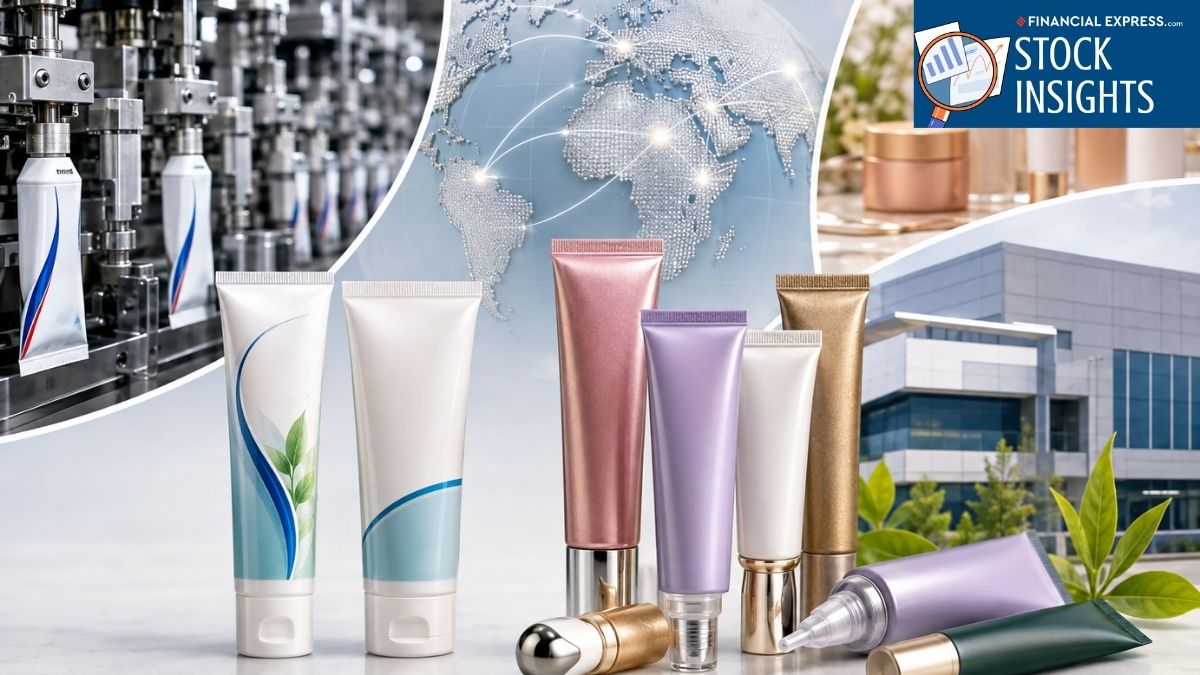
EPL makes tubes used for products such as toothpaste, cosmetics, and medicines.
It is trying to grow beyond toothpaste by making more high-end packaging for beauty products.
Beauty and Cosmetics grew strongly during the latest quarter, and newer products use special designs and materials.
The company’s sales increased a lot, but its profit after tax decreased slightly.
EPL says it can pass higher material, shipping, and currency costs on to customers.
Europe is a problem because sales grew there while profits fell during factory changes.
The company is spending more money on factories, equipment, and inventory to prepare for future growth.
Debt and inventory have increased, so investors will watch whether these investments produce better profits.
The main question is whether EPL can turn its beauty growth into steady profits across all regions.

EPL’s June-quarter revenue rose 25.3% year over year, while underlying EBITDA margin was reported at 19.6%.
Beauty and Cosmetics revenue grew 23.6%, while Personal Care & Beyond reached 54% of tube revenue, up from 43% in FY19.
Profit After Tax fell 1.4%, partly because the previous year benefited from an unusually low effective tax rate.
Europe’s revenue increased 20.2%, but EBITDA fell 11.9% and EBIT dropped 44.4% during a manufacturing restructuring.
Borrowings rose to Rs 962 crore and inventory days expanded to 177, although management attributed this to investment, higher raw-material prices, and safety stock.
- Who
- EPL Ltd, formerly Essel Propack, and its management and investors.
- What
- EPL is shifting from a primarily toothpaste-tube business toward beauty, cosmetics, pharmaceutical, and other premium packaging while reporting strong revenue growth.
- Where
- EPL operates through 21 manufacturing facilities across 11 countries, with Europe identified as its largest current operating concern and India as the location of its Beauty and Cosmetics Centre of Excellence.
- When
- During the June quarter and the reported FY25-to-FY26 period; the Indovinya merger is expected to be completed around Q4 FY27 if pending approval is received.
- Why
- The company wants to use premium beauty packaging, specialised technologies, and expanded manufacturing capacity to create faster and more diversified growth.
Management’s Growth Case
Investor Concerns
Beauty-led expansion
Management’s Growth Case
Management believes Beauty and Cosmetics, oral-care recovery, Brazil, and Thailand can support high-teen revenue growth over the next few quarters.
Investor Concerns
The beauty investments are still being tested, and investors need sustained earnings growth rather than a strong single-quarter performance.
Margin protection
Management’s Growth Case
EPL says it recovered increases in raw materials, freight, and foreign-exchange costs through customer pricing and expects underlying EBITDA margins to remain around 20%.
Investor Concerns
Reported EBITDA growth lagged revenue growth, and profit after tax fell 1.4%; commodity-price pass-through may also make recent revenue growth harder to assess.
Investment and Europe
Management’s Growth Case
Management says higher spending, new assets, and restructuring should improve capacity and European performance as utilisation increases.
Investor Concerns
Europe’s EBITDA and EBIT fell sharply, while debt, depreciation, and inventory increased, creating near-term operational and working-capital risks.
Key facts
- Annual production
- More than 9 billion tubes annually.
- Global footprint
- 21 manufacturing facilities across 11 countries.
- June-quarter revenue growth
- Revenue from operations increased 25.3% year over year.
- Underlying EBITDA margin
- Management reported an underlying margin of 19.6%; reported EBITDA margin was 18.8%.
- Beauty revenue mix
- Personal Care & Beyond contributed 54% of tube revenue, compared with 43% in FY19.
- Europe performance
- Revenue grew 20.2%, while EBITDA declined 11.9% and EBIT declined 44.4%.
- Balance-sheet changes
- Borrowings increased from Rs 802 crore in FY25 to Rs 962 crore in FY26, while inventory days rose from 151 to 177.
Sources
Related news

EPL sees beauty and cosmetics as key growth driver

PG Electroplast shares in focus as revenue tops ₹2,000 crore

Blackstone exits EPL through Rs 2,032 crore stake sale

Pidilite targets double-digit volume growth in FY27

Shilpa Medicare Moves From Capacity Building Toward Growth Monetisation

Tube Investments Q1 Profit Falls 15% as Margins Contract

Ikea cuts European prices as cost pressures weaken demand

Europe's Bond Selloff Deepens as Middle East Tensions Lift Oil

China’s Rapid Car Development Faces Growing Safety Scrutiny
CNG Prices Rise Rs 2 per Kilogram in Pune

China Challenges US Leadership in Escalating Global AI Contest
