1 hr ago
Scabies Remains Neglected Despite Widespread Suffering in Vulnerable Communities
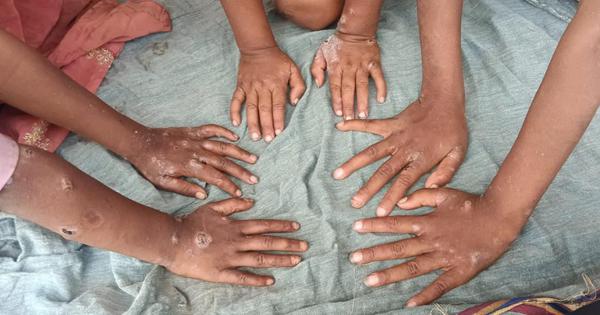
Scabies is an illness caused by tiny mites that live in the skin.
It makes people itch a lot, often at night.
The itching can make it hard to sleep and pay attention at school or work.
The mites can spread between people who live close together.
People can get scabies again if clothes and bedding remain contaminated.
Having little water, crowded living spaces and limited health care can make the problem worse.
Scratching may also cause other infections.
The article says scabies affects many people but is often overlooked, even though it can be treated.
Treating a whole community at once could help, but it takes careful planning and supplies.

Scabies causes persistent itching that can disrupt sleep, concentration and daily life.
The article describes cases among children and families in crowded communities across India.
The infection spreads through close contact and can recur when people reuse contaminated clothing or bedding.
Scratching can lead to bacterial infections, while poor access to water and health care can increase risk.
The World Health Organization classified scabies as a Neglected Tropical Disease in 2017, but large-scale control efforts have not begun.
- Who
- People affected by scabies, including children and families in vulnerable communities in India.
- What
- The article describes scabies’ effects, how it spreads and why it remains neglected.
- Where
- India, including communities in Chhattisgarh, Odisha, Andhra Pradesh, Bihar and Gujarat.
- When
- The article gives no publication date; it cites the Global Burden of Disease Study 2021 and the WHO designation in 2017.
- Why
- Crowding, repeated exposure through clothing and bedding, limited water and inadequate access to health care can contribute to infection and reinfection.
Common misconception
Article’s account
Hygiene and prevention
Common misconception
Scabies has often been described as a “water-washed” disease associated with inadequate personal hygiene and preventable through washing with enough water.
Article’s account
The article says scabies is not simply a consequence of poor personal hygiene: people may bathe regularly yet become reinfected through close contact and reused clothing or bedding, while water scarcity and overcrowding affect prevention.
Public health response
Common misconception
Individual treatment may provide relief, but the article notes that local injections can be only partly effective and costly.
Article’s account
The article argues for coordinated community-level treatment, while recognizing that it requires consent, medicines, clean clothing and bedding, trained staff and substantial planning.
Key facts
- Cause
- The itch mite Sarcoptes scabiei.
- Global prevalence estimate
- Around 206.6 million people had scabies at any given time, according to the Global Burden of Disease Study 2021.
- Estimated annual new cases
- Around 622.5 million worldwide, according to the article.
- WHO designation
- Scabies was declared a Neglected Tropical Disease in 2017.
- Transmission
- It spreads through contact, especially among people living close together.
- Possible complications
- Scratching can introduce bacteria and lead to serious skin, kidney or other infections.
- Community control
- The article says control measures should prioritize community-level treatment, alongside steps to treat clothing, bedding and affected people.
Quotes
Dr Rohith Meesaraganda
Physician who regularly visits scabies-affected villages in Andhra Pradesh
“The tragedy is that most people living with scabies normalise the itching and aren’t even aware that they have a disease that can be treated.”
 scroll.in
“Only when we treat them for other conditions do they even mention the itching.”
scroll.in
Sources
Related news
Study Finds Leprosy Stigma Harms Children, Calls for Holistic Action
Anna University Student’s Death Highlights Serious Scrub Typhus Warning Signs

ASHA Workers Share Six Ways to Prevent Dengue and Malaria

Letters Address Loneliness, Food Safety, Floods and Women’s Rights

Rajesh Sharma Denies Insect Bite Caused Hospitalisation on Fauzi Set

Andhra Pradesh Intensifies Disease Controls After Monsoon Rains

Chhattisgarh Chief Minister to Pitch Investment at Singapore Forum

Why Moringa Is Called a Superfood: Reported Health Benefits

High Court Balances No-Confidence Motion With Pregnant Sarpanch’s Rights

Haryana Seeks Singapore Investment in Technology and Professional Centres