1 hr ago
Kashmir Mosques Expand Focus to Addiction, Suicide and Environment
Mosques in Kashmir usually speak about religion.
Now, they will also discuss problems affecting people’s daily lives.
These problems include drug addiction, suicide, self-harm and damage to the environment.
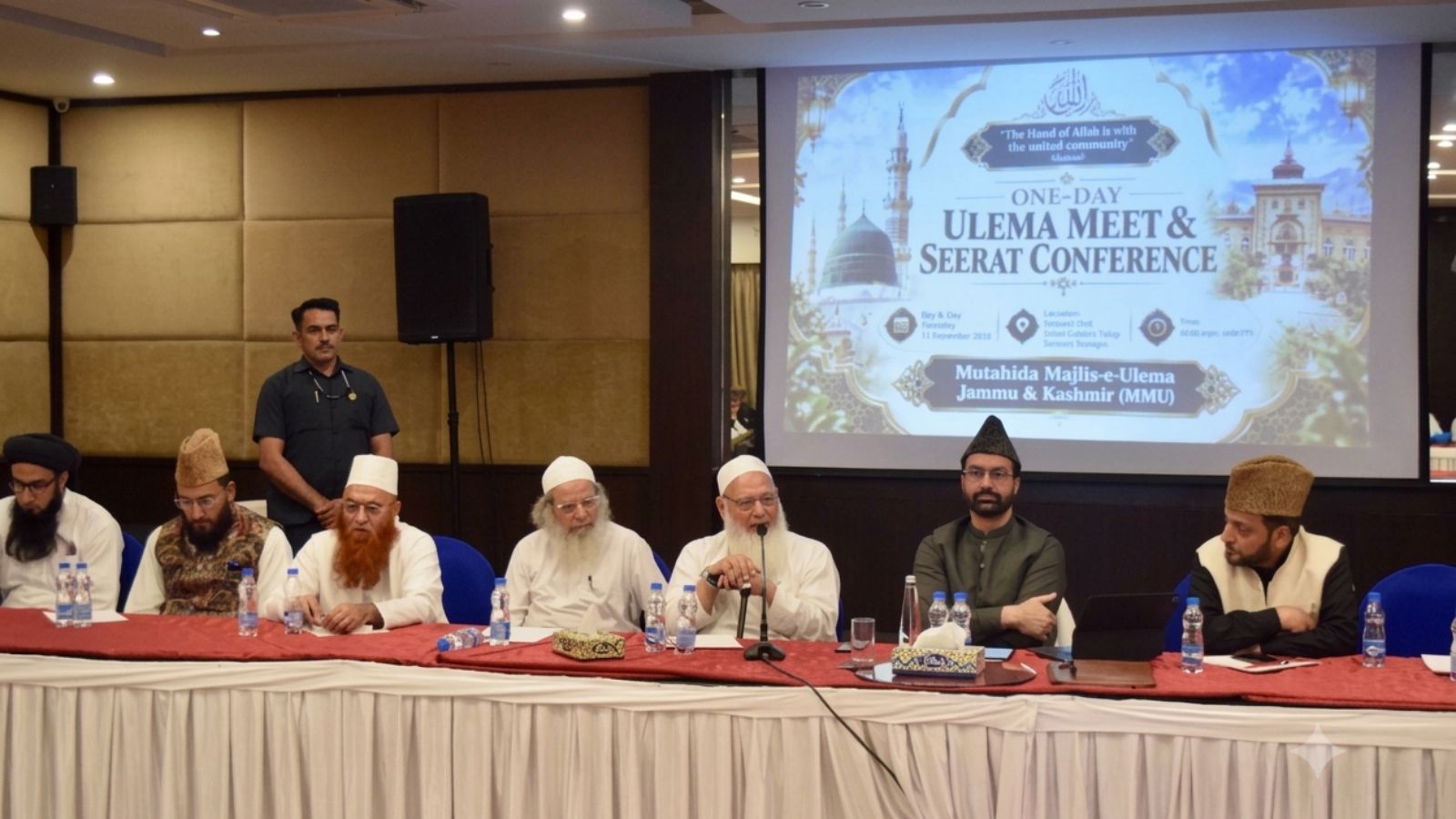
Religious scholars from Jammu and Kashmir and Ladakh agreed on this plan.
Shia and Sunni clerics both took part in the meeting.
Mirwaiz Umar Farooq led the meeting.
He said young people are facing more emotional distress and self-harm.
He believes mosques can use their trusted position to help the community respond regularly.

Kashmir mosques will address drug addiction, suicide, self-harm and environmental problems alongside religious matters.
The decision was made at a meeting of religious scholars from Jammu and Kashmir and Ladakh.
The meeting brought together clerics from across the Shia-Sunni divide.
Mirwaiz Umar Farooq, Kashmir’s chief cleric, chaired the meeting held on Tuesday.
Mirwaiz said mosques and religious scholars can provide a sustained social response to growing community concerns.
- Who
- Religious scholars and clerics from Jammu and Kashmir and Ladakh, led by Mirwaiz Umar Farooq.
- What
- Mosques will broaden their sermons and discussions to include addiction, suicide, self-harm and environmental issues.
- Where
- The initiative applies to mosques in Kashmir; the meeting included scholars from Jammu and Kashmir and Ladakh.
- When
- The decision was taken at a meeting held on Tuesday.
- Why
- Mirwaiz said increasing emotional distress, self-harm and environmental degradation require a sustained social response beyond government action or occasional seminars.
Key facts
- Main decision
- Kashmir mosques will address social and environmental issues in addition to religious matters.
- Issues identified
- Drug addiction, suicide, self-harm, emotional distress and environmental degradation.
- Meeting participants
- Religious scholars and clerics from Jammu and Kashmir and Ladakh.
- Religious representation
- The meeting included clerics from across the Shia-Sunni divide.
- Meeting leader
- Mirwaiz Umar Farooq, the Valley’s chief cleric.
- Platform emphasized
- Mosques and their mimbar, or pulpit, were described as having unique reach and influence in society.
Quotes

Mirwaiz Umar Farooq
Valley chief cleric who headed the meeting of religious scholars
“We are witnessing an increase in self-harm and emotional distress among young people, and the steady degradation of our environment. These are no longer issues that can be left only for the government (to tackle) or occasional seminars. They require a sustained social response.”
 indianexpress.com
“The mosque and the mimbar (pulpit) have a unique reach and influence in our society and the ulema (scholars) have a responsibility to use that platform constructively.”
indianexpress.com
Sources
Related news

Mirwaiz Says Srinagar Jama Masjid Pulpit Stands for Rights

Mumbai Symposium Addresses Suicide, Foeticide, Drugs And Pollution

Seerah Quiz Urges Mosques to Expand Community Service
Kanthapuram Urges Calm Amid Controversy Over Remarks on Women

Samastha Chief Backs Kanthapuram Amid Kerala Women Remarks Row
Owaisi Urges Youth to Avoid Drugs, Seeks Speedy Murder Trials
Government cleanliness drives earn over Rs 5,000 crore from scrap

IMD Forecasts Heavy Rain Across India Over Next Seven Days

The Vvaan Trailer Wins Praise and Drishyam 3 Comparisons
Omar Abdullah Urges Ladakh to Get Centre’s Promises in Writing