

2 hrs ago
Ex-Colonel Says India Faces More Than China and Pakistan
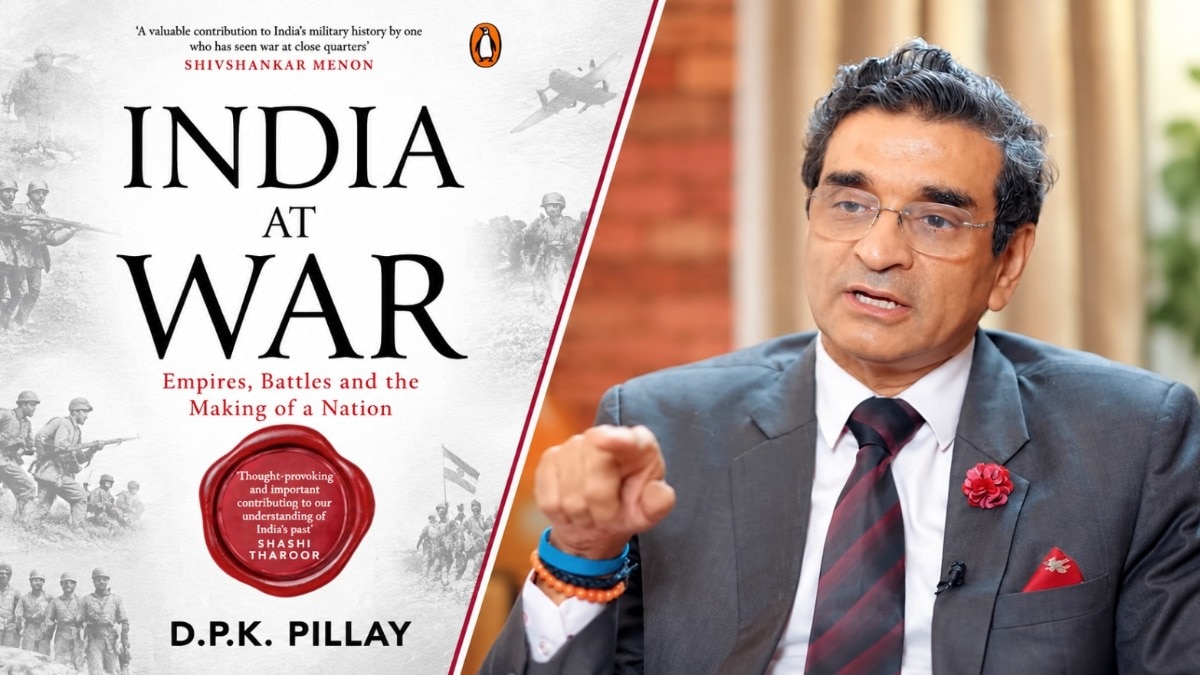
Former Army Colonel DPK Pillay says India should study more of its own history.
He believes Indian schools have focused too much on some foreign and medieval histories while overlooking many Indian kingdoms and achievements.
He points to the Battle of Haifa in 1918 as an example of Indian soldiers showing courage and leadership.
Pillay also says India made important strategic mistakes in past wars and negotiations.
He argues that powerful countries have sometimes supported Pakistan to serve their own interests.
Because foreign technology was denied to India during conflicts, he wants India to build more of its own technology.
He says this includes computers, satellites, navigation systems, cyber tools, and autonomous weapons.
He supports the Great Nicobar project because he considers the islands strategically important.
His broader message is that India’s military, scientists, universities, and industries should work together for national security.

Former Army Colonel DPK Pillay argues that external powers have repeatedly used Pakistan against India.
Pillay says India’s history underrepresents major kingdoms, military achievements, and cultural influence.
He describes the 1918 Battle of Haifa as a decisive Indian cavalry victory that demonstrated Indian leadership.
Pillay criticizes past decisions involving Kashmir, China, Pakistan, and the Indus Waters Treaty.
He calls for national self-reliance in semiconductors, space, cyber capabilities, navigation, and autonomous weapons.
- Who
- Former Army Colonel DPK Pillay, discussing India’s military history and security.
- What
- Pillay argues that India faces threats from larger external powers as well as China and Pakistan, and should strengthen national self-reliance.
- Where
- The discussion covers India, Pakistan, China, Haifa, Jammu and Kashmir, the Andaman and Nicobar Islands, and other strategic locations.
- When
- Why
- Pillay says external powers have used Pakistan and restricted India’s access to critical technology, making strategic capability and domestic production essential.
Pillay’s Position
Questions and Countervailing Concerns
India’s historical narrative
Pillay’s Position
Pillay says Indian education and post-independence narratives have minimized the country’s kingdoms, achievements, and military victories.
Questions and Countervailing Concerns
The interview raises the need for an academically driven, evidence-based effort involving international scholars to address disputed or underrepresented historical interpretations.
Indus Waters Treaty
Pillay’s Position
Pillay calls the treaty one-sided, says it did not produce peace, and recommends keeping it in abeyance while linking it to terrorism and Pakistan’s conduct.
Questions and Countervailing Concerns
The question presents the treaty as a major and unusually generous settlement, while asking whether India should revoke it or merely keep it in abeyance.
Great Nicobar development
Pillay’s Position
Pillay says the project is strategically necessary because the islands lie near busy sea lanes and can strengthen India’s security.
Questions and Countervailing Concerns
The interview notes that the project has faced criticism, including concerns about its environmental implications, though those criticisms are not detailed.
Key facts
- Book discussed
- India At War
- Battle of Haifa
- Indian Jodhpur and Mysore Lancers helped capture Haifa on 23 September 1918.
- Historical criticism
- Pillay says Indian education has overlooked major kingdoms, scientific achievements, and military history.
- Past conflicts cited
- Pillay discusses the wars of 1947–48, 1962, 1971, and Kargil in 1999.
- Indus Waters Treaty
- Pillay says India should keep the treaty in abeyance and link its future to Pakistan’s conduct, rather than immediately abrogating it.
- Technology priorities
- Pillay identifies semiconductors, space, cyber capabilities, sovereign NavIC navigation, autonomous weapons, software, and electronic warfare as priorities.
- Great Nicobar project
- Pillay supports the project, describing the Andaman and Nicobar Islands as strategically important to regional sea lanes.
Sources
Related news

Former Air Marshal Details Technology Behind Operation Sindoor
India Expands Defence Capabilities Amid Pakistan Unrest and Regional Shifts
India’s Defence Self-Reliance Is Key to Strategic Resilience
India’s Defence Push Must Advance From Production To Technology
Ex-CDS Chauhan Warns Pakistan Will Remain Major Security Threat

BRICS Summit Highlights India’s Diplomatic Balancing and Security Push

Assam CM Urges Diyas For Modi Birthday Celebrations
Anant Nag To Receive 2024 Dadasaheb Phalke Award
Naidu to Join Seva Sankalp Abhiyan in Varanasi
Congress Raises Concerns Over Karnataka Voter Roll Revision