13 hrs ago
Insurance Commission Reform Has Right Direction, But Uncertain Pace

India’s insurance regulator wants to change how insurance companies pay agents, brokers and banks.
Today, sellers can receive much more money when a policy is first sold than when customers keep renewing it.
This may encourage some sellers to focus on making sales instead of finding suitable policies for customers.
The proposed changes aim to reduce mis-selling and eventually make insurance cheaper or better for customers.
However, the article says that cutting payments too quickly could make banks and agents less interested in selling insurance.
It could also make it harder for smaller insurers to grow and for foreign companies to invest.
Some insurers might pass savings to customers, but others could face pressure to raise prices or redesign products.
The author recommends making the changes gradually and checking their effects before going further.

IRDAI’s consultation paper seeks to expand insurance coverage, improve affordability and accessibility, and curb bundling and mis-selling.
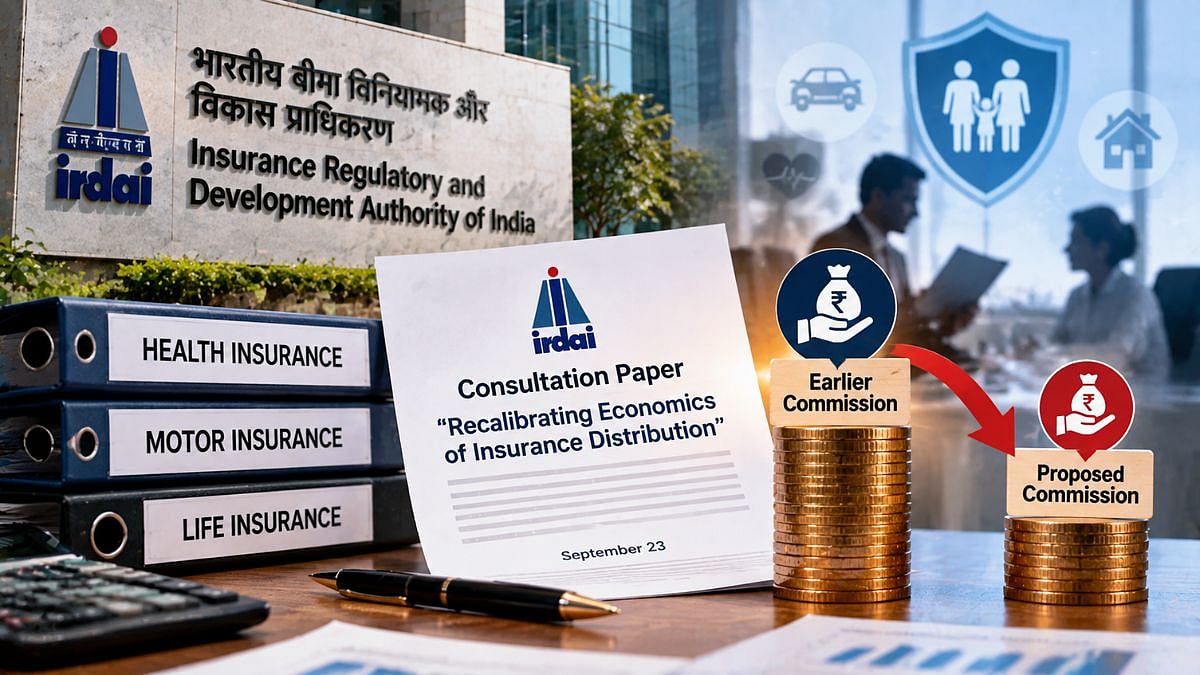
The paper proposes rationalising commissions and compressing expense-of-management limits after identifying high first-year payouts and weak persistency incentives.
The author warns that sharp payout reductions could weaken distribution, especially bancassurance, and reduce new business.
Insurers may not pass all cost savings to customers, while lower returns could make India less attractive to foreign investors.
A phased, product-specific transition with review points is recommended to balance consumer protection, industry viability and insurance growth.
- Who
- The Insurance Regulatory and Development Authority of India, insurers, banks, brokers, agents, investors and policyholders.
- What
- A consultation paper proposes changes to intermediary commissions and expense-of-management limits.
- Where
- India’s insurance market.
- When
- The proposals are under consultation; the article also cites financial data from FY24 and FY26.
- Why
- To expand coverage, improve affordability and accessibility, and address mis-selling, compulsory bundling and high distribution costs.
Reform proponents
Caution advocates
Commission structure
Reform proponents
Reducing high first-year commissions and strengthening renewal-linked incentives could reduce mis-selling and reward policy persistency.
Caution advocates
A rapid reduction could sharply reduce cash flow for agents, banks and brokers and weaken insurance distribution.
Customer affordability
Reform proponents
Savings from lower commissions and operating costs could lead to lower premiums, moderated price increases or better returns.
Caution advocates
Insurers without sufficient scale may be unable to cut operating costs quickly and could instead raise prices or alter products.
Investment and market growth
Reform proponents
Large insurers may benefit from lower payouts and improved value of new business margins.
Caution advocates
Lower expected returns could discourage foreign investors, limit industry capacity and delay the insurance-for-all target.
Key facts
- First-year commission
- The article says new-business commissions can reach 40-50%, while persistency earns much less.
- Proposed payout range
- A reduction in first-year payouts to about 20-25% is discussed.
- Bancassurance commissions
- Banks earned more than Rs 14,500 crore in bancassurance commissions in FY24, about 2% of their revenue.
- Life insurance growth
- New business premium growth was about 16% in FY26, compared with 5.7% in FY25 and 2% in FY24.
- Industry profit
- The life insurance industry recorded about Rs 66,000 crore in profit before tax in FY26; LIC accounted for about Rs 57,000 crore.
- Loss-making insurers
- Nine of 25 life insurers reported losses in FY26, according to the article.
- Recommended approach
- The author recommends a calibrated glide path, staged commission changes and periodic reviews based on outcomes and customer feedback.
Sources
Related news

IRDAI Commission Cuts Set to Reset Insurance Distribution Models

IRDAI Proposes Overhaul to Cut Commissions and Mis-selling

IBAI Warns Irdai Distribution Reforms Could Hurt Insurance Growth
IRDAI Proposes Hard Commission Caps and Lower Insurer Expenses

India’s Insurance Reforms Aim to Curb Commissions, Expand Coverage

IRDAI Proposes Major Changes to Insurance Distribution Costs
IRDAI Insurance Commission Overhaul Sparks Debate Over Costs

Indian Bureaucratic Appointments Feature Alongside Political and Policy Developments

Nationwide Bank Strike Begins Monday Over Five-Day Week Demand

LIC and New India Assurance veterans appointed as IRDAI members