

1 week ago
Doctors Urge Vigilance as Influenza Cases Rise in Delhi-NCR

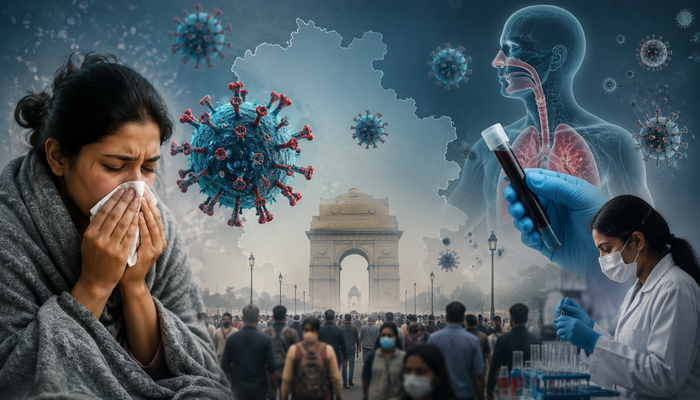
Flu cases are increasing in the Delhi-NCR area.
One type of flu involved is called H1N1, also known as swine flu.
Flu can cause fever, coughing, sore throat, tiredness and body aches.
Most mild cases can be managed with rest, fluids and advice from a doctor.
Some people can become seriously ill, especially if they already have health problems.
Antibiotics usually do not work against flu because flu is caused by a virus.
People should seek medical help for breathing trouble, chest pain, confusion, low oxygen or symptoms that get worse.
Covering coughs, washing hands, avoiding close contact when sick and improving indoor ventilation can reduce spread.
Doctors also say some higher-risk adults may benefit from an annual flu vaccine after medical advice.

Delhi has reported a significant increase in H1N1 cases, prompting greater surveillance and hospital monitoring.
Influenza symptoms can include sudden fever, cough, sore throat, body aches, fatigue, chills and weakness.
H1N1 is an Influenza A subtype, and scientists report no evidence that a new H1N1 strain is causing the increase.
Rest, hydration and symptom relief may help uncomplicated cases, while doctors may prescribe antivirals for higher-risk or seriously ill patients.
People should avoid self-medication, watch for warning signs, improve ventilation, practice hand hygiene and consider vaccination when medically appropriate.
- Who
- People in Delhi-NCR, particularly those at higher risk of complications, and doctors including pulmonologist Dr. Abhijeet Singh.
- What
- Influenza activity, including H1N1 cases, is increasing, leading doctors to provide guidance on symptoms, treatment and prevention.
- Where
- The Delhi-NCR region, including Delhi and Greater Noida in Uttar Pradesh, India.
- When
- The report was dated August 26; it describes an increase occurring this year.
- Why
- H1N1 is contributing significantly to increased influenza activity, while authorities are monitoring respiratory infections and advising early recognition and prevention.
Key facts
- Illnesses discussed
- Influenza and H1N1, an Influenza A subtype
- Reported trend
- Delhi has seen a significant rise in H1N1 cases this year
- Common symptoms
- Fever, cough, sore throat, runny or blocked nose, headache, body aches, weakness and fatigue
- Possible complication
- Influenza can progress to pneumonia, particularly in some people with underlying illnesses
- Treatment
- Rest, hydration and symptomatic treatment are commonly advised for uncomplicated cases; doctors may recommend antivirals for selected patients
- Urgent warning signs
- Breathing difficulty, persistent high fever, chest pain, confusion, severe weakness, low oxygen saturation or worsening symptoms
- Prevention
- Hand hygiene, covering coughs and sneezes, avoiding close contact when symptomatic, better ventilation and masks in crowded or poorly ventilated settings
- Vaccination
- Annual influenza vaccination may be considered for appropriate adult age and risk groups after medical advice
Quotes
Dr. Abhijeet Singh
Pulmonologist at ShardaCare Healthcity, Greater Noida
“Influenza is caused by a virus, so antibiotics do not routinely treat the infection. People should avoid taking antibiotics or antiviral medicines without medical advice. If there is breathing difficulty, persistent high fever, chest pain, confusion, severe weakness, low oxygen saturation or worsening symptoms, medical evaluation should not be delayed.”
 theprint.in
“Influenza can present with sudden fever, cough, sore throat, headache, body ache, fatigue and chills. In some patients, particularly those with underlying respiratory or other chronic illnesses, the infection can progress to complications such as pneumonia. The important message is not to panic, but also not to ignore persistent or severe symptoms.”
theprint.in
Sources
Related news

Delhi records nearly six-fold rise in H1N1 cases in 2026

Delhi H1N1 Cases Rise as Government Urges Mask Use
Delhi-NCR H1N1 Cases Surge as Officials Review Preparedness

Delhi's H1N1 Cases Surge, Doctors Warn High-Risk Groups
Delhi reports six-fold rise in H1N1 flu cases, experts warn
H1N1 Cases Rise in North India; Experts Urge Caution
One dead, nine injured in Rath Yatra accident

Three Punjabi Men on Trial for Murder of Elderly Canadian Couple
