1 hr ago
India’s Gig Economy Grows as Workers Seek Stronger Protections

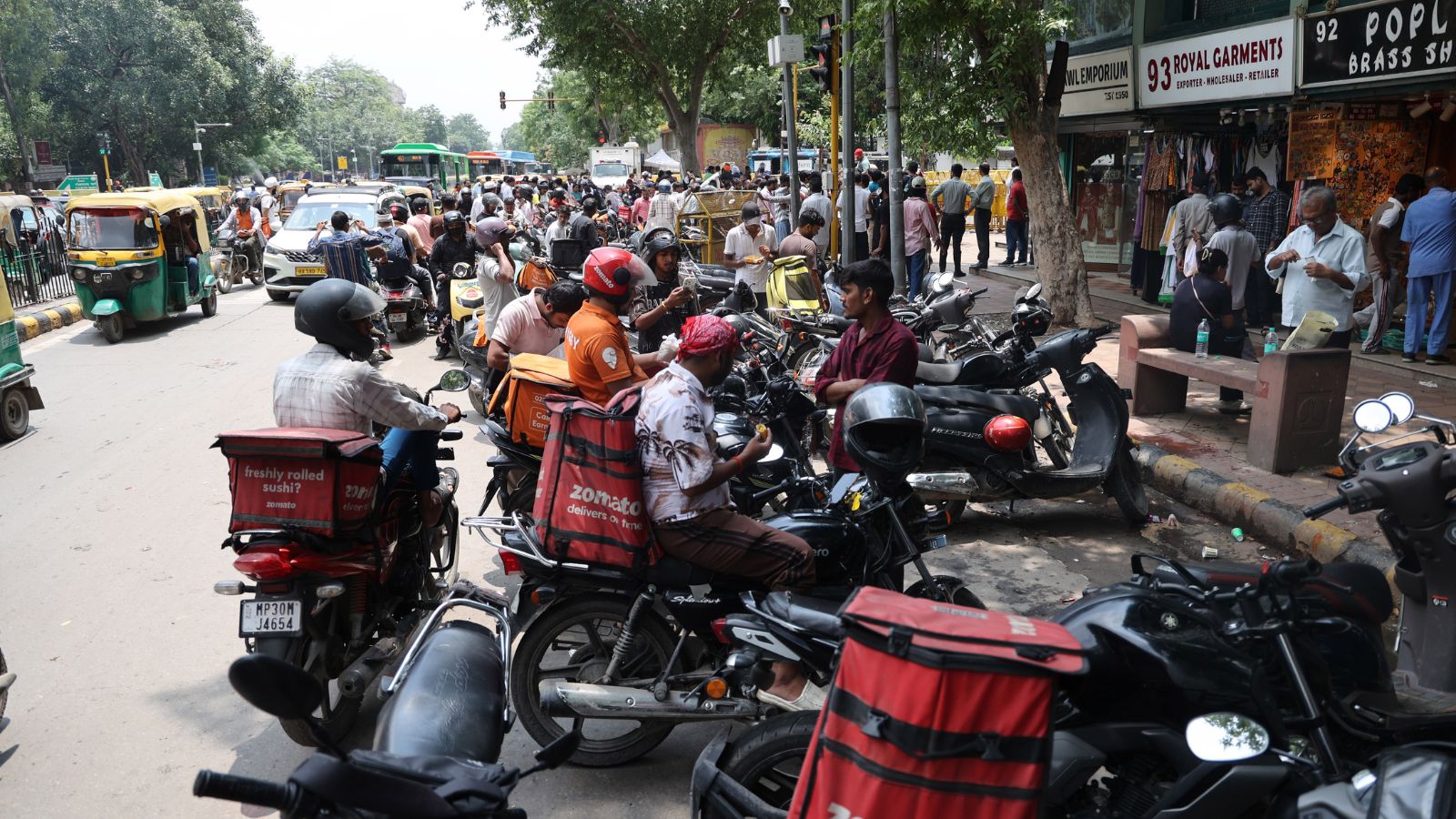
More people in India are earning money through short-term or platform-based jobs.
This group grew to 12 million workers in FY2025 and may reach 23 million by 2029-30.
New rules are being introduced to give these workers social-security benefits and clarify what companies must do.
However, many gig workers are still treated as contractors rather than regular employees.
This means they may not receive protections such as fixed working hours or collective bargaining rights.
App-based workers also worry about unclear ratings, penalties, wages and safety responsibilities.
Freelancers such as software developers and tutors can face different problems, including expensive ways to settle disputes.
The article says the rules should be applied consistently across states.
It also argues that future laws should protect different types of gig workers without removing the flexibility of gig work.

India’s gig workforce grew 55% in four years to 12 million in FY2025 and is projected to reach 23 million by 2029-30.
New labour codes and gig-worker social-security rules aim to formally recognise platform workers and define aggregator responsibilities.
Contractor classification excludes gig workers from several employee protections, including safeguards against termination, fixed hours and collective bargaining.
Algorithmic ratings, penalties, incentives, unclear wages, safety risks and accident liabilities remain major concerns for platform workers.
The workforce includes high-skilled, medium-skilled and low-skilled workers, whose differing needs may require a more flexible legal framework.
- Who
- India’s gig workers, including delivery workers, drivers, freelancers, software developers, tutors and other platform or project-based workers, along with the aggregators that engage them.
- What
- The gig economy is expanding rapidly while workers and policymakers address labour protections, social security, algorithmic management, safety and dispute resolution.
- Where
- India, with implementation of the provisions evolving across states.
- When
- The workforce reached 12 million in FY2025, with further growth projected by 2029-30; labour codes took effect in 2025 and gig-worker-specific social-security rules were announced in 2026.
- Why
- Gig work is becoming a significant source of livelihoods, but existing protections may not adequately address the varied needs and risks of different types of gig workers.
Regulatory Progress
Unresolved Worker Concerns
New labour framework
Regulatory Progress
The labour codes introduced in 2025 and gig-worker social-security rules announced in 2026 formally recognise platform workers and clarify aggregator responsibilities.
Unresolved Worker Concerns
Treating gig workers as contractors leaves them outside protections such as safeguards against termination, fixed working hours and collective bargaining rights.
Social security
Regulatory Progress
Eligible workers can receive welfare benefits, and aggregators must contribute up to 1-2% of annual turnover to a social-security fund.
Unresolved Worker Concerns
Eligibility and implementation are still evolving across states, and the article says the law’s intent must be reflected more consistently in practice.
Scope of regulation
Regulatory Progress
Rules addressing platform work can provide flexibility while extending meaningful protection to a growing workforce.
Unresolved Worker Concerns
The practical focus remains on app-based delivery and mobility workers, while high-skilled freelancers and medium-skilled workers may face different problems that are not adequately addressed.
Key facts
- Gig workforce in FY2025
- 12 million workers, about 2% of India’s total workforce
- Recent growth
- The workforce grew 55% in four years
- Projected workforce
- Expected to reach 23 million by 2029-30
- Projected GDP contribution
- Rs 2.35 lakh crore by 2029-30
- Workforce composition
- 22% high-skilled, 47% medium-skilled and 31% low-skilled workers
- Aggregator contribution
- Platforms are required to contribute up to 1-2% of annual turnover to a social-security fund
- Work limit
- A 48-hour weekly work limit has been introduced
Sources
Related news
India’s Gig Economy Growth Leaves Women Behind, Study Finds

Gig Work Pays More, Offers Flexibility, Report Finds

Gig Work Leaves India’s Workforce Exhausted and Dehumanized

India’s New Labour Rules Aim to Unlock Manufacturing Growth

AI Data Annotation Boom Creates Low-Paying Jobs in India
India festive hiring to rise 15-20%, 250-270k jobs: Adecco study

Flipkart Tests Eat In Food Delivery Service in Bengaluru

Zomato Adds Variable Cash-on-Delivery Fee Amid Intensifying Competition

Inside Ladu Samrat’s Round-the-Clock Ganpati Sweet-Making Hustle in Mumbai

BRICS Summit Traffic Rules Allow Deliveries Across Most Delhi Areas