1 hr ago
Climate Risks and Agentic AI Challenge India’s Economy
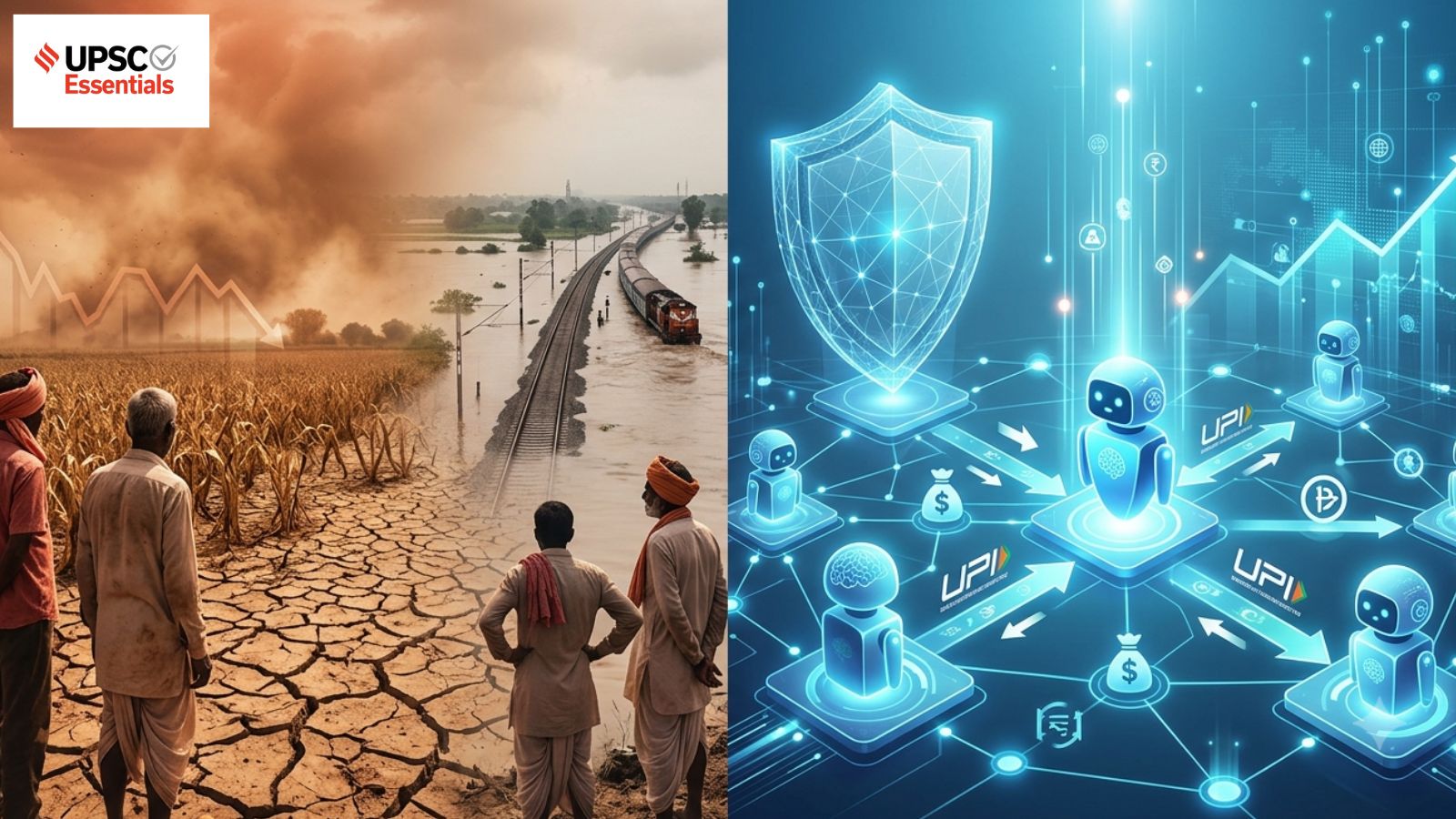
The article gives UPSC students two important questions about India’s future.
The first explains why climate change in the Himalayas can hurt the whole economy, not just the environment.
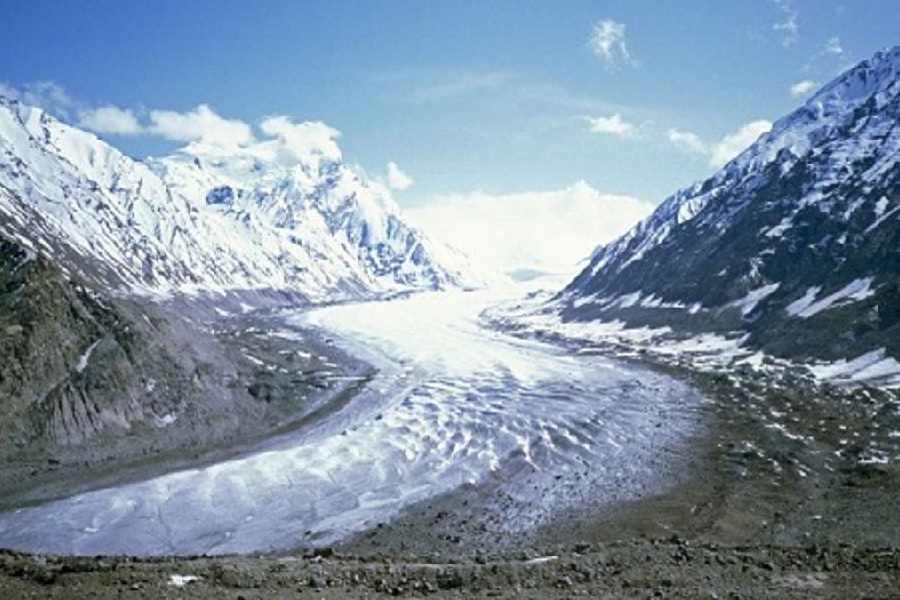
Melting glaciers may first increase river water and later reduce it, affecting farms and cities.
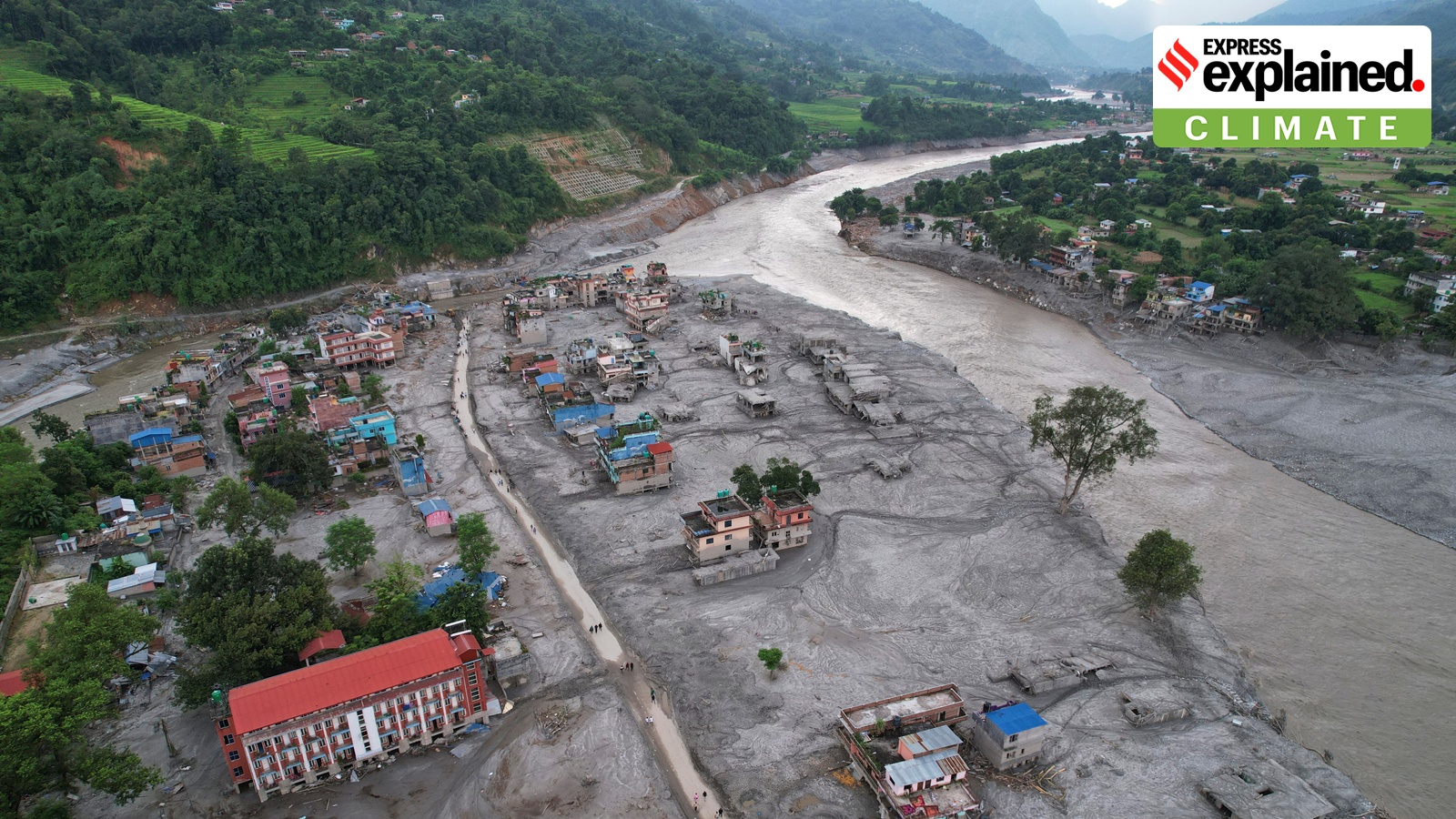
Floods, landslides and other disasters can damage roads, power projects and tourism.
The second question is about agentic AI, which can make payment decisions and complete tasks for people.
It could help businesses manage bills, detect fraud and predict money shortages.
However, these systems may create security and privacy risks and may be expensive to build.
India will need careful rules, strong monitoring and human control while using both technologies.

Himalayan climate change threatens India’s water security, agriculture, hydropower, infrastructure and livelihoods.
The Himalayan region supports economic activity equivalent to 21.5% of India’s FY24 GDP, indicating broad economic dependence.
Glacier retreat, peak-water decline, landslides, flash floods and glacial lake outburst floods could increase public costs and economic disruption.
Agentic AI could automate product searches, payment choices, bill reconciliation, fraud detection, refunds and cash-flow management.
Its adoption faces fragmented payment data, cybersecurity threats, privacy concerns, accountability questions and high integration costs.
- Who
- India, Himalayan communities, farmers, businesses, digital-payment users and financial institutions are affected or potentially affected.
- What
- The article presents two GS-3 questions: the macroeconomic impact of Himalayan climate change and the opportunities and challenges of agentic AI in digital payments.
- Where
- The climate discussion concerns the Himalayan region and the Indus, Ganga and Brahmaputra basins; the AI discussion concerns India’s digital-payment ecosystem.
- When
- The topics are presented as current UPSC Mains answer-writing practice, with the associated magazine identified as September 2026.
- Why
- The questions examine how climate risks can destabilise economic activity and how AI-assisted payments could improve services while creating governance, security and cost challenges.
Key facts
- Climate focus
- Himalayan glacier retreat and related climate hazards
- Economic dependence
- The Himalayas support economic activity worth 21.5% of India’s FY24 GDP
- Affected river basins
- Indus, Ganga and Brahmaputra
- Climate-related risks
- Water insecurity, volatile river flows, landslides, flash floods and glacial lake outburst floods
- AI transition
- A shift from user-initiated payments toward AI-assisted financial decision-making
- Potential AI uses
- Product comparison, payment selection, bill reconciliation, fraud detection, refunds and cash-flow forecasting
- Key AI challenges
- Fragmented data, cybersecurity threats, privacy and consent concerns, accountability and implementation costs
Sources
Related news
Melting Himalayas Put One-Fifth of India’s GDP at Risk
Himalayan Glacier Loss Signals India’s Looming Water Crisis

UPSC Key Highlights Defence, Disasters, Economy and Governance
UPSC Key Covers UPI, Inflation, Science, UCC and Hindi

Tamannaah Bhatia’s Madhubani Dupatta Honors The Vvaan’s Bihar Connect

Tamirabarani River Gains Legal Rights, But Nature Needs More

Kolkata Prepares for Heavy Rain and Possible Waterlogging

Flood-hit Bhutni Students Sit Exams After Homes Are Submerged