

2 hrs ago
Tamirabarani River Gains Legal Rights, But Nature Needs More
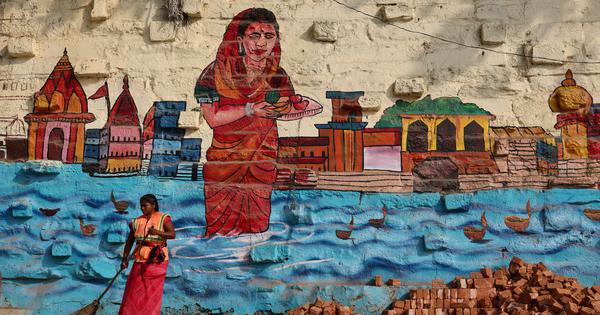
A court in India said the Tamirabarani River should have legal rights.
This means the river can be treated somewhat like a legal person.
The court connected this decision to the river being worshipped as a Hindu deity.
Critics say rivers should be protected for everyone, including people of different faiths and people with no religion.
They also say a river is more than a channel carrying water.
It includes its basin, plants, animals, underground flows and surrounding communities.
River rights could involve keeping water clean, allowing natural flows and protecting habitats.
Dams, diversions, sand mining and pollution can damage these relationships.
The article says laws alone are not enough and that people must change how they govern and live with nature.

The Madras High Court recognised the Tamirabarani River as a juristic person on July 23.
The ruling was India’s sixth pronouncement granting legal personhood to an element of nature.
The judgment linked the river’s personhood to its status as a Hindu deity, raising concerns about religious framing.
The analysis argues river rights should protect ecological integrity, natural flows, habitats, catchments and flood spaces.
It concludes that legal recognition must be paired with community-led, ecologically grounded governance and renewed relationships with nature.
- Who
- The Madras High Court, along with researchers and writers Shrishtee Bajpai and Ashish Kothari in the analysis.
- What
- The court recognised the Tamirabarani River as a juristic person with legal rights, while the analysis examined the limits of that approach.
- Where
- The ruling concerns the Tamirabarani River in India, while the broader discussion covers South Asia and international rights-of-nature developments.
- When
- The judgment was issued on July 23; the article also refers to earlier rulings, including the 2017 Uttarakhand High Court judgment.
- Why
- The court sought to recognise and protect the river, while the article argues that legal personhood must address pollution, ecological damage and humanity’s wider disconnection from nature.
Broader Ecological Rights
Legal Personhood
Is legal recognition enough?
Broader Ecological Rights
Critics argue that personhood alone does not define a river’s rights or address the political, economic and social systems causing ecological damage.
Legal Personhood
Supporters of legal recognition view juristic personhood as a way to give rivers a formal status through which their protection can be pursued in court.
Religious or universal basis
Broader Ecological Rights
River rights should rest on secular, plural and ecological principles and apply to all communities, regardless of religion.
Legal Personhood
The Madras High Court’s reasoning emphasised the Tamirabarani’s status as a deity worshipped by Hindus and suggested that religious beliefs can help support protection.
Human relationships with rivers
Broader Ecological Rights
Fishing, farming and other river-dependent activities can reflect reciprocal responsibilities when they respect ecological integrity and local communities.
Legal Personhood
A legal framework may focus on restricting harmful uses, although the article says it must avoid treating all human interaction with rivers as inherently damaging.
Key facts
- Court ruling
- The Madras High Court recognised the Tamirabarani River as a juristic person.
- Legal status
- The ruling treats the river as a non-human legal entity capable of holding rights and duties.
- Religious basis
- The judgment said the river was recognised as a person because it is worshipped as a Hindu deity.
- Indian precedent
- The article describes the decision as India’s sixth pronouncement granting legal personhood to an element of nature.
- Earlier Indian ruling
- The 2017 Uttarakhand High Court judgment recognised the Ganga and Yamuna, along with tributaries, glaciers and catchments in Uttarakhand, as legal persons.
- Potential river rights
- The article identifies rights including relative freedom from pollution, safe habitat for riverine life, natural flow, ecological integrity and river space.
- Potential violations
- Pollution, dams, diversions, industrial fishing, agricultural chemicals and sand mining are identified as activities that could damage river rights.
Quotes
Madras High Court judges
Judges who issued the judgment recognising the Tamirabarani River’s legal personhood
“Jurisprudence must increasingly align itself with spiritual ecology. Especially in a country like India.”
 scroll.in
“She is hereby recognised for her own intrinsic value.”
scroll.in
Imtiaz Ahmed, Ajaya Dixit and Ashis Nandy
Authors of the 1997 South Asian water manifesto cited in the article
“Rivers also have their rights, including the right to be relatively pollution free, to be a safe habitat for riverine forms of life and, within limits, to flow freely.”
scroll.in
Sources
Related news
Justice Nagarathna Calls Environmental Protection A Matter Of Global Regulation

India Needs Climate Displacement Law as Delta Communities Vanish

How Islamic Traditions Shaped India’s Local Ecological Practices
India Rejects Hague Ruling, Exposing International Law's Power Gap

CJI Calls Supreme Court Banyan Tree Of Environmental Justice
Supreme Court Bars Construction Near Rajasthan’s Jojari River

India's Kabaddi Teams Crush Iran, Bangladesh at Asian Games
India Demands Pakistan Act on Terrorism, Rejects Water Ruling

Muslim Groups Challenge AIMPLB Campaign Over UCC Reforms
How Cyclones Get Named as Bay System Nears India
