3 hrs ago
Naipaul’s ‘Million Mutinies’ Cast Protest as Democratic Strength
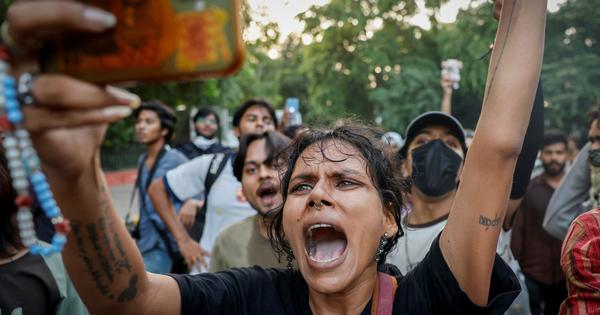
The article says people in India are asking for more say in their lives.
It connects this idea to a book by V.S. Naipaul, who called India a country of “a million little mutinies.”
Here, mutinies means many people speaking up, not necessarily a revolution.
People may protest for different reasons, and they may not all agree with one another.
The author says protests are not always right or peaceful.
But people disagreeing with leaders does not automatically mean the country is weak.
The article argues that citizens should be able to question those in power.
It says patriotism can include saying “no” when people believe something is wrong.

The article draws on V.S. Naipaul’s 1990 book, India: A Million Mutinies Now, to frame protest as part of India’s social change.
Naipaul described people asserting the right to decide who they are and what their lives should mean.
The author cites protests by young people, farmers, workers, students, women, Dalits, minorities and regional communities.
The article argues that dissent can signal active citizenship, while acknowledging that some protests may be flawed, coercive or violent.
It warns that patriotism should not require conformity or silence, and says elected governments remain open to citizens’ criticism.
- Who
- The article discusses Indian citizens and protest movements, drawing on V.S. Naipaul’s interpretation of social change.
- What
- An opinion article argues that diverse protests and dissent can reflect democratic participation rather than national decline.
- Where
- India
- When
- The article refers to India’s present moment and to Naipaul’s book, published in 1990.
- Why
- The author argues that people gaining confidence to question power and claim rights is part of social and democratic change.
Dissent as democratic strength
Concerns about protest and disorder
What protests signify
Dissent as democratic strength
The author presents dissent as a possible sign that citizens are asserting rights and participating in democracy.
Concerns about protest and disorder
The article notes that some people view protests as insubordination or disorder, and acknowledges that some protests can become coercive or violent.
Patriotism and disagreement
Dissent as democratic strength
The author argues that patriotism need not mean conformity and that citizens should be able to question elected governments.
Concerns about protest and disorder
The article describes a competing view in which national unity is associated with compliance, though it does not identify a specific proponent of that view.
Key facts
- Article type
- Opinion
- Central reference
- V.S. Naipaul’s India: A Million Mutinies Now
- Book publication year
- 1990
- Main argument
- Dissent can be a sign of active citizenship, not necessarily national weakness.
- Groups mentioned
- Young people, farmers, Dalits, women, minorities, workers, students and regional communities
- Caveat
- The author says not every protest or demand is necessarily just or constructive, and protests can become coercive or violent.
- Author
- Lt Gen Bhopinder Singh (Retd), identified in the article as a former Lt Governor of Andaman and Nicobar Islands and Puducherry.
Quotes

V.S. Naipaul
Writer whose 1990 book India: A Million Mutinies Now informs the article’s argument.
“The liberation of spirit that has come to India could not come as release alone.”
 scroll.in
“India was now a country of a million little mutinies.”
scroll.in
Sources
Related news
India’s Gen Z Protests Challenge Democratic Erosion Beyond Politics

Gen Z Protests Knock on India’s Democratic Door

Manoj Muntashir Brings Faith, Identity And Politics To Republic Summit
Rahul Gandhi Leads Opposition Protest Over Voter Rights
Nana Patekar Films Offer Lessons on Protest and Accountability