1 hr ago
Gujarat Natural Farming Trial More Than Doubles Turmeric Output
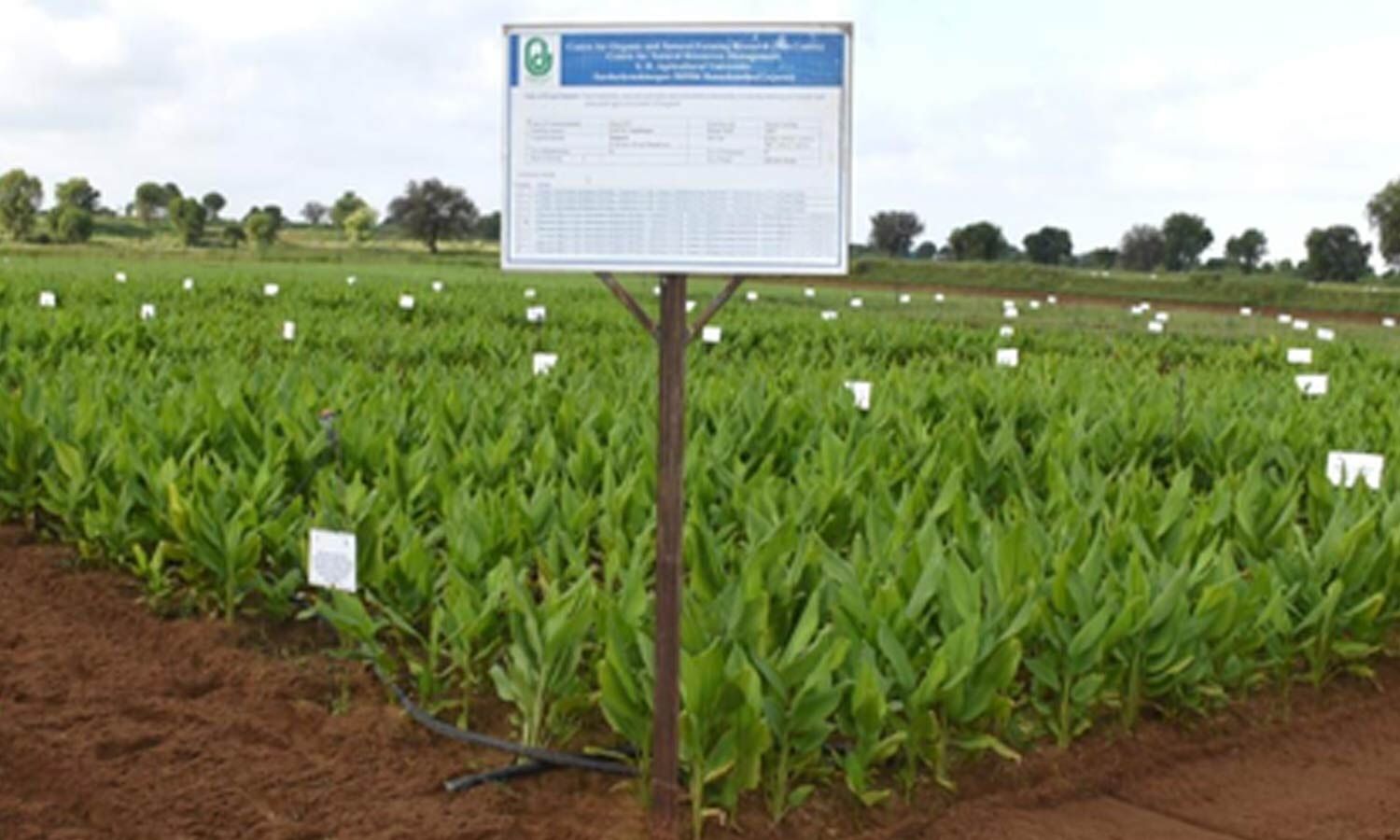
Researchers in Gujarat tested different ways of growing turmeric without synthetic chemical inputs.
They compared nine natural-farming treatments with conventional chemical farming.
Some natural-farming plots produced more than 40 tonnes of turmeric per hectare.
Conventional plots produced 19.3 tonnes per hectare.
The researchers also studied soil nutrients, enzymes and tiny organisms living in the soil.
Natural-farming plots had more of some helpful bacteria and fungi.
The state said natural farming also produced higher net returns.
Farmers in Banaskantha were trained to prepare and use the natural-farming inputs.

Field trials at Sardarkrushinagar Dantiwada Agricultural University produced over 40 tonnes of turmeric per hectare under two natural-farming treatments, versus 19.3 tonnes conventionally.
The study compared nine natural-farming treatment combinations with chemical farming and examined soil nutrients, enzyme activity, microbial diversity and farm economics.
Natural-farming plots used preparations including Beejamrit, Jeevamrit and Ghanjeevamrit, combined with wheat-straw mulch.
The state reported net returns exceeding Rs 10.5 lakh per hectare under natural farming, compared with about Rs 3.61 lakh conventionally.
Researchers found different microbial communities in natural-farming plots, including beneficial bacteria and fungi associated with decomposition, nutrient cycling and plant health.
- Who
- Researchers from the Gujarat Biotechnology Research Centre and Sardarkrushinagar Dantiwada Agricultural University, with involvement from the CSIR-Central Salt & Marine Chemicals Research Institute.
- What
- A study compared natural and conventional turmeric farming, finding higher yields, different soil microbes and greater reported returns under natural farming.
- Where
- Field trials were conducted at Sardarkrushinagar Dantiwada Agricultural University in Banaskantha, Gujarat.
- When
- The research was published in BMC Plant Biology in 2026; the articles do not specify when the field trials occurred.
- Why
- The programme aimed to assess whether traditional natural-farming practices combined with biotechnology could improve productivity, soil health and farm economics.
Key facts
- Natural-farming yield
- More than 40 tonnes of fresh turmeric rhizomes per hectare in two treatments
- Conventional yield
- 19.3 tonnes of fresh turmeric rhizomes per hectare
- Natural-farming net returns
- More than Rs 10.5 lakh per hectare, according to the state
- Conventional net returns
- Approximately Rs 3.61 lakh per hectare
- Treatments tested
- Nine natural-farming treatment combinations plus conventional farming
- Natural-farming inputs
- Beejamrit, Jeevamrit and Ghanjeevamrit, with wheat-straw mulch
- Research publication
- BMC Plant Biology, 2026
Quotes
Rajeshwar Sinh Chandel
Vice-Chancellor of SDAU
“The Gujarat Biotechnology Research Centre (GBRC) carried out an in-depth microbial and metabolomic analysis of key natural farming inputs, including Beejamrit, Jeevamrit, Ghanjeevamrit, and other natural farming bioformulations used as biocontrol agents. The analysis identified several beneficial microbes and around 300 to 500 important metabolites belonging to 11 different classes, several of which could play a role in stimulating soil health, plant growth and improving crop resilience.”
 thehansindia.com
“The study, published in BMC Plant Biology in 2026, compared conventional chemical farming with nine different natural farming treatment combinations. One of the natural farming treatments produced more than 40 tonnes of fresh turmeric rhizomes per hectare, compared with 19.3 tonnes per hectare under conventional farming.”
thehansindia.com
Sources
Related news

Gujarat Team Praises Andhra Pradesh Natural Farming Transformation

Collector Inspects Natural Farming Fields and Dairy Unit

Teacher Turns College Demolition Into Rs 1.5 Lakh Mushroom Business
KfW Team Studies Natural Farming In Sri Sathya Sai
Zambian Delegation Studies Andhra Pradesh’s Natural Farming Model
Punjab Brothers' Three-Crop Model Ends Six Years of Stubble Burning

Sumeet Bagadia Recommends Five Breakout Stocks for September 8

Sumeet Bagadia Names Five Breakout Stocks Amid Cautious Market

Ahmedabad Wholesaler Loses Licence Over Illegal Codeine Syrup Sale

Gujarat launches DNA-based sports talent hunt for 2030 Commonwealth Games