

1 hr ago
Congo Health Officials Use Mobile Data to Track Ebola Spread
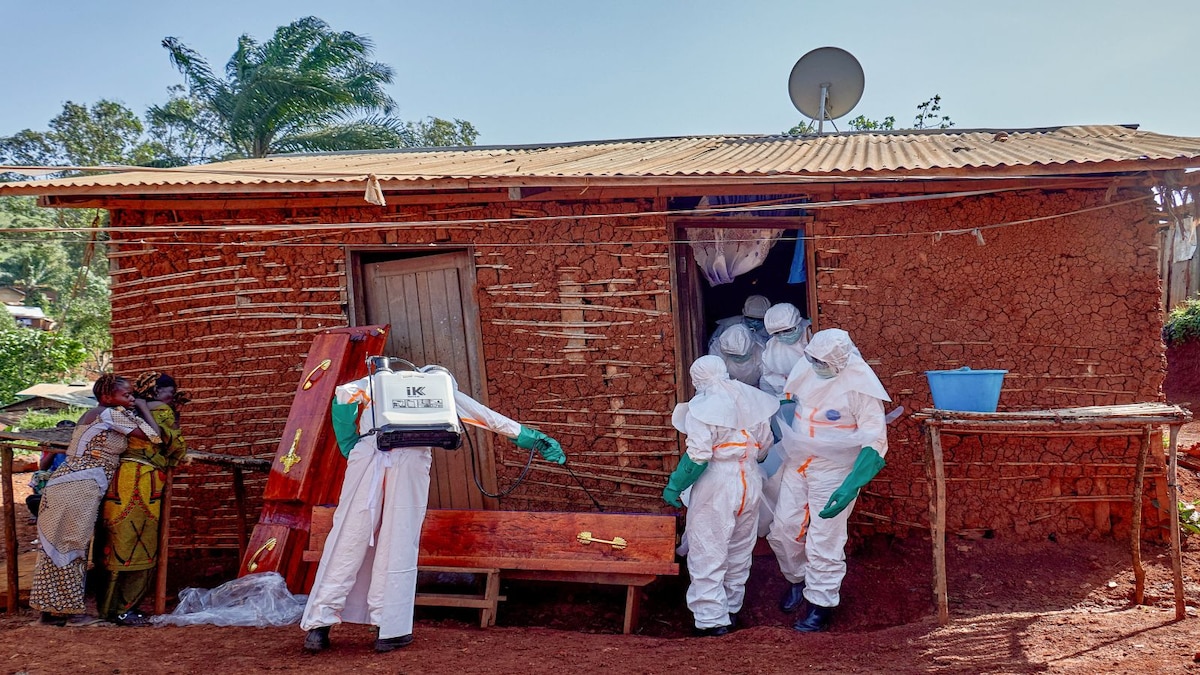
Health workers are trying to predict where Ebola might spread next in Congo.
They are using information from mobile phones, but not the names or personal details of phone users.
When phones connect to different network towers, researchers can estimate how people travel.
This helps officials see which towns are connected to places where Ebola is already spreading.
The information drew attention to Kisangani, where officials increased preparations before the first cases were found.
It also showed possible connections to Kinshasa and nearby countries.
The data is not complete because it comes from only one phone company and does not fully show international travel.
Officials hope to get information from more phone companies to improve the estimates.

The World Health Organization and researchers are using anonymised mobile-phone data to map population movements during the Ebola outbreak in eastern Democratic Republic of Congo.
The outbreak has affected six provinces, with more than 6,250 infections and 3,039 deaths since it was declared on May 15, according to government data.
Swedish nonprofit Flowminder analyses aggregated records supplied by Vodacom to estimate travel between outbreak areas and other locations.
All 10 destinations receiving the largest traveller flows from the initial outbreak areas had reported confirmed Ebola cases by the end of June.
The method helped officials strengthen preparations in Kisangani, but coverage remains incomplete because it uses data from only one telecom operator and does not fully capture cross-border travel.
- Who
- The World Health Organization, Flowminder, Congolese health authorities, and telecommunications providers are involved.
- What
- Officials are using anonymised mobile-phone records to estimate population movements and identify places at risk of Ebola transmission.
- Where
- The response focuses on eastern Democratic Republic of Congo, including Ituri, North Kivu, Kisangani, and possible connections to Kinshasa and neighbouring countries.
- When
- The Ebola outbreak was declared on May 15; Flowminder published its first analysis in early June, with further analysis continuing through late June.
- Why
- The data is intended to help officials anticipate new infections and direct limited surveillance and response resources.
Key facts
- Outbreak status
- More than 6,250 people had been infected and 3,039 killed, according to the latest government data cited.
- Geographic reach
- Cases had been confirmed in six provinces.
- Data provider
- Vodacom provides the mobile-network data free of charge.
- Data analyst
- Swedish nonprofit Flowminder produces the population-movement estimates.
- Privacy protection
- Flowminder says it receives aggregated, anonymised records without identifying individual subscribers.
- Kisangani risk
- Officials strengthened operations in Kisangani before the first cases were detected there.
- Kinshasa modelling
- A WHO modelling exercise estimated a 70% probability of detecting a case in Kinshasa by the end of September.
- Main limitation
- The analysis uses data from only one telecom operator and gives only a partial picture of international movements.
Quotes
Olivier Le Polain
Head of epidemiology and analytics for response at the WHO Health Emergencies Programme
“The fact that Kisangani was at risk was not a huge surprise, even if it was not bordering the affected areas. By mid-June, the data showed the risk was significant and that the outbreak could spread there faster than we initially thought. We strengthened operations there before the first cases were detected.”
 CNBC TV 18
“Population movements have always been a factor in outbreaks, but they are particularly important in the current epidemic.”
CNBC TV 18
Sources
Related news

Congo Ebola deaths surpass 2,000 in fastest-spreading outbreak
Ebola Outbreak in Congo Grows Exponentially as Deaths Top 2,500
Congo's Ebola Outbreak on Track to Surpass Deadliest in History
DR Congo's Ebola outbreak surpasses 4,000 cases, 1,850 deaths

DR Congo Ebola Outbreak May Be Three Times Larger

Unpaid Ebola Responders Disrupt Congo’s Fight Against Outbreak
Congo Reopens Ebola Red-Zone Schools, Abandoning Remote Learning Plan
Conflict and Ebola Intensify Each Other in Eastern Congo
