9 hrs ago
AI-Driven Job Changes Require Workers and Employers to Adapt

Artificial intelligence is changing what people do at work.
This means some workers may need to learn new skills or change careers.
Women may be especially affected because they often work in jobs more exposed to these changes.
Researchers studied 655 women who moved into Australian construction from other industries.
They found that these workers brought useful skills such as communication, management and teamwork.
However, employers do not always recognize skills gained outside their industry.
The researchers say employers should also change by looking at what applicants can do and learn.
This could help fill construction jobs and make career changes easier.

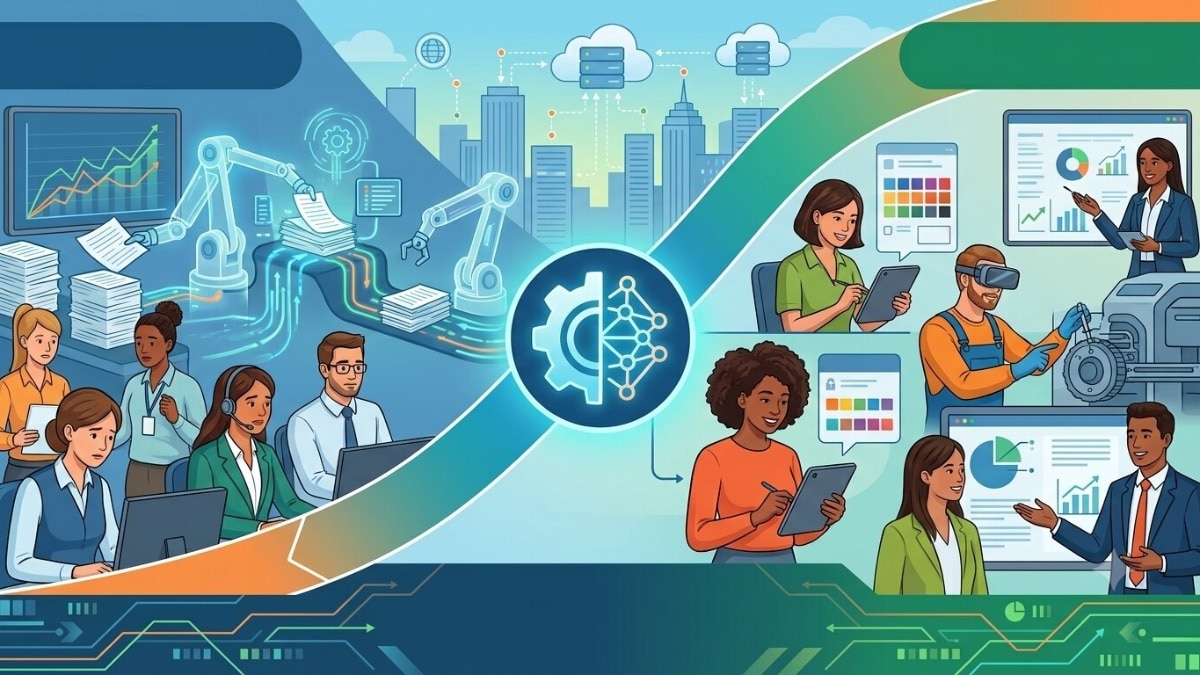
AI is changing workplace tasks and the skills workers need, increasing the importance of career mobility.
Jobs and Skills Australia found women face greater exposure than men to automation and AI-related workplace changes.
A study of 655 women in Australian construction found many had transferred skills from health care, education, finance, transport and other industries.
Construction has about 20,000 unfilled jobs, while women represent 13% of its 1.37 million workers.
Researchers say employers should assess transferable skills and trainable abilities rather than relying too heavily on prior industry experience.
- Who
- Workers, employers and especially women affected by changes in work; researchers also studied 655 women in Australian construction.
- What
- The article argues that AI-driven workplace changes require both workers and employers to become more adaptable, especially in recognizing transferable skills.
- Where
- Australia, with examples from the construction industry.
- When
- The article was published September 19; BuildSkills Australia’s projection concerns 2029.
- Why
- AI is changing workplace tasks and skills, while industries such as construction face worker shortages and may benefit from recognizing skills gained elsewhere.
Worker Adaptation
Employer Adaptation
Who must change?
Worker Adaptation
Workers are increasingly expected to reskill, retrain and move between jobs or industries as AI changes workplace tasks.
Employer Adaptation
Employers also need to change how they define relevant experience and assess candidates from other industries.
Value of industry experience
Worker Adaptation
Specialist construction and engineering roles may require industry-specific training and experience.
Employer Adaptation
For roles such as administration, finance, safety and environmental work, employers may be able to value transferable skills and teach industry knowledge.
Access to opportunities
Worker Adaptation
Workers without industry contacts may not know where opportunities are or may assume their qualifications are unsuitable.
Employer Adaptation
Employers should create roles or transition pathways that allow career changers to enter the industry.
Key facts
- Study sample
- 655 women working in Australian construction companies
- Construction vacancies
- Around 20,000 construction jobs remain unfilled
- Women in construction
- Women make up 13% of the industry's 1.37 million workers
- Projected workforce increase
- Increasing women's participation in residential construction could add 51,000 workers by 2029
- Projected gap reduction
- The additional participation could reduce the projected workforce gap by 44%
- Transferable skills
- Examples include management, communication, collaboration, coordination and experience
- Potential roles for career changers
- Administration, finance, safety and environmental work may offer greater scope for cross-industry movement
Quotes
Unnamed former commercial pilot and engineering consultant
A woman who moved into construction after working as a commercial pilot and in engineering consulting.
“If I […] didn't have access to this network, I'm not sure how I'd even go about starting. I'd find it intimidating, and would presume my qualifications wouldn't marry with the expectations.”
 livemint.com
“I do have a lot of experience, and I do have lot of relevant skills that I think I bring to the table too.”
livemint.com
Unnamed construction hiring manager
A hiring manager interviewed in the research on career changers in construction.
“I don't believe the obstacle is with the candidate; I think it's us not being creative enough to create roles or positions that would suit the skill set of those candidates or provide them with a platform where they can transition into the industry.”
livemint.com
Sources
Related news
New Technologies Are Opening Career Paths Across Many Industries

AI Reskilling May Become Essential as White-Collar Work Changes

Degrees, Skills and Continuous Learning Shape Graduate Employability

AI’s Future Hinges on Regulation, Cost, Jobs and Education

AI Could Help Women Return to Work With Skills

AI Job Search Prompts Experts Recommend After A Layoff
Two Books Examine Fascism, Technology, and Power Today

India’s Galleries Welcome Global Art and Cultural Exchange

Alfred Cooke’s 1965 Sabre Battle Deserved India’s Highest Gallantry Award

West Asia Crisis Prompts Calls for India Energy Diversification

Big Bash League Opens in Chennai in Historic Overseas First