6 days ago
Pakistan’s Information Environment Faces Shutdowns, Surveillance and Online Speech Restrictions

A report says Pakistan has been placing more controls on the internet.
Some websites and social media platforms have been blocked or disrupted.
Internet and mobile services have also been shut down during protests.
Critics say these actions make it harder for people to speak, organize and receive news.
A cybercrime law, called PECA, was expanded in January 2025.
The change made sharing information described as false or misleading a crime.
Human rights groups say journalists and ordinary citizens are increasingly affected.
The government’s legal framework allows some restrictions, but critics say the rules are being used too broadly.

A report says Pakistan’s digital space is increasingly shaped by platform bans, shutdowns and surveillance.
Freedom House’s 2025 assessment rated Pakistan “Not Free,” giving it 27 out of 100 for internet freedom.
The Prevention of Electronic Crimes Act and its January 2025 amendment expanded penalties for online content deemed false or misleading.
Journalists, activists, opposition leaders and citizens have reported censorship, intimidation, prosecutions and reduced access to information.
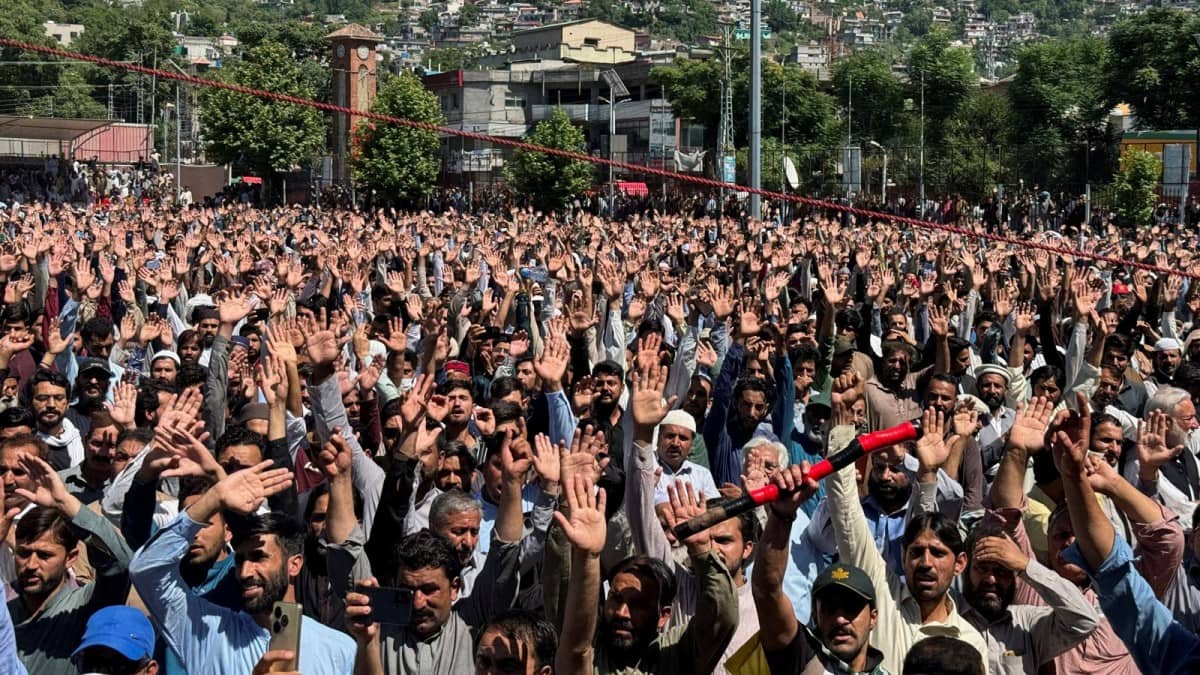
Authorities imposed a communications blackout in Pakistan-occupied Jammu and Kashmir during protests over electricity tariffs and flour subsidies.
- Who
- Pakistani authorities, journalists, activists, opposition leaders, citizens and human rights organizations are involved.
- What
- A report describes expanding internet restrictions, surveillance, censorship and legal action against online expression in Pakistan.
- Where
- Pakistan, including Pakistan-occupied Jammu and Kashmir and Muzaffarabad.
- When
- The report discusses developments through 2025, including disruptions during 2024–25 and a PECA amendment in January 2025.
- Why
- Authorities use legal and technological measures to regulate online content and address alleged harms, while critics say the measures suppress political criticism and free expression.
Critics and Rights Groups
Legal and Official Rationale
Scope of online restrictions
Critics and Rights Groups
Human rights groups and participants at the Human Rights Commission of Pakistan roundtable say laws and technology are being used to suppress criticism, intimidate journalists and restrict ordinary citizens.
Legal and Official Rationale
Pakistan’s constitutional framework, including Article 19, permits restrictions on expression; the article presents these restrictions as measures intended to address genuine harms, though it says their interpretation has become expansive.
Internet shutdowns during protests
Critics and Rights Groups
Critics argue that communications blackouts prevent citizens from coordinating, accessing information and exercising free expression.
Legal and Official Rationale
Authorities suspended services during protests connected to demands over electricity tariffs and flour subsidies; the articles do not provide a detailed official explanation beyond the reported context.
PECA amendment
Critics and Rights Groups
Rights advocates warn that criminalizing false and misleading information can expand censorship and increase pressure on independent media and online speakers.
Legal and Official Rationale
The amendment provides a legal mechanism for controlling online content classified as false or misleading; the articles do not state the government’s detailed defense of the change.
Key facts
- Internet freedom rating
- Freedom House’s 2025 assessment gave Pakistan 27 out of 100 and classified it as “Not Free.”
- Main cybercrime law
- The Prevention of Electronic Crimes Act, enacted in 2016, is described as a principal tool for regulating online speech.
- 2025 legal change
- The January 2025 PECA Amendment Act intensified online-content controls and criminalized sharing false and misleading information.
- Reported restrictions
- The report cites platform bans, internet suspensions, surveillance, cybercrime prosecutions and regulatory coercion.
- Affected groups
- Journalists, activists, opposition leaders, media workers, artists, academics, human rights defenders and ordinary citizens have raised concerns.
- Kashmir communications blackout
- Mobile, landline and internet services were suspended in Pakistan-occupied Jammu and Kashmir during protests over electricity tariffs and flour subsidies.
- Rights roundtable
- The Human Rights Commission of Pakistan convened a roundtable with European Union support to discuss freedom-of-expression concerns.
Quotes
Paul Antonopoulos
Commentator quoted in the report
“Yet this democratisation of communication has been accompanied by the expansion of an increasingly sophisticated apparatus of digital control.”
 thehansindia.com
“Beyond such shutdowns, authorities have pursued more embedded surveillance and filtering.”
thehansindia.com
Sources
Related news
Pakistan Journalist Detained as Press Freedom Group Condemns Cybercrime Case
Activist Raises Alleged PoJK Civilian Killings and Blackout at UNHRC
Fazlur Rehman Condemns Pakistan’s Power Use and Political Lawlessness
UNICEF Report Highlights Pakistan’s Widespread Online Abuse of Children
Report Says Pakistan Uses Detentions to Restrict Women’s Political Organizing
Pakistan’s Punjab Assembly Approves Secret Terror Trial Law
Lahore High Court Suspends Orders Affecting Afghan Medical Students

Pakistan Rights Body Questions PoK Polls, Condemns Protest Force