1 week ago
August 21, 1986: Rural Plan, Pakistan Protests and Regional Conflict
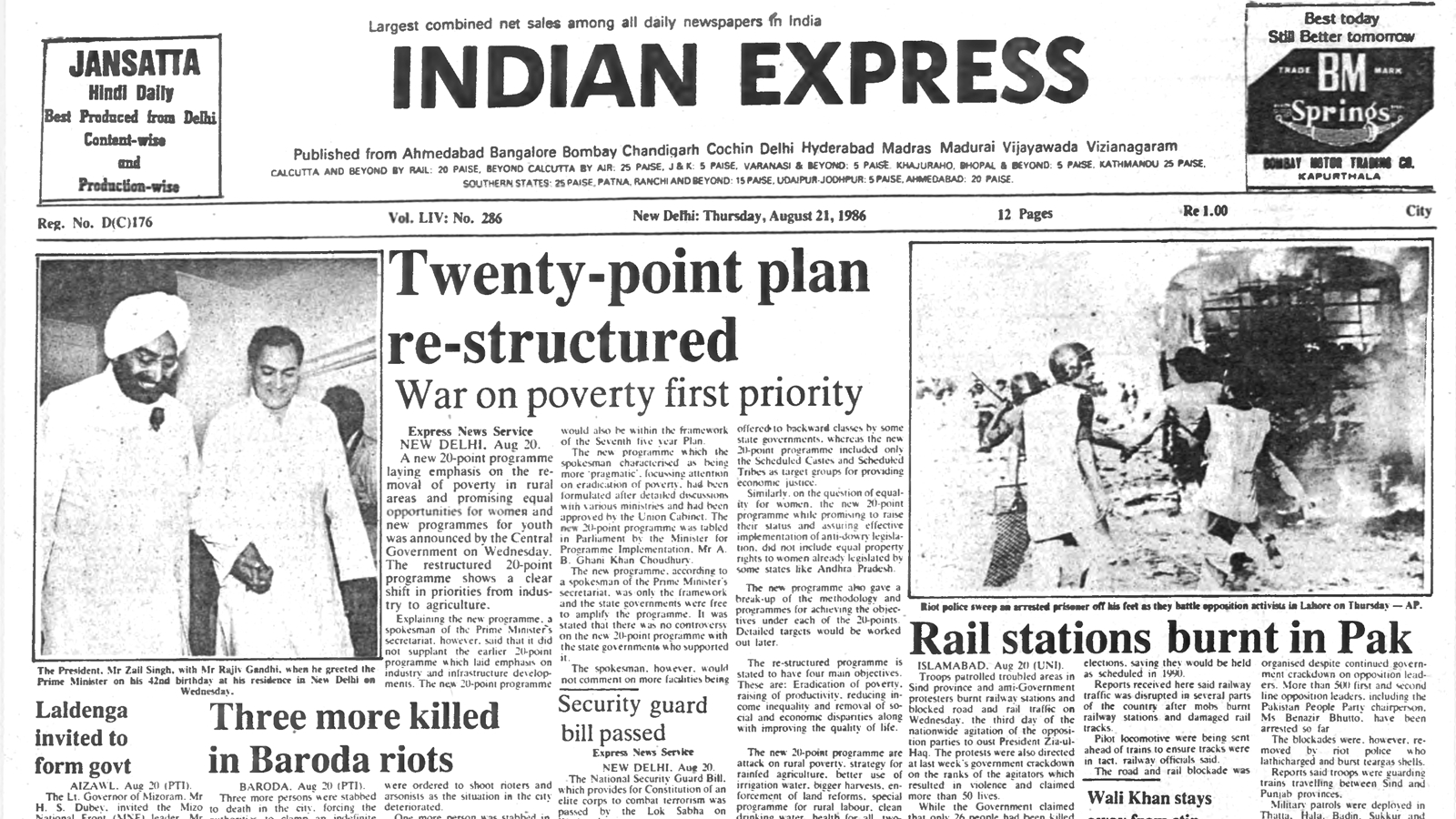
On August 21, 1986, governments and protesters made headlines in several countries.
India announced a new plan to fight poverty in rural areas.
The plan also promised new programmes for young people and women.
In Pakistan, opposition supporters protested against President Zia-ul-Haq.
Some protesters burned railway stations and stopped trains and roads.
Troops patrolled Sindh, where recent violence had reportedly killed more than 50 people.
U.S. President Ronald Reagan spoke about Nicaragua and said rebels could take over if the government did not seek democracy.
In Punjab, the government forgave a large amount of farmers’ debt and reduced some prisoners’ sentences in memory of Sant Harchand Singh Longowal.

India announced a new 20-point programme prioritizing rural poverty reduction, youth, and women over industry.
Anti-government protesters in Pakistan burned railway stations and blocked transport during nationwide agitation against President Zia-ul-Haq.
Troops patrolled Sindh after a government crackdown on agitators reportedly left more than 50 people dead.
U.S. President Ronald Reagan said Nicaraguan rebels might take over unless the government pursued democracy.
Punjab wrote off Rs 300 crore in farmers’ water-course lining charges and reduced some prisoners’ sentences.
- Who
- India’s Central Government, Pakistan’s opposition protesters and troops, U.S. President Ronald Reagan, Nicaraguan rebels, and the Punjab government were involved in the reported developments.
- What
- India introduced a 20-point programme; Pakistan saw continuing anti-government protests; Reagan discussed Nicaragua; and Punjab announced farmer debt relief and prisoner sentence remissions.
- Where
- The developments took place in India, Pakistan’s Sindh province, Nicaragua, and Punjab; Reagan spoke from his holiday ranch in California.
- When
- August 21, 1986, with the Pakistan agitation occurring on its third day and Longowal’s first death anniversary being observed.
- Why
- The Indian programme aimed to reduce rural poverty, Pakistan’s protests sought to oust Zia-ul-Haq and opposed a government crackdown, Reagan linked U.S. policy to democracy in Nicaragua, and Punjab’s concessions commemorated Sant Harchand Singh Longowal.
Governments and Their Supporters
Opposition Movements and Rebels
Pakistan’s political crisis
Governments and Their Supporters
The government responded to unrest with a crackdown, while troops patrolled troubled areas in Sindh.
Opposition Movements and Rebels
Opposition parties sought to oust President Zia-ul-Haq and protesters burned railway stations and blocked road and rail traffic.
Nicaragua’s political future
Governments and Their Supporters
Reagan said the Nicaraguan government should seek democracy and presented this as central to U.S. policy.
Opposition Movements and Rebels
Reagan said that, absent such a move, the Nicaraguan rebels’ alternative would be to take over.
Key facts
- India’s programme
- A new 20-point programme emphasized removing poverty in rural areas and creating programmes for youth and women.
- Policy shift
- The restructured Indian programme shifted emphasis from industry toward agriculture.
- Pakistan unrest
- Opposition parties were conducting nationwide agitation to oust President Zia-ul-Haq.
- Reported casualties
- A government crackdown on Pakistani agitators the previous week reportedly resulted in violence and more than 50 deaths.
- Reagan’s statement
- Ronald Reagan said the only alternative for Nicaraguan rebels might be to take over if the government did not seek democracy.
- Punjab debt relief
- The Punjab government wrote off Rs 300 crore owed by farmers as water-course lining charges.
- Commemoration
- The Punjab measures were announced during observances marking Sant Harchand Singh Longowal’s first death anniversary.
Sources
Related news
Pakistan Faces Crackdown Threat as Opposition Fights On

Punjab Farmers Begin Week-Long Protest Over Trade Deal, Reforms
Chouhan Defends India-US Trade Deal During Punjab BJP Speech

Hanumangarh Farmers Break Barricades Over Pending Farm Pond Subsidies
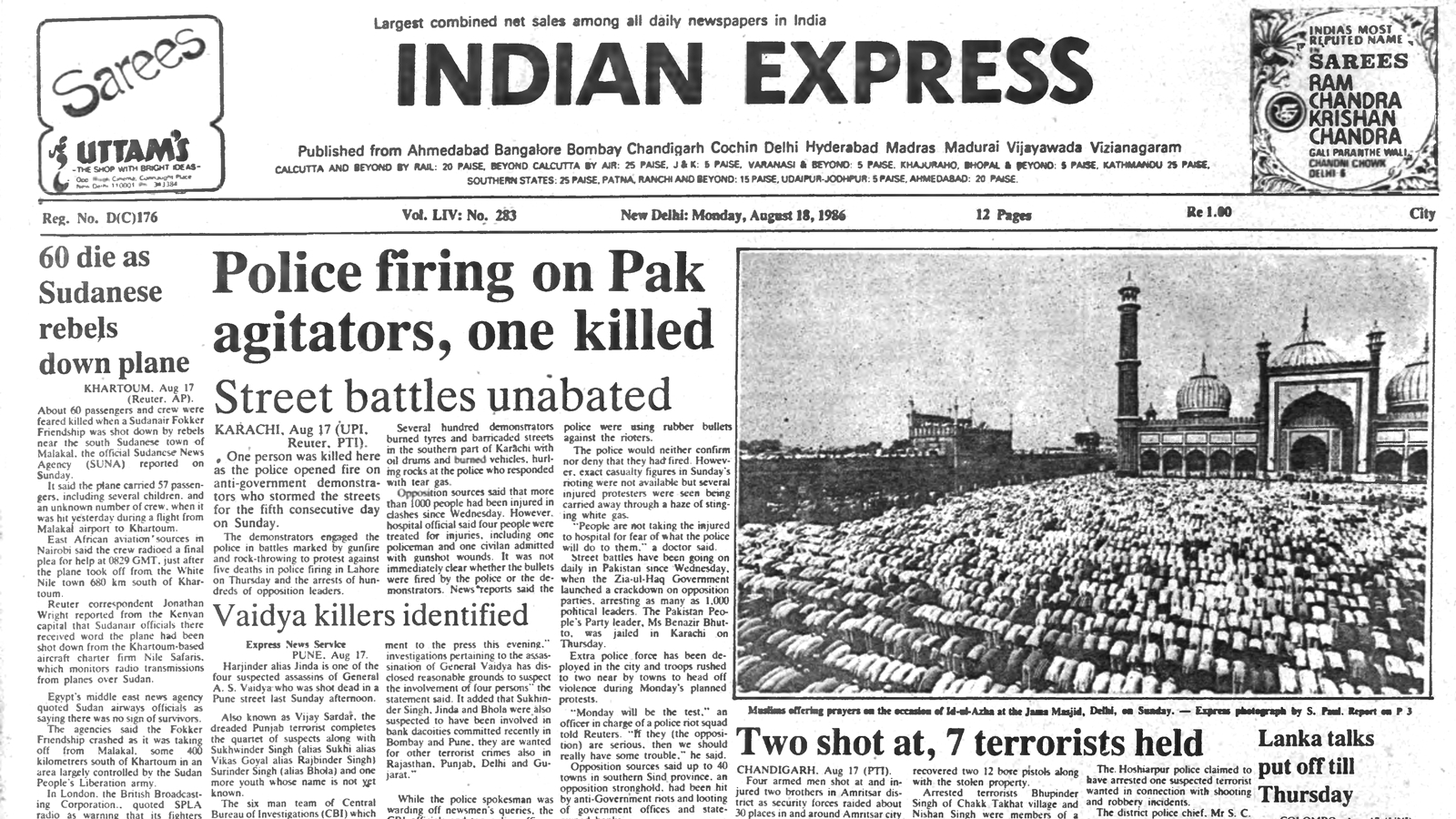
Karachi Protests, Sudan Plane Downing, IAF Helicopter, Housing Delays
Sheikh Hasina calls 2024 Bangladesh uprising a planned regime change

Private Hospitals Flag Ayushman Bharat Payment Delays and Claim Deductions
Punjab Announces Statewide Awareness Drive on BC Certificates
NDA Personnel Found Dead On Pune Railway Track; Inquiry Ordered
Bajwa Questions Punjab Government Over Pending Employee DA Arrears
BJP Alleges Punjab Cash-for-Transfer Network, Seeks Mann Resignation