1 hr ago
Why India’s Stock Market Fell Despite Strong GDP Growth

India’s economy grew strongly in the April-to-June 2026 quarter.
Many people expected this good news to help Indian stocks rise.
Instead, major stock indexes fell after the GDP announcement.
Investors were worried about higher interest rates and bond yields in the United States.
A stronger US dollar also encouraged foreign investors to move money away from India.
More expensive crude oil could make imports and business costs higher for India.
The falling rupee added to those concerns.
Experts also said some stocks were already expensive and certain industries faced weaker profits.
As a result, investors sold shares even though the economy’s headline growth looked strong.

India’s Q1 FY2026-27 GDP data was released on 31 August 2026 and described as strong.
Since the release, the Sensex fell nearly 3,300 points, while the Nifty 50 declined about 1,000 points.
By 10 a.m. Friday, the Bank Nifty was around 55,500, down approximately 2,500 points in September.
Experts attributed the decline to rising US bond yields, a stronger dollar, crude oil pressures and rupee depreciation.
Premium valuations, sector-specific pressures and foreign investor selling also weighed on Indian equities.
- Who
- Indian stock-market investors, foreign institutional investors, and analysts including Seema Srivastava and Amit Goel.
- What
- Indian benchmark stock indexes declined despite strong Q1 FY2026-27 GDP data.
- Where
- India’s stock market, including the BSE Sensex, Nifty 50 and Bank Nifty.
- When
- The GDP data was released on 31 August 2026; the reported market declines were measured through Friday in September 2026.
- Why
- Experts cited global risk aversion, higher US Treasury yields, a stronger dollar, crude oil pressures, rupee depreciation, foreign outflows, high valuations and domestic sectoral pressures.
Growth Optimism
Market Caution
Economic growth versus share prices
Growth Optimism
The strong Q1 FY2026-27 GDP report was expected to attract foreign investors and support Indian equities.
Market Caution
Analysts said strong headline growth does not immediately guarantee higher corporate earnings, particularly when global and domestic pressures are strong.
Main market drivers
Growth Optimism
India’s stronger economic performance compared with some Asian counterparts suggested potential resilience for the Indian market.
Market Caution
Rising US Treasury yields, a stronger dollar, crude oil concerns and foreign capital outflows created a broader risk-off environment that outweighed the GDP news.
Reasons for selling
Growth Optimism
The GDP announcement provided a positive fundamental signal for India’s economy.
Market Caution
Experts cited profit-taking, premium valuations, slower Western technology spending, and tighter oversight and higher deposit costs affecting banking and non-banking finance companies.
Key facts
- GDP period
- April-June 2026, or Q1 FY2026-27
- GDP release date
- 31 August 2026
- Sensex level at release
- 76,957
- Sensex level by Friday morning
- Around 73,675, nearly 3,300 points lower
- Nifty 50 level at release
- 24,080
- Nifty 50 level by Friday morning
- Around 23,075, approximately 1,000 points lower
- Bank Nifty level by Friday morning
- Around 55,500, down approximately 2,500 points in September
Quotes
Seema Srivastava
Senior Research Analyst at SMC Global Securities
“Despite India posting strong headline GDP growth, the stock market often faces short-term corrections due to broader macro and global headwinds.”
 livemint.com
“This squeeze raises corporate input costs, especially for manufacturing, auto, and consumer sectors, dimming medium-term earnings expectations.”
livemint.com
SMC Global expert
Unnamed expert from SMC Global Securities
“The market reacted to the classic 'buy the rumour, sell the news' dynamic as institutional desks trimmed overextended mid- and large-cap positions.”
livemint.com
Sources
Related news

India’s Strong Growth Fails to Lift Stocks Amid Crude Surge

India's Strong GDP Growth Fails to Lift Stock Markets
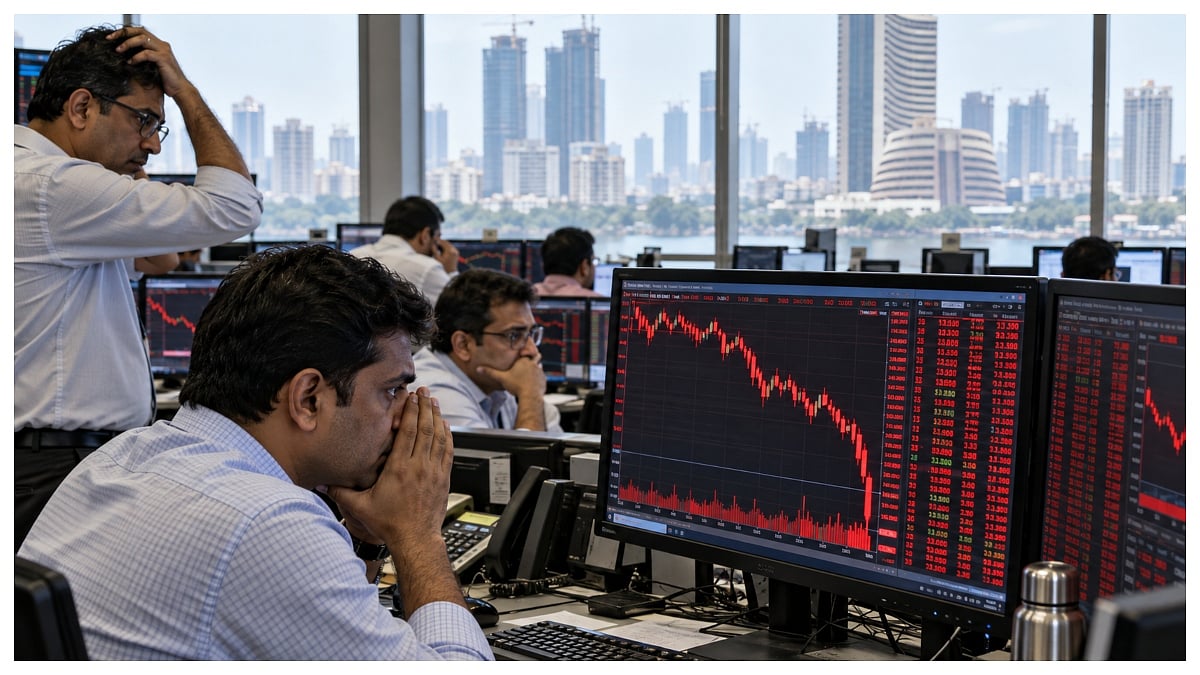
Indian Markets Slide as US Yields, Oil and Rupee Weaken

Indian Stocks Plunge as Oil, Yields and War Weigh

Sensex, Nifty Slip as Crude, US-Iran Tensions Weigh
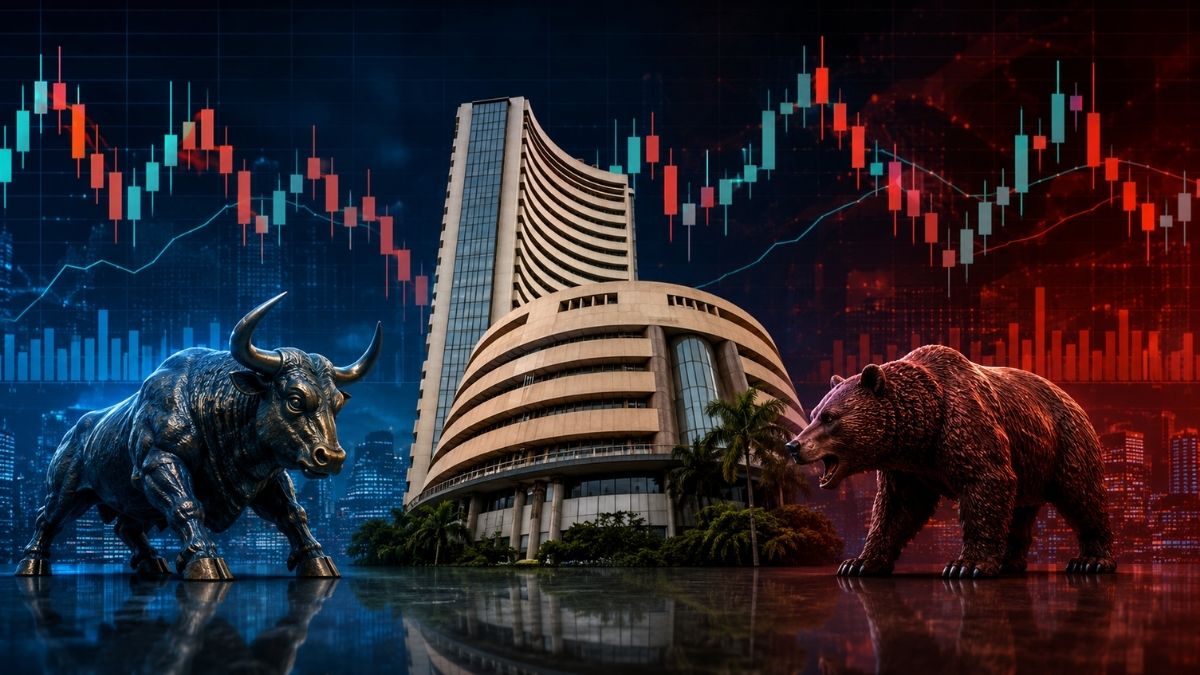
Indian Stocks Plunge as Yields, Oil and Regulation Weigh

Officials Urge Fiscal Prudence and Agile Data for Viksit Bharat

Medical Trips Cost Most as MoSPI Compares Domestic Travel Spending
Economy Quiz Covers GDP, Carbon Markets, Oil and UPI

Religion Drives Nearly Half of India’s Overnight Trips