1 hr ago
Supreme Court Questions Medicine Markups and India’s Pricing Rules

India has rules about how much some medicines can cost.
The Supreme Court is examining whether those rules protect patients well enough.
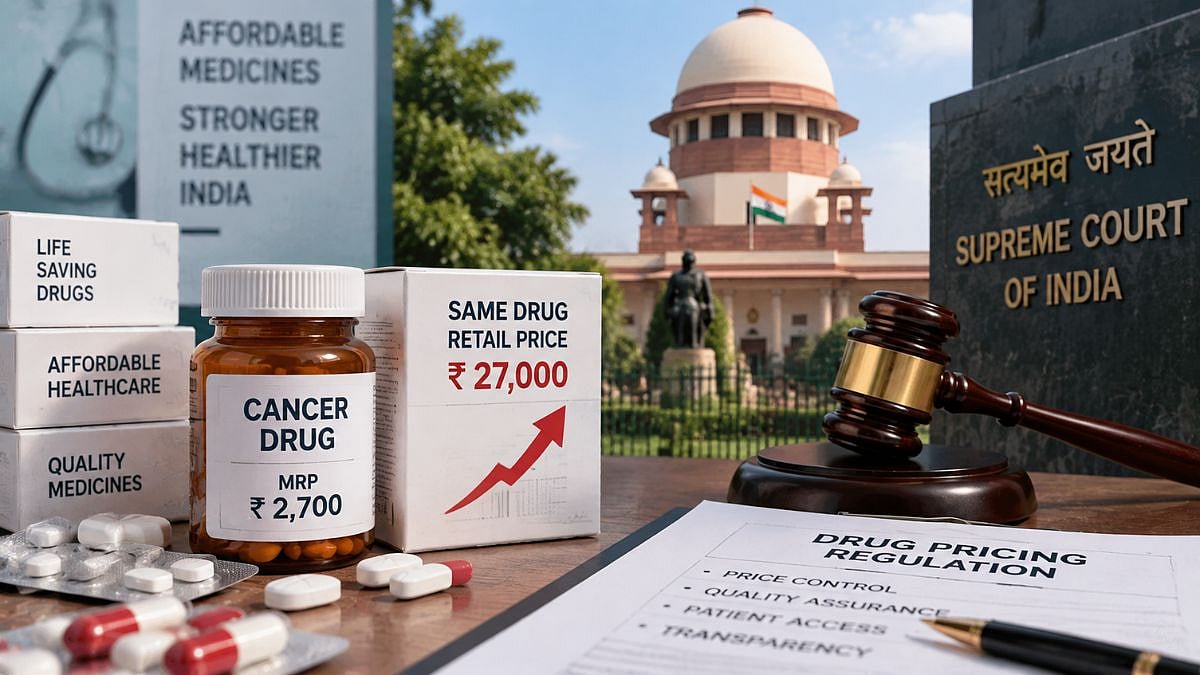
Judges questioned why a cancer medicine supplied to retailers for about Rs 2,700 could have an MRP near Rs 27,000.
Medicines on the essential list have a maximum price set by the government.
This maximum price is usually calculated from market prices, with a 16% retailer margin added.
Medicines not on the essential list can usually be launched at a price chosen by the manufacturer.
The petitions say companies can set very high starting prices and that some hospitals and retailers add large markups.
The court is considering concerns about medicine prices, generic prescriptions, and medical devices.

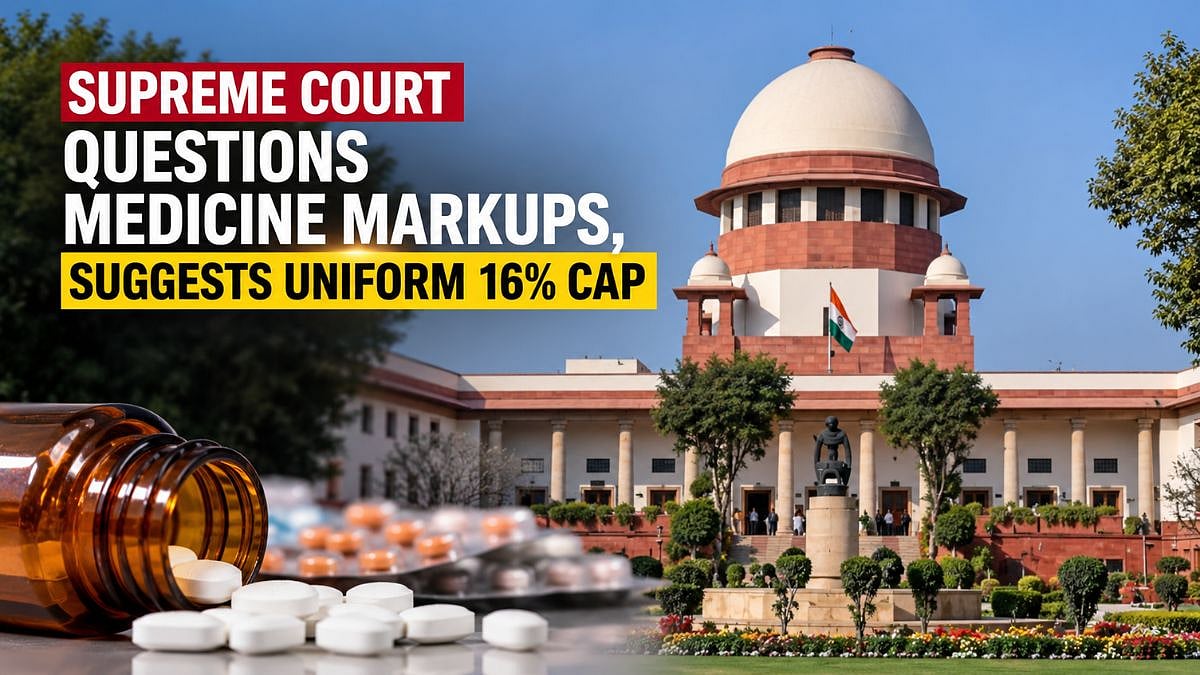
The Supreme Court questioned a large gap between retailer prices and printed MRPs for medicines.
The bench asked why the DPCO’s 16% retailer margin should not apply to all essential medicines.
India’s DPCO authorises the NPPA to set ceiling prices for medicines listed as essential.
Scheduled medicines are priced using average retailer prices plus a permitted 16% margin.
Non-scheduled medicines generally have no ceiling price, though their MRP increases are limited to 10% in 12 months.
- Who
- The Supreme Court bench of Justices Vikram Nath and Sandeep Mehta, the Centre, the National Pharmaceutical Pricing Authority, manufacturers, retailers, hospitals, and petitioners.
- What
- The court heard petitions challenging medicine pricing practices, including launch prices, retailer markups, generic prescriptions, and medical-device prices.
- Where
- India, in proceedings before the Supreme Court.
- When
- Tuesday, September 29; the year is not specified in the article.
- Why
- The petitions seek stronger price controls and enforcement, arguing that unrestricted initial MRPs and excessive supply-chain markups can make medicines unaffordable.
Petitioners and court concerns
Existing pricing framework
Initial medicine prices
Petitioners and court concerns
Petitioners argue that manufacturers can set inflated launch prices because the DPCO does not regulate initial MRPs for non-scheduled medicines.
Existing pricing framework
Under the current framework, non-scheduled medicines generally have no ceiling price, while increases after launch are limited to 10% in 12 months.
Retailer and hospital markups
Petitioners and court concerns
The petitions allege that retailers and hospital pharmacies can make profits far above the permitted 16% margin, contributing substantially to patients’ bills.
Existing pricing framework
For scheduled medicines, the DPCO’s ceiling-price formula includes a 16% retailer margin, and the NPPA can monitor overcharging and order recovery of excess amounts.
Scope of price controls
Petitioners and court concerns
The Supreme Court questioned why the 16% margin should not apply to all essential medicines and described some price gaps as potentially exploitative.
Existing pricing framework
The existing system limits direct price ceilings to medicines listed in Schedule I, which is based on the National List of Essential Medicines.
Key facts
- Pricing framework
- The Drugs (Prices Control) Order, 2013 governs medicine price controls.
- Regulator
- The National Pharmaceutical Pricing Authority fixes ceiling prices, monitors overcharging, and implements the DPCO.
- Essential medicines
- The Schedule I list contains 384 medicines and accounts for about 20% of total drug-market turnover.
- Retailer margin
- For scheduled medicines, the ceiling-price calculation adds a 16% retailer margin to the average price to retailer.
- Non-scheduled medicines
- Manufacturers generally set the initial MRP freely, but cannot increase it by more than 10% in 12 months.
- Example cited
- An essential cancer drug was reportedly supplied to retailers for Rs 2,700 while carrying an MRP of nearly Rs 27,000.
- Annual revision
- Scheduled-medicine ceiling prices are revised each April 1 using the Wholesale Price Index.
Quotes
Supreme Court bench of Justices Vikram Nath and Sandeep Mehta
The Supreme Court bench hearing petitions challenging medicine pricing and related regulations.
“The MRP is 10 times the rate at which it is provided to the retailers. If this is not extortion, then what is it?… That’s absolute rampage, carnage, broad daylight dacoity… It is very surprising that the authorities who are supposed to take a decision on this are absolutely silent. We don’t need to spell out the reason for that”
 indianexpress.com
Sources
Related news
Supreme Court Questions Steep Mark-Ups on Essential Medicines
Supreme Court Questions ₹27,000 MRP on ₹2,700 Cancer Drug
Supreme Court Questions India’s Drug Pricing and Calls for Reform

Karnataka Seeks Central Action Over High-Cost Drug Price Gaps

Supreme Court Slams Tenfold Cancer Drug Markups by Hospitals
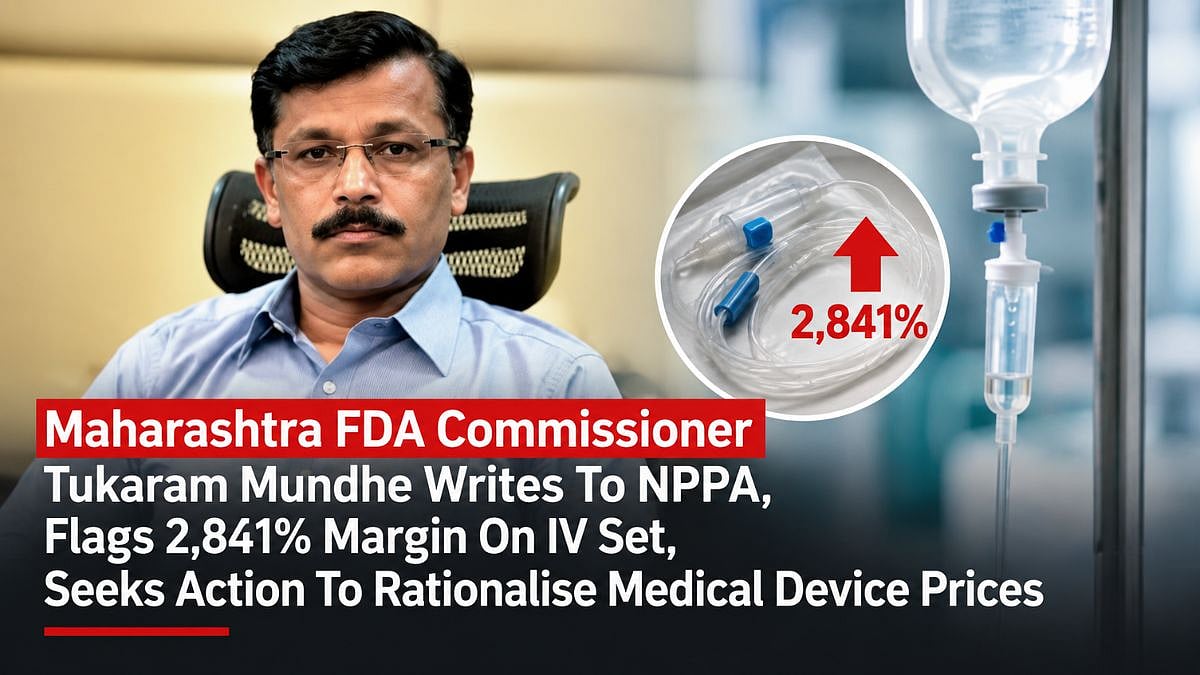
Maharashtra FDA Flags Huge Markups on Hospital Consumables

Andhra Pradesh Parties Clash Over 34% BC Reservations

Rozlyn Khan Raises Suicide Threat Amid Cancer And Legal Battle
Supreme Court Refuses TMC Relief Over Four Frozen Accounts

Form 6 Dispute Tests Legal Limits of Electoral Roll Revision